Governor Green Requests Federal Disaster Declaration After Kona Low Flooding
Gov. Green asked the White House for a major disaster declaration on March 23, with $1 billion in storm damage statewide and Big Island communities from Kailua-Kona to Pahala still reeling.
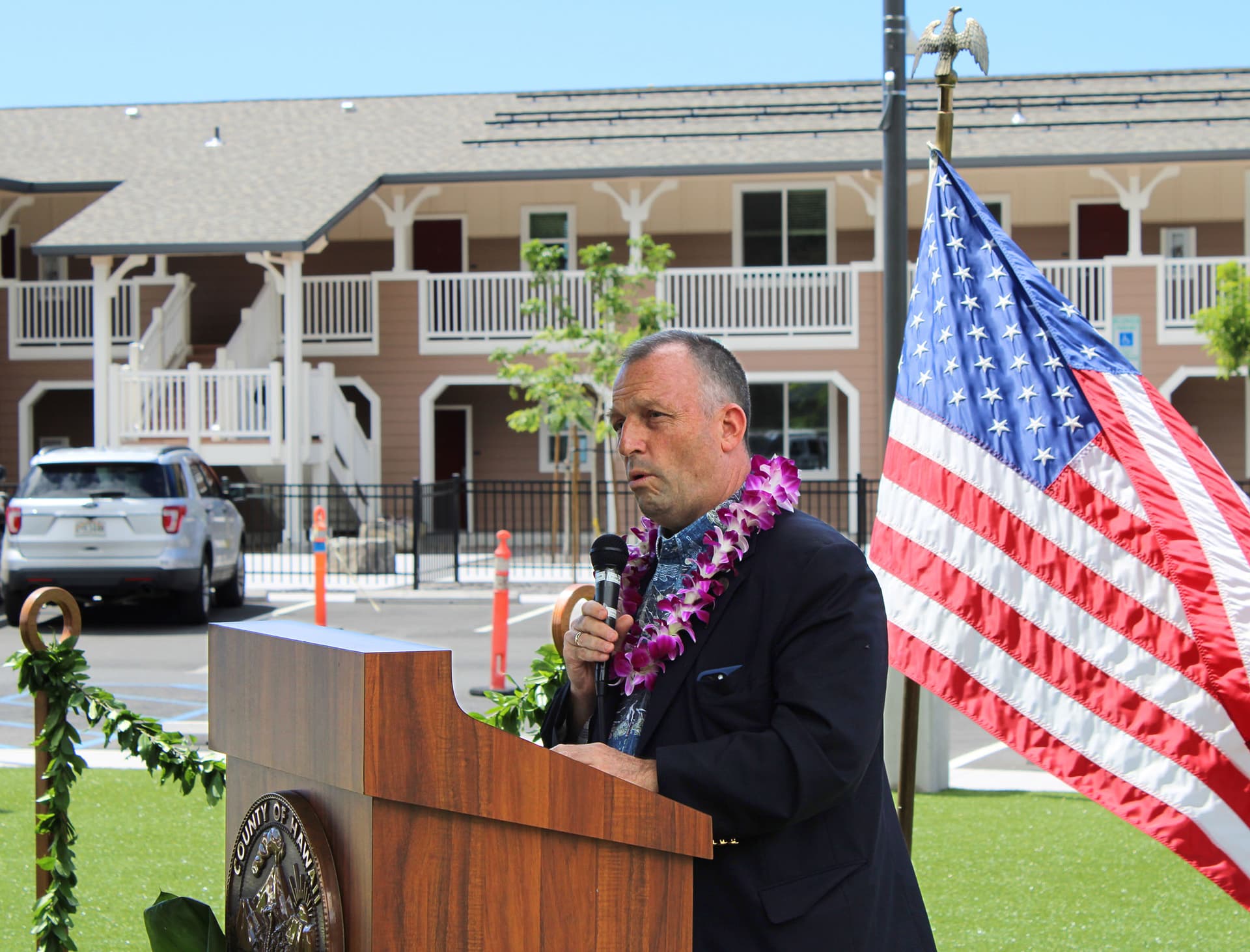
With damage from back-to-back Kona low storms now estimated at roughly $1 billion statewide, Governor Josh Green, M.D. formally asked the President for a major disaster declaration on March 23, putting Washington on notice that Hawaiʻi needs federal cost-sharing of up to 90 percent to fund its recovery.
Green and Honolulu Mayor Rick Blangiardi said state and city agencies are working together "in a way that we've never been before" as flooding concerns spread well beyond the North Shore. Green said FEMA has been brought in early to conduct damage assessments alongside state teams "so that we don't have to do them twice," and the state has deployed reserve personnel to assist with assessments across the counties. He also said he plans to seek additional, immediate support from the Hawaiʻi Legislature.
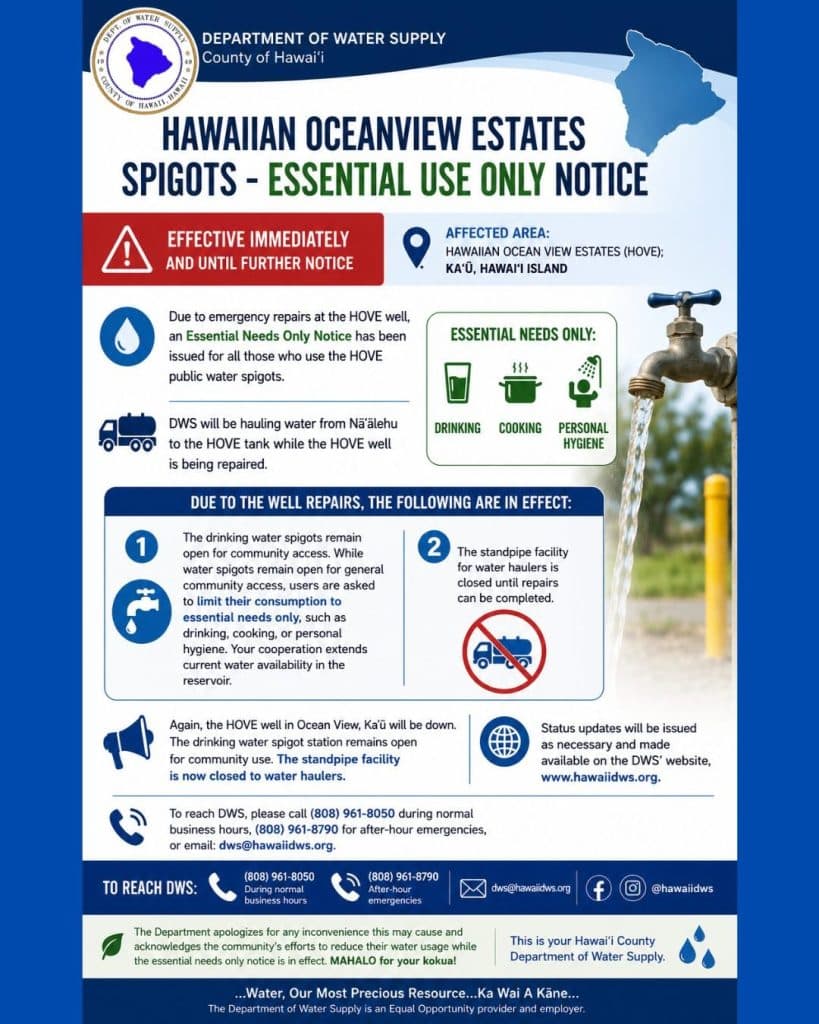
The Big Island took its own beating from the two storms. Radar on March 23 indicated heavy rain continuing over portions of east and southeast Hawaiʻi Island, with the heaviest rain concentrated over the Ka'ū District between Kawa Flats and Volcano, including portions of Mamalahoa Highway, falling at a rate of 2 to 4 inches per hour. The County of Hawaiʻi Civil Defense Agency reported road flooding along Bayfront Highway. Preliminary five-day precipitation totals from the first storm alone showed Kahuku Ranch in the Ka'ū District recorded 19.44 inches of rain, Kealakekua in South Kona recorded 11.11 inches, and Kaloko-Honokohau in North Kona recorded 7.77 inches.
County Mayor Kimo Alameda said over the weekend that residents had filed hundreds of damage reports over the last two weeks from the consecutive storms, with the county receiving over 300 residential responses and nearly 100 commercial damage assessments. Alameda noted that on the west side alone, some areas saw 15 inches or more of rain.
Green described the second storm as "the largest flood that we've had in Hawaii in 20 years," resulting in widespread damage across Oahu on the most destructive day. On the North Shore, muddy floodwaters in the Waialua-Haleʻiwa area inundated streets, pushed homes off their foundations, swallowed vehicles, and prompted evacuation orders for thousands of people. "There's a lot of destruction that we're aware of. We went and walked right next to the houses that were completely displaced," Green said of the North Shore tour.
Green said the cost of the storm could top $1 billion, including damage to airports, schools, roads, homes and a Maui hospital in Kula. Green said some $40 million of roads will need to be replaced following the storms.
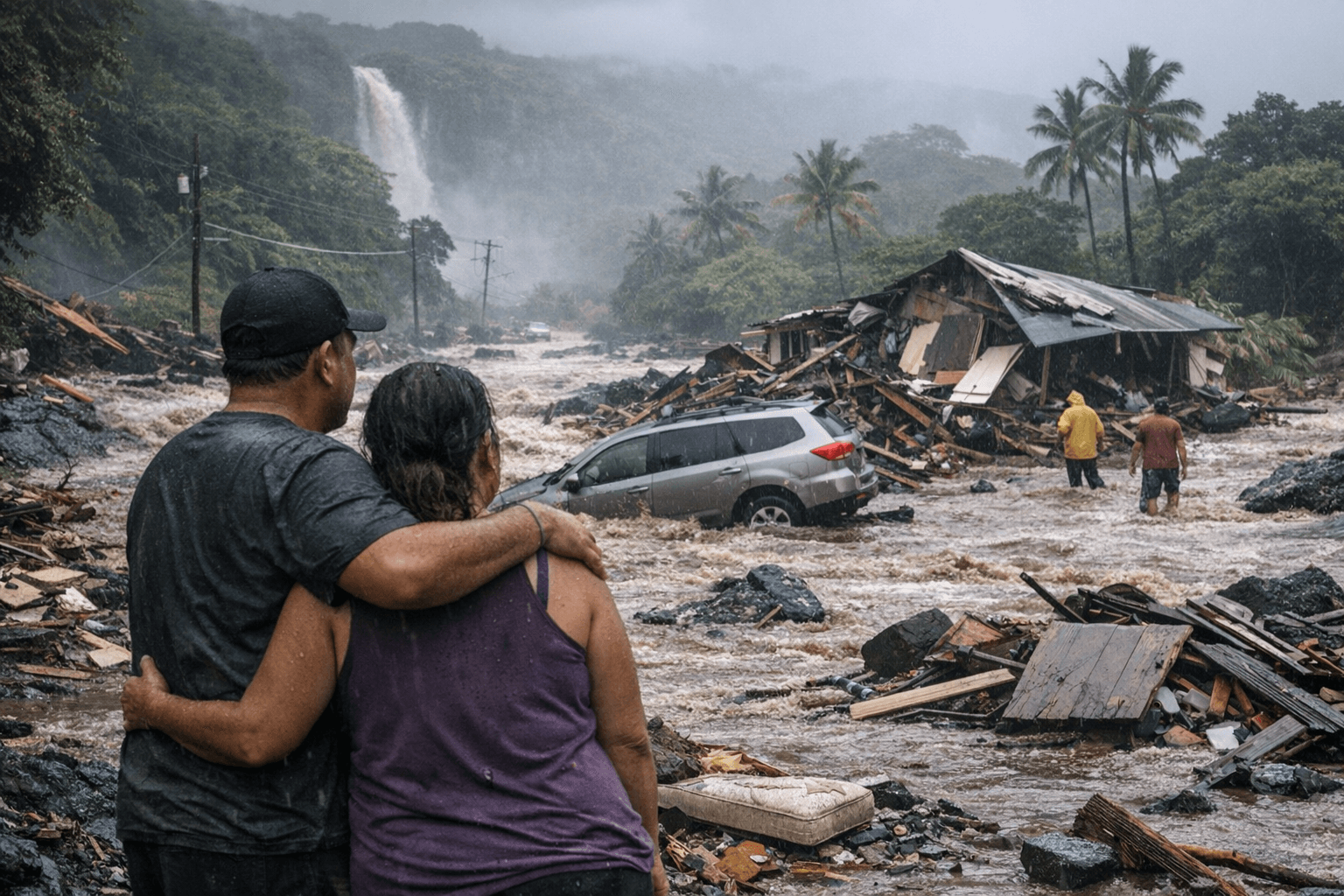
"Here we are, just 48 hours later, with concerns for the whole island," Green said at Monday's press conference, citing recent flooding in Manoa, where roads were underwater and a swollen stream rose dangerously close to nearby homes, and on the Leeward side.
The Governor also raised a public health alarm for anyone who came into contact with floodwaters. Green warned of potential public health risks from floodwaters, including possible sewage contamination that can carry bacteria such as enterococcus and staph: "Those are bacteria that will give you infections, cause blisters or redness on the skin, can make you very sick." All water users on the North Shore from Mokulēʻia to Turtle Bay remained under a boil water notice, with tap water required to reach a vigorous rolling boil and be held there for three minutes before consumption.
Mayor Blangiardi said first responders conducted 233 rescues during the storm, with no reported fatalities. Hawaiʻi has navigated this federal request path before: the state has suffered an estimated $1 billion in damages that dwarfs the $2.2 million in public assistance costs recorded during the December 2008 low-pressure flooding that led to a presidential disaster declaration from President George W. Bush in January 2009.
Whether President Trump approves the March 23 request has not yet been announced. The federal damage-assessment teams now working alongside state crews will be the first measure of whether the declaration clears the threshold.
This article was produced by Prism’s automated news system from verified source data, official records, and press releases, then run through automated quality and moderation checks before publishing. The system is built and supervised by the people who set the standards it runs under. Read our full AI policy.
Did this article answer your question?