Hawaii County weighs property tax hikes to close $15 million gap
Higher-value homes and second homes could face steeper tax bills as Hawaii County tries to plug a $15 million budget hole, while owner-occupied rates edge down.

Higher-value homes and second homes could carry more of Hawaii County’s tax load as the County Council prepares to set real property tax rates aimed at closing an estimated $15 million budget gap. The public hearing is set for Tuesday, May 19, 2026, at 5:30 p.m. at the Hawaii County Building in Hilo, and the council is weighing a structure that shifts more of the burden onto nonowner-occupied and luxury properties.
Under the proposal, the county’s tier-two residential class, which covers homes valued at $2 million and above, would rise from $13.60 to $15 per $1,000 of taxable value. That change adds $1.40 per $1,000, or about $2,800 on $2 million of taxable value before any exemptions. The county is also creating a new tier-three residential class for properties with net taxable value above $4 million, set at $17 per $1,000 under Bill 128, which the Finance Committee advanced on a 7-1 vote on Feb. 4 before the council passed it in March.
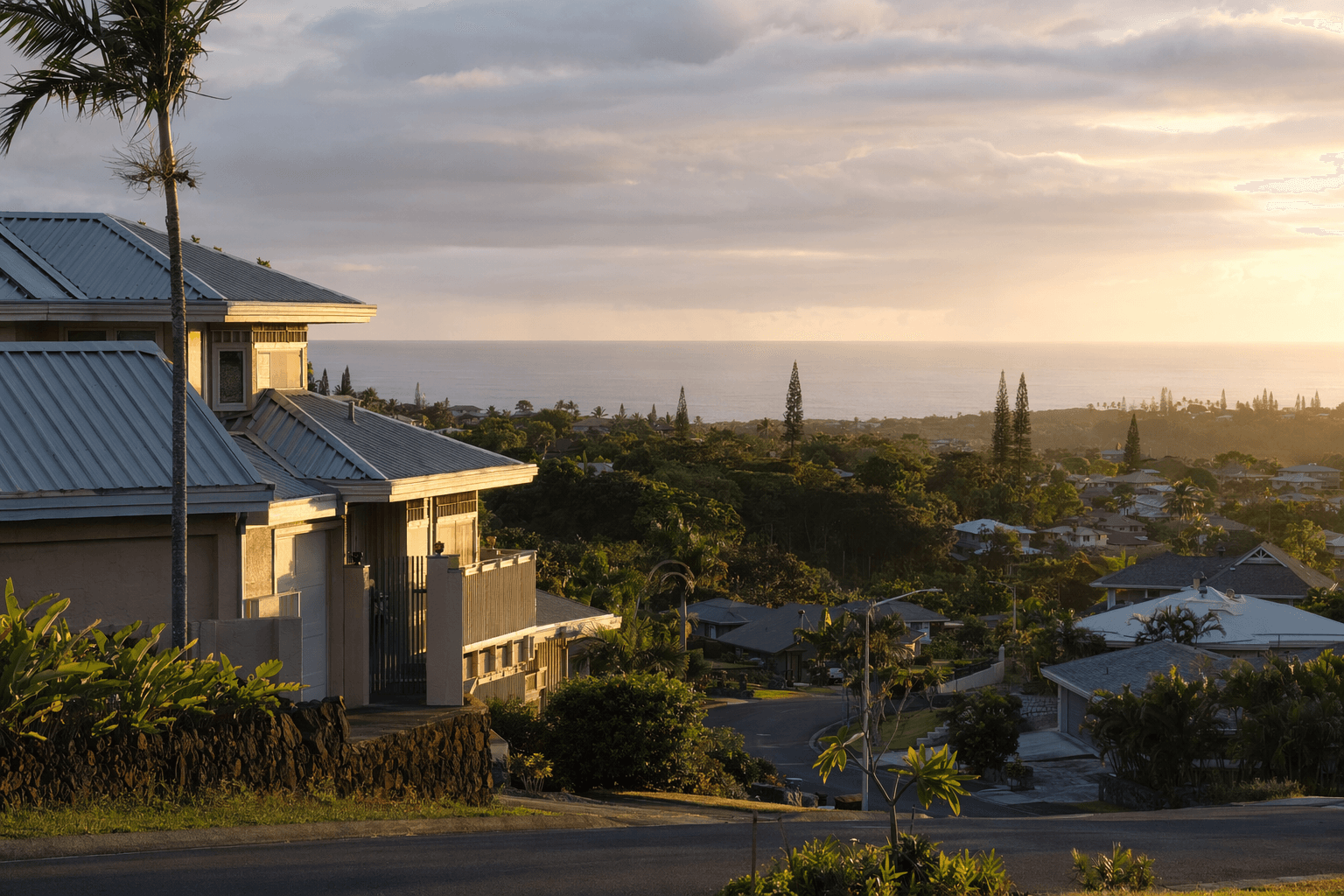
County records show the new tier was designed to capture the island’s most valuable residential properties, especially second homes and investment properties. Hawaii Public Radio reported in February that about 842 Hawaii Island homes were worth at least $4 million, a sign of how much of the county’s top-end housing stock would sit in the new bracket. Because the higher rates focus on nonowner-occupied property, the policy could also reverberate through the rental market if owners of investment housing try to recover the added cost.
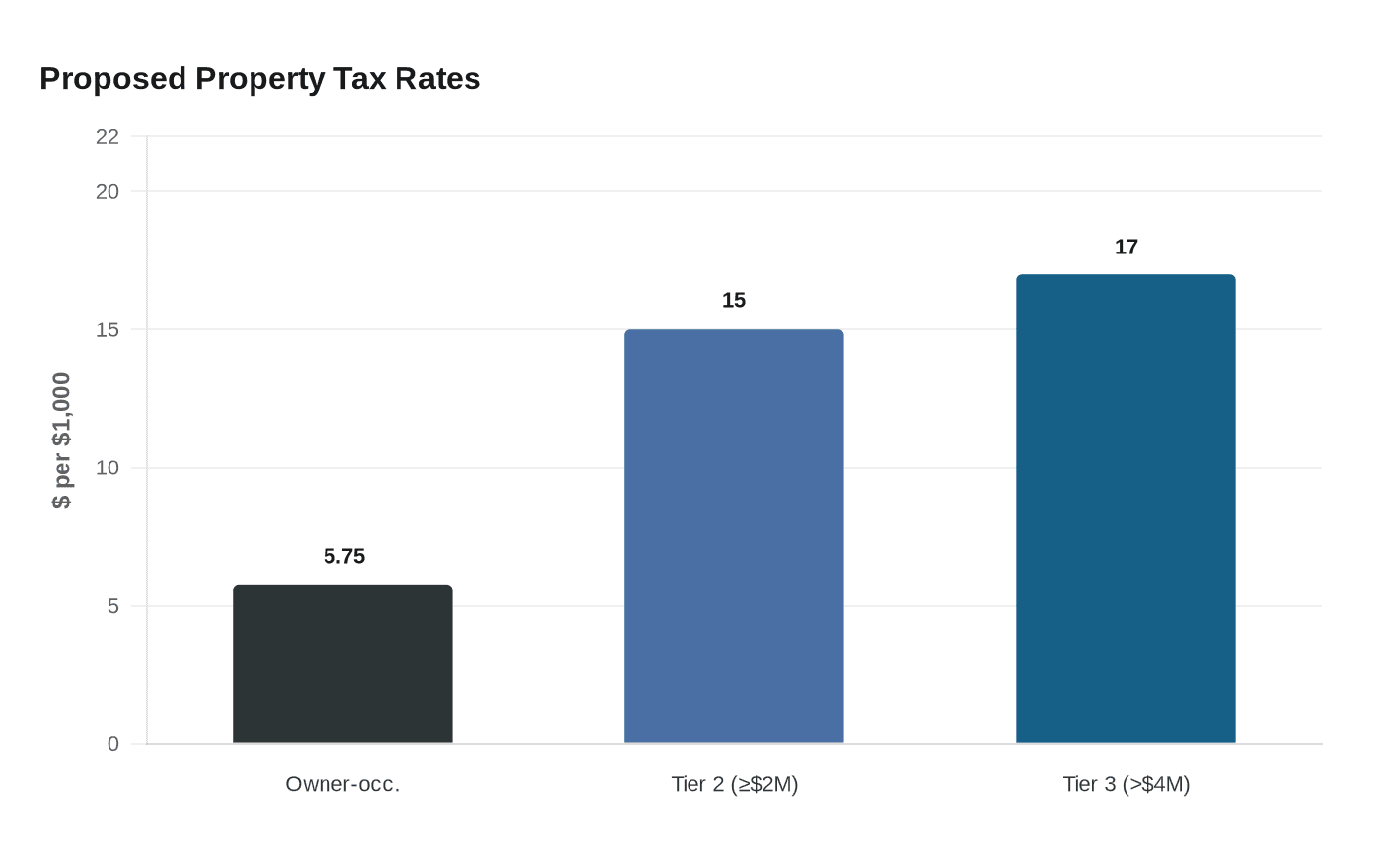
The proposal is not a blanket increase. Owner-occupied homes and affordable rental housing would see a slight cut, from $5.95 to $5.75 per $1,000 of taxable value. Council Chair Holeka Goro Inaba has framed the shift as a way to protect full-time residents who are already squeezed by inflation and housing costs. County records show nearly 39,000 owner-occupied homes receive the homeowner exemption, so even a small rate change touches a large share of island households.
The tax debate is tied directly to the county’s budget math. County budget materials show the FY 2026-27 operating budget was proposed on May 5, and the real property tax resolution was transmitted on May 11, just days before the public hearing. The County of Hawaii Real Property Tax Division says taxes are based on fair market value and the council sets the rates according to the budget. A December 2025 resolution also asked for a performance audit of real property tax revenues used for housing and homelessness, underscoring that the county is using the tax code not just to raise money, but to decide which parts of the island economy should pay for the next round of services and projects.
This article was produced by Prism’s automated news system from verified source data, official records, and press releases, then run through automated quality and moderation checks before publishing. The system is built and supervised by the people who set the standards it runs under. Read our full AI policy.
Did this article answer your question?