Green signs Big Island-backed laws on domestic violence, trafficking prevention
Green signed two new laws that put Big Island hospitals, courts and hotels on the front line of domestic violence and trafficking response.
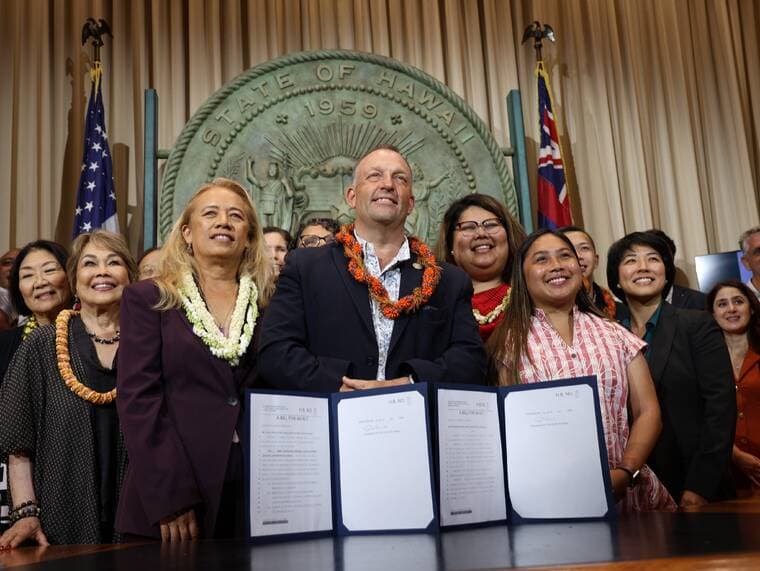
Gov. Josh Green signed House Bill 1959 and House Bill 1960 into law, moving two Big Island-backed measures from the Women’s Legislative Caucus into practice statewide. One law extends a five-year domestic violence pilot project; the other creates a state training program for transient accommodations workers to spot trafficking and report suspected cases.
House Bill 1959 changes how lower-level abuse cases can move through the courts. It creates a petty misdemeanor category for the least serious domestic abuse incidents and allows judges to defer acceptance of guilty pleas in misdemeanor and petty misdemeanor abuse cases. If defendants comply with court-ordered remediation, those pleas can later be stricken from the record. The state Judiciary must also file yearly reports on the pilot, tracking case outcomes, assessments, treatment referrals and any new charges while cases remain open and for a year afterward.

For Hawaii Island, the practical effect lands well beyond the courtroom. Courts in Kona and Hilo will have another tool for handling repeated abuse without simply pushing the same defendants back through the system, while hospitals and emergency rooms are likely to remain the first place many survivors and trafficking victims are seen. The law’s reporting requirement is meant to show whether the pilot changes outcomes for people who cycle through the system again and again.
House Bill 1960 turns hotels and other transient accommodations into a more formal part of the state’s trafficking response. Workers in those settings will be trained to recognize signs of human trafficking and to report suspected cases, giving frontline staff in a major visitor industry a clearer pathway for intervention. On an island where tourism, short-term stays and transient labor intersect every day, the measure puts more eyes on places where exploitation can stay hidden.
Green tied both bills to his own experience as a Hawaii Island emergency room physician in the early 2000s. He said he saw too many patients harmed by domestic violence and trafficking-related abuse and did not always feel equipped to know where to turn. Sen. Lynn DeCoite and other legislators said victims, especially women and children, too often go unseen and need safer systems for reporting and help.
This article was produced by Prism’s automated news system from verified source data, official records, and press releases, then run through automated quality and moderation checks before publishing. The system is built and supervised by the people who set the standards it runs under. Read our full AI policy.
Did this article answer your question?