Hawaii Bill Would Let Private Developers Build Public Schools, Drawing Labor Concerns
A state bill advancing through the Legislature would let private developers design and build public schools, raising alarms from labor groups over wages and long-term oversight.
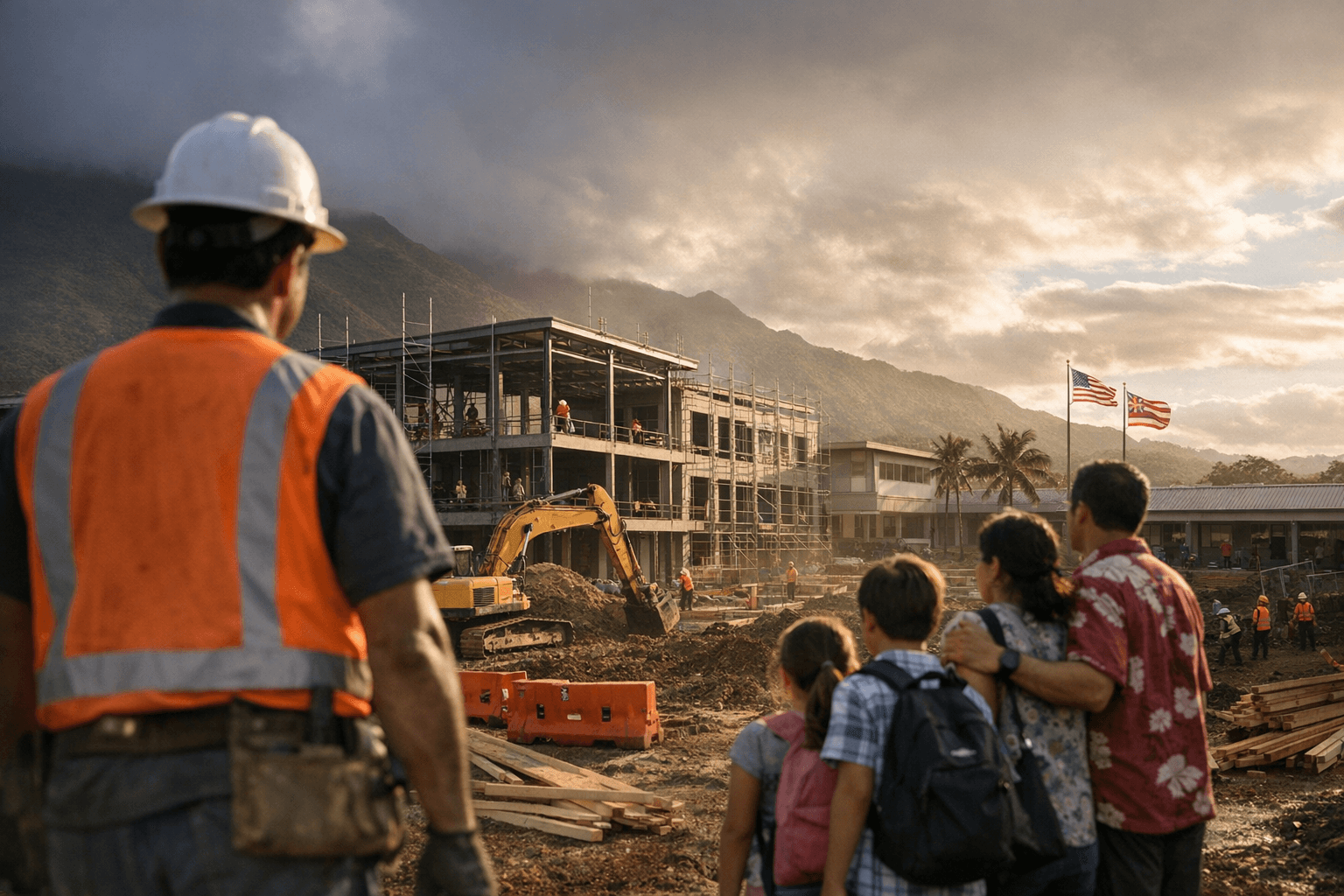
A measure advancing through the Hawaii Legislature last week could fundamentally change how the state designs, finances, and builds public schools, with private developers taking the lead on projects that have long been handled through traditional public contracting. Senate Bill 2024 passed through multiple committees and would authorize the Hawaii School Facilities Authority to enter public-private partnerships with developers, including on privately owned land, and launch a pilot program to deliver three new schools statewide.
The urgency behind the proposal is no mystery to anyone watching Hawaii's school construction backlog grow. "The thought is, we cannot build schools the old way," said Riki Fujitani, executive director of the School Facilities Authority. "They're too expensive, and it's too slow." Hawaii carries some of the highest public school construction costs in the nation, a burden that has stalled projects across all islands, including the Big Island, where remote logistics and aging infrastructure compound the problem.
Under the bill, the authority would solicit developer proposals through a competitive process, weighing cost savings, community need, design quality, and speed of delivery. The pilot program would run through 2028, with interim and final reports submitted to the Legislature to assess whether the P3 model should expand beyond the initial three schools.
Labor groups and public-construction advocates pushed back hard in testimony, raising concerns that the bill opens the door to privatization and could erode prevailing-wage protections that currently govern public school projects. Reduced transparency and weakened oversight compared to traditional bonding and public contracting were also cited as risks.
For the Big Island, the stakes are especially concrete. Konawaena High School and other campuses on Hawaii Island were forced to alter operations following the Kona low weather events that caused significant structural damage to roofs, electrical systems, and flood-prone classrooms. Parents and local school board members have been watching the bill closely because faster delivery of replacement and repaired facilities is badly needed; the question is whether private-sector speed comes at the cost of worker protections and long-term maintenance commitments that island communities can sustain.
Any final version of the bill will likely face pressure from unions and local contractors to include explicit wage standards and accountability measures. Without those guardrails written into law, critics warn Hawaii Island communities could end up holding maintenance obligations on privately financed facilities with little recourse if standards slip after the ribbon-cutting.
This article was produced by Prism’s automated news system from verified source data, official records, and press releases, then run through automated quality and moderation checks before publishing. The system is built and supervised by the people who set the standards it runs under. Read our full AI policy.
Did this article answer your question?