Hawaii Board Adopts Containment Zone to Slow Kona Beetle Spread
A 20-mile Kona containment zone now requires permits to move mulch and compost offsite, putting nurseries, landscapers, and farms on notice.
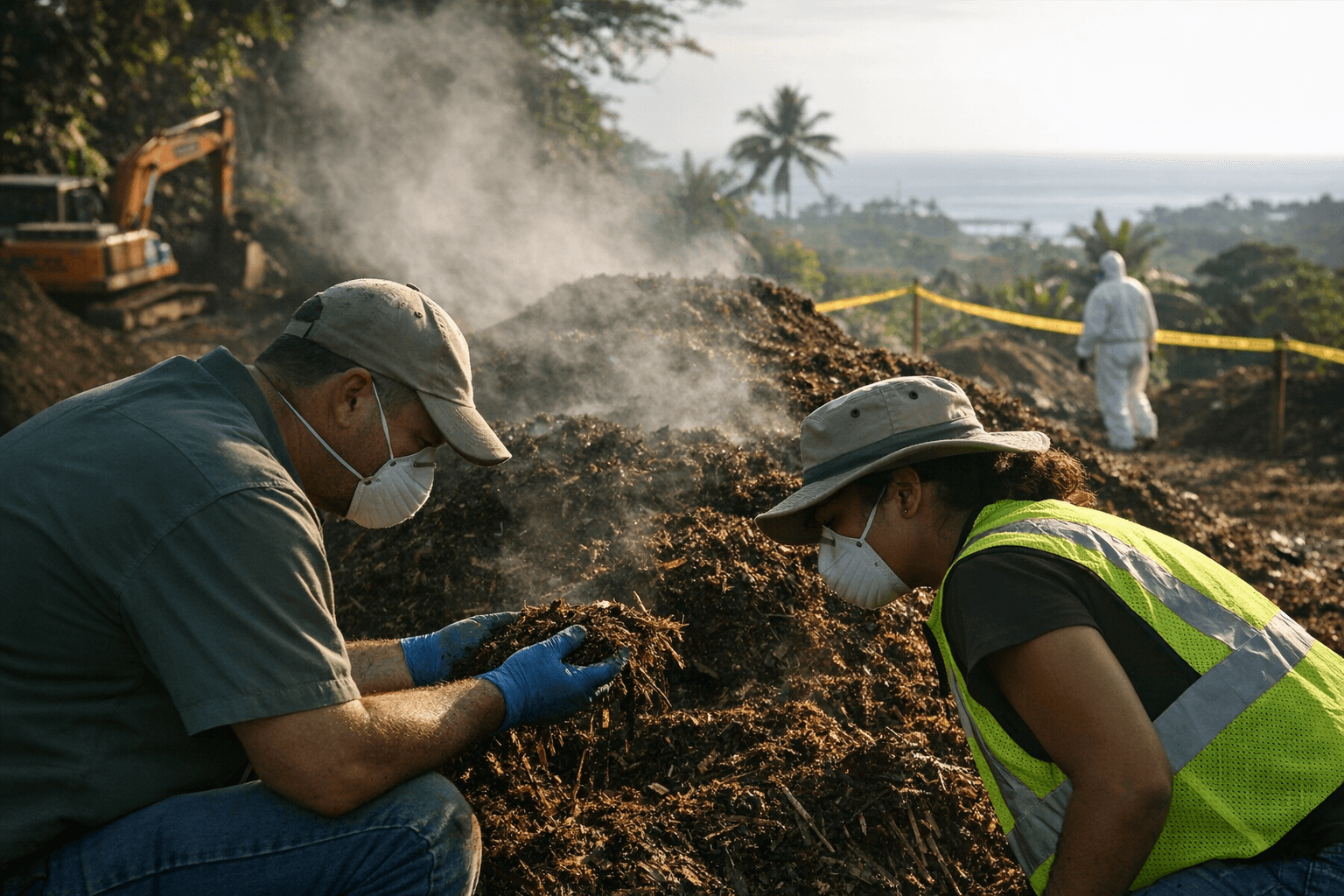
The Hawaii Board of Agriculture and Biosecurity voted March 27 to establish a formal containment zone along the Kona coast, stretching roughly 20 miles from downtown Kailua-Kona north to Waikoloa, after coconut rhinoceros beetle detections spread across West Hawaii's palm-heavy landscape over the past year.
The new interim rules put an immediate compliance burden on nurseries, landscapers, composting operations, green waste haulers, and farms operating inside the zone. Any business moving mulch, compost, or other decaying plant material out of the containment area must now obtain a permit from the Department of Agriculture and Biosecurity before transporting those materials. The beetle's larvae develop inside exactly those materials, and a single pile can harbor dozens of them.
Big Island Invasive Species Committee manager Franny Brewer, who testified before the board, has been among the most direct voices on how the infestation reached its current scale. Brewer warned the board that people accidentally transporting infested materials have likely driven the beetle's spread up and down the Kona coast. The goal of the permitting rules, in Brewer's framing, is to "get at least a screen covering that door" while longer-term containment strategies are developed. BIISC, which pushed hard for regulatory action after conservation groups petitioned the department in January, plans to offer compliance trainings for affected businesses.
The beetle was first detected near Kona International Airport in March 2025. Within a year, live beetles and larvae had been confirmed at multiple points along the west side, a corridor lined with the coconut palms, ornamental trees, and agricultural crops the beetle targets by boring into crowns and stems. The unregulated movement of green waste within and beyond the island was identified as the primary mechanism accelerating that spread.
Businesses in the containment zone should contact the Hawaii Department of Agriculture and Biosecurity now to begin the permitting process before hauling any host material off-site. BIISC's upcoming training sessions will walk operators through compliant handling and sourcing protocols; businesses should monitor BIISC communications for scheduled dates. Failure to obtain a permit before transporting covered materials exposes operators to enforcement action under the interim rules.
The practical costs are real: added inspection steps, documentation requirements, potential disposal delays, and the labor of sourcing clean organic inputs from outside the zone. Those costs, however, are measured against the alternative. A beetle population that moves beyond Kona's 20-mile corridor and reaches Oahu or Maui would threaten agricultural and tourism economies that have no equivalent infestation experience and no existing containment infrastructure.
This article was produced by Prism’s automated news system from verified source data, official records, and press releases, then run through automated quality and moderation checks before publishing. The system is built and supervised by the people who set the standards it runs under. Read our full AI policy.
Did this article answer your question?