Hawaiʻi County Council passes first reading of luxury second-home tax funding housing
Hawaiʻi County Council approved first reading of Bill 128 Feb. 18, creating a Tier 3 tax on residential parcels worth more than $4 million; council vote was seven ayes at West Hawai‘i Civic Center.
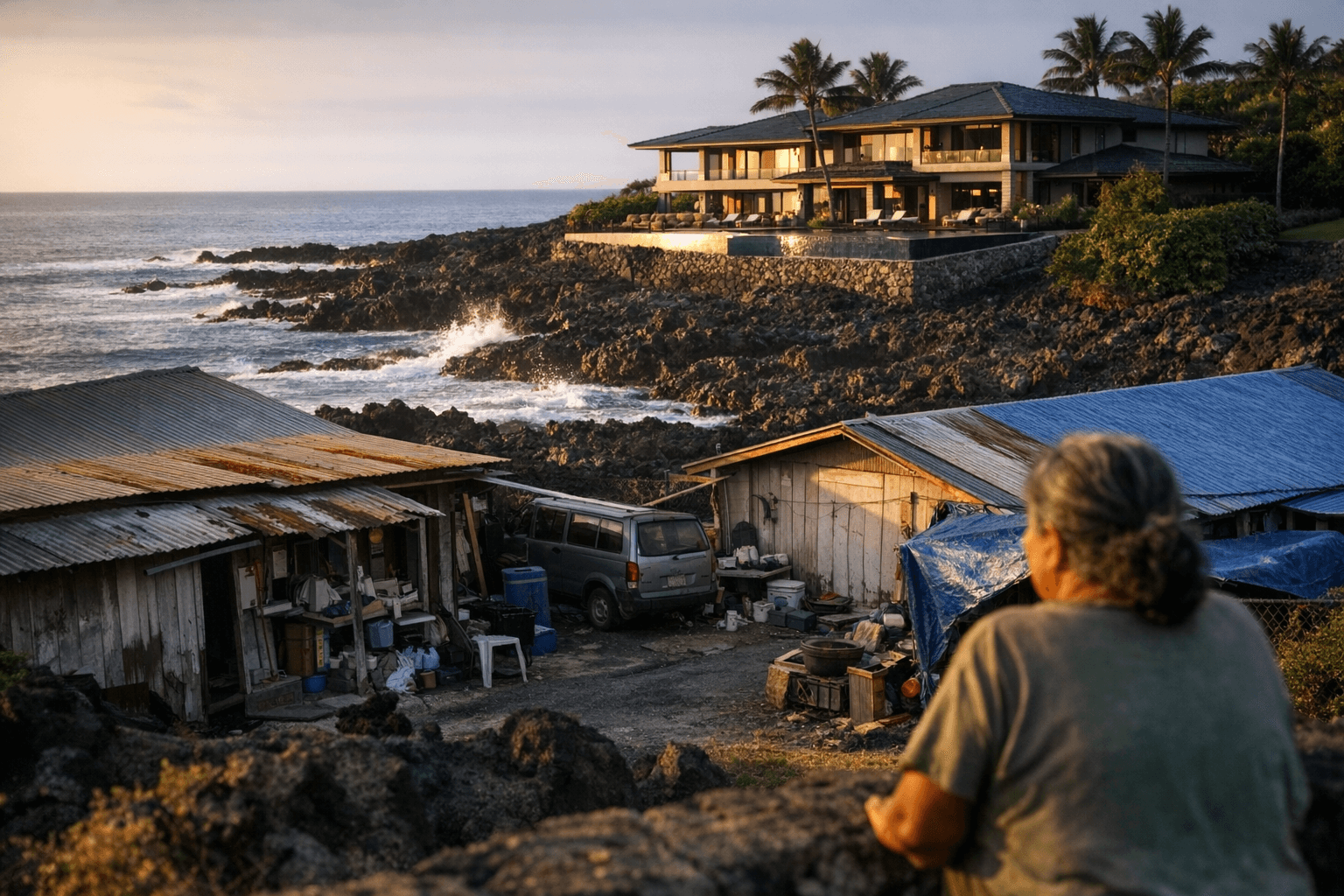
Hawaiʻi County Council passed first reading of Bill 128 on Feb. 18, approving by a seven-aye vote a proposed third residential property-tax tier aimed at high-value second homes. The hearing at the West Hawai‘i Civic Center in Kailua-Kona was brief, with BigIslandNow reporting little discussion and no oral testimony during the council session.
Real Property Tax administrator Lisa Miura told the Finance Committee that the proposed Tier 3 would affect 842 parcels, primarily in West Hawai‘i, with an estimated total taxable value of $5.3 billion and an average value of $6.3 million per parcel, according to BigIslandNow’s report of Miura’s remarks. HPR described those 842 homes as “ultra luxury” properties worth at least $4 million each; the bill sets the Tier 3 threshold at residential parcels with a net taxable value above $4 million.
Bill 128 was introduced by Councilmember Jenn Kagiwada (spelled Jennifer in HPR) and Councilmember James Hustace. BigIslandNow records show the measure was first presented to the council’s Finance Committee on Feb. 4 and moved to full council for the Feb. 18 first reading. Kagiwada told HPR that similar tiered structures have been tried in other counties and were recommended by analysts seeking “fair and more progressive real property tax structures.”
Fiscal projections for the measure vary in the public reporting. County officials told HPR that the high-value homes currently generate about $13 million annually under the existing two-tier system. Aloha State Daily reported a different figure, saying the revised structure “could generate at least $9 million each year” and that the bill “requires that no less than $9 million collected annually from the higher tiers be directed toward county-sponsored housing and homelessness programs.” The sources do not reconcile the $13 million and $9 million figures; the county’s fiscal note and Finance Department analysis have not been published alongside these reports.
The ordinance, as described in council discussion and written testimony posted on the Hawai‘i County website, targets non-owner-occupied luxury homes, high-end condos and speculative residential land while shielding owner-occupied dwellings that claim the home exemption. Susan Bambara of Kurtistown wrote in a posted testimony that “Most local homeowners are unaffected” and that owner-occupied homes “are shielded from higher tiers,” characterizing the bill as asking those who benefit most from the market to contribute more to the community.
Public input was limited in the Feb. 18 session; BigIslandNow reports eight written testimonies in favor were posted online and HPR reports that most testifiers supported a tier for the island’s wealthiest property owners. HPR quoted supporter Tanya Aynessazian arguing that taxing “ultra luxury” properties ensures proportional participation in funding county services and infrastructure, and that Hawai‘i Island communities are “participants in a global luxury market” that requires continuous tax-code adjustments.
The proposal has drawn council disagreement. Aloha State Daily quoted Council Chair Holeka Inaba opposing creation of a new tier and saying, “I think it’s better to just increase the Tier Two rate that already exists,” while BigIslandNow notes that Councilmembers Rebecca Villegas and Holeka Inaba were not present for the Feb. 18 vote. Aloha State Daily also highlighted island luxury communities likely to be affected, including Kūkiʻo, Hōkūli‘a and Kohanaiki, where a Kohanaiki estate sold for $23 million late last year.
Final action on Bill 128 will come before the county’s budget discussions slated to start in April, when councilmembers must decide whether to adopt the ordinance, adjust rates or amend any required funding floor for housing and homelessness programs.
Know something we missed? Have a correction or additional information?
Submit a Tip

