Hawai‘i County Extends Voluntary Coconut Rhinoceros Beetle Restrictions Through April 30
Hawai‘i County extends a voluntary ban on moving CRB host materials in parts of West Hawai‘i through April 30, 2026, directing green waste to two heated-compost sites.
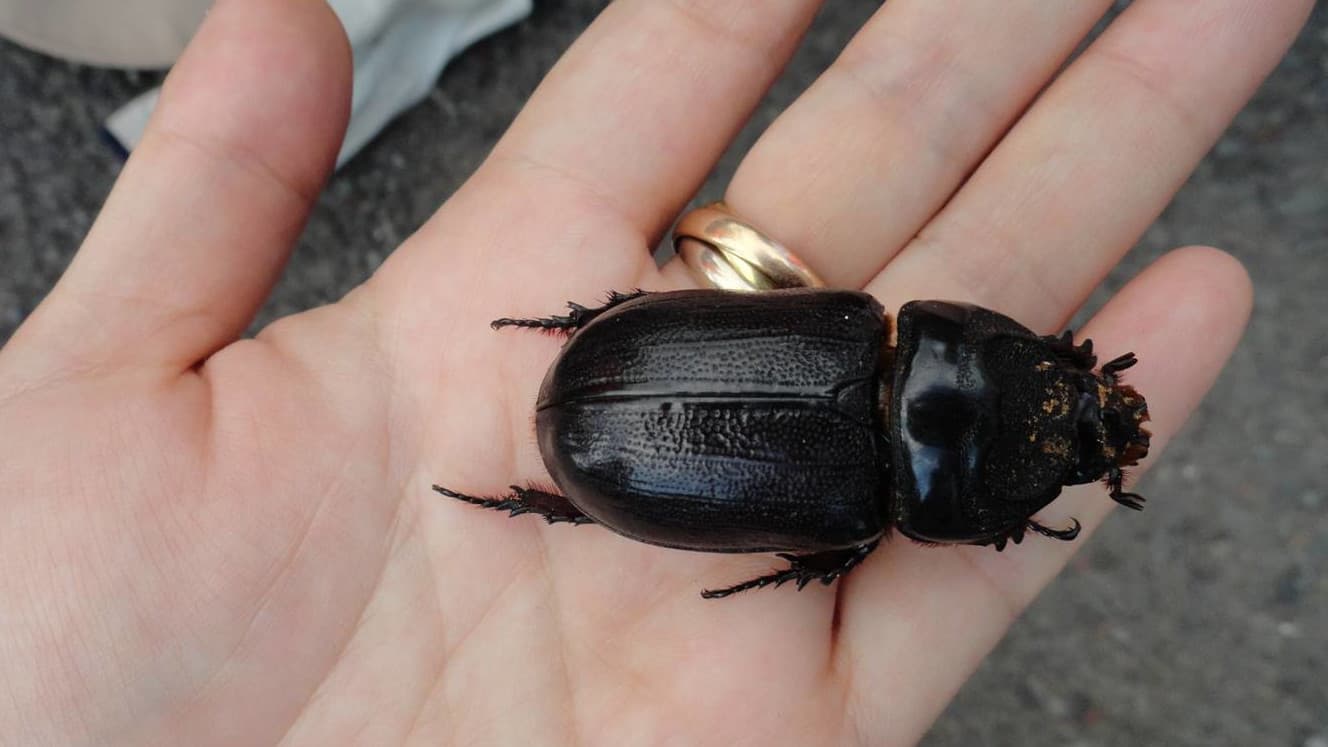
Hawai‘i County has extended a voluntary compliance order that restricts movement of coconut rhinoceros beetle (CRB) host materials within parts of West Hawai‘i through April 30, 2026, the County announced following coordination with the Hawai‘i Department of Agriculture and Biosecurity. The extension, credited to Mayor C. Kimo Alameda, PhD, comes as the state agency drafts interim CRB rules for Hawai‘i Island and follows multiple prior renewals of the original June 2025 order.
The voluntary order first went into effect in mid-2025; Dab Hawaii summarized the initial implementation as a three-month compliance period from July 1 through Sept. 30, 2025. Hawaii News Now reported an earlier extension in effect through Jan. 31, 2026, while Big Island Video News and Maui Now reported the County’s Feb. 18–21, 2026 extension through April 30, 2026. The County provided a map showing the West Hawai‘i area where CRB detections have occurred and where the movement restrictions apply.
County materials and partner agencies describe the compliance area boundaries using local roads and coastline markers. Dab Hawaii’s description of the initial compliance-area borders lists Waikoloa Road; Mamalahoa Highway (Highway 190) from Waikoloa Road to Palani Road in Kailua‑Kona; and the coastline from Palani Road back to Waikoloa Road. Big Island Video News and other outlets note the County map detailing those limits is available with the announcement.
Residents and businesses in the compliance area are asked not to transport materials that can harbor CRB. County guidance identifies specific host materials: decomposing plant material, green waste, finished compost, coconut and other palm species, and, once palms are diminished, ʻulu (breadfruit), banana, and kalo (taro). Maui Now advises inspecting host materials at least every four months, examining incoming materials before acceptance, and collecting suspected beetles for reporting. HDOA Biosecurity can be reached at 808‑643‑PEST (808‑643‑7378) and the Big Island Invasive Species Committee at 808‑933‑3340 for reports and questions.
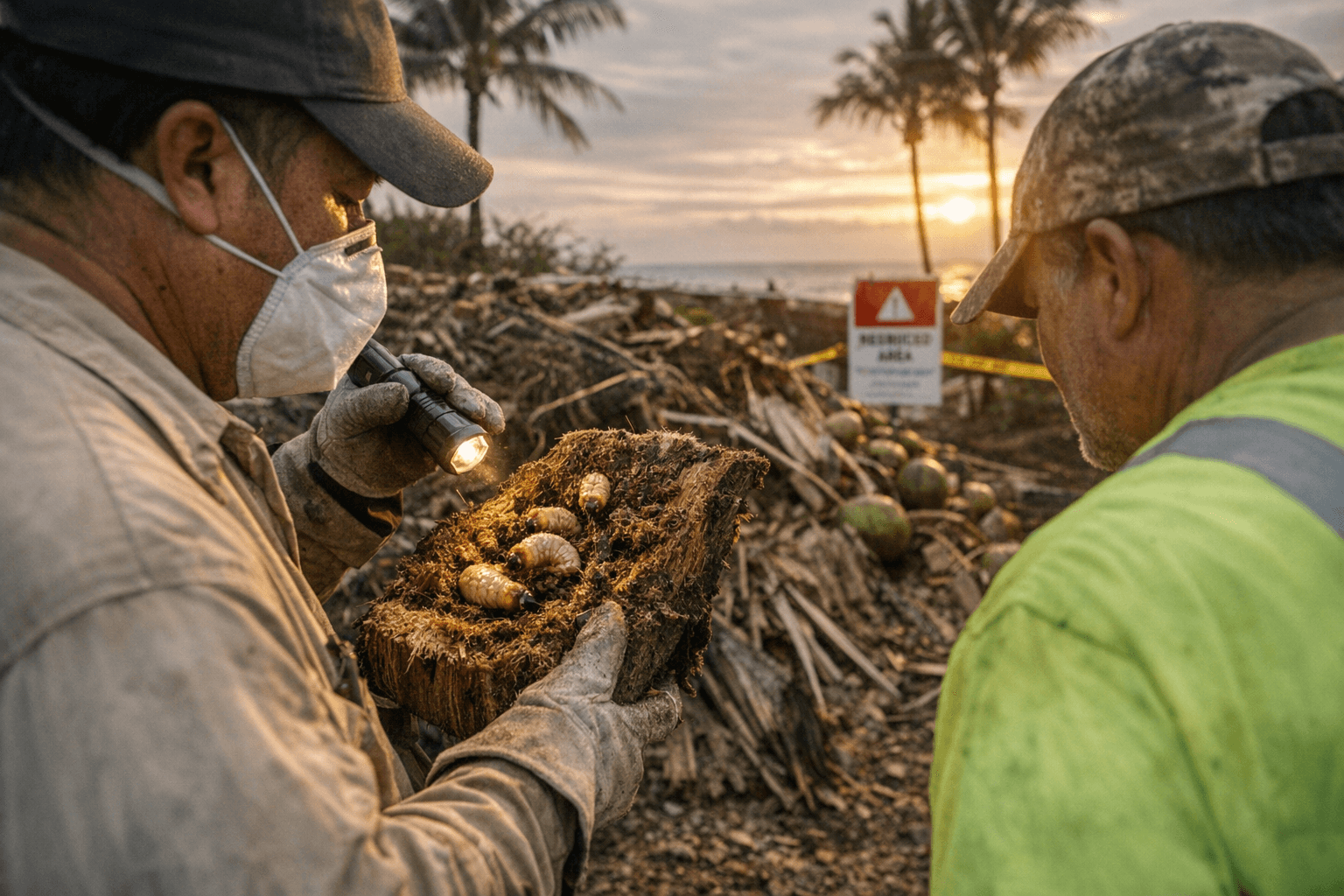
For disposal inside the compliance area, the County directs green waste to two designated facilities that heat compost to lethal temperatures for CRB larvae. Big Island Video News and County materials identify the West Hawai‘i Organics Facility at 71-1111 Queen Ka‘ahumanu Highway and the Kealakehe Transfer Station at 74-598 Hale Makai Place; those facilities heat compost piles to at least 131 degrees Fahrenheit to kill CRB larvae. For operational questions about moving items that attract CRB, Hawaii News Now lists County Economic Development Specialist Glenn Sako at 808‑961‑8811 and a CRB response line at 808‑679‑5244.
The County news release underscores the biosecurity risk: “Host materials, such as decomposing plant material, can contain CRB eggs, larvae and adults. Moving such infested materials outside the compliance area could unintentionally spread CRB far beyond its current range, complicating eradication efforts and hindering control measures.” Mayor C. Kimo Alameda added that “CRB is a destructive invasive species that already has had a huge impact in other parts of the state. By following best management practices and containing host materials, we can all do our part to stop the spread and protect our island.”
The voluntary order remains in force through April 30, 2026 while the Hawai‘i Department of Agriculture and Biosecurity prepares interim CRB rules for Hawai‘i Island, with County and state agencies continuing outreach and coordinated disposal operations at the West Hawai‘i Organics Facility and Kealakehe Transfer Station.
Know something we missed? Have a correction or additional information?
Submit a Tip

