Hawaiʻi Legislature opens amid federal budget uncertainty, prioritizes 2045 vision, wildfire recovery
Hawaiʻi's legislature opened with a focus on the 2045 vision and wildfire recovery amid uncertain federal disaster funding, signaling priorities that will affect housing, health care and local aid.
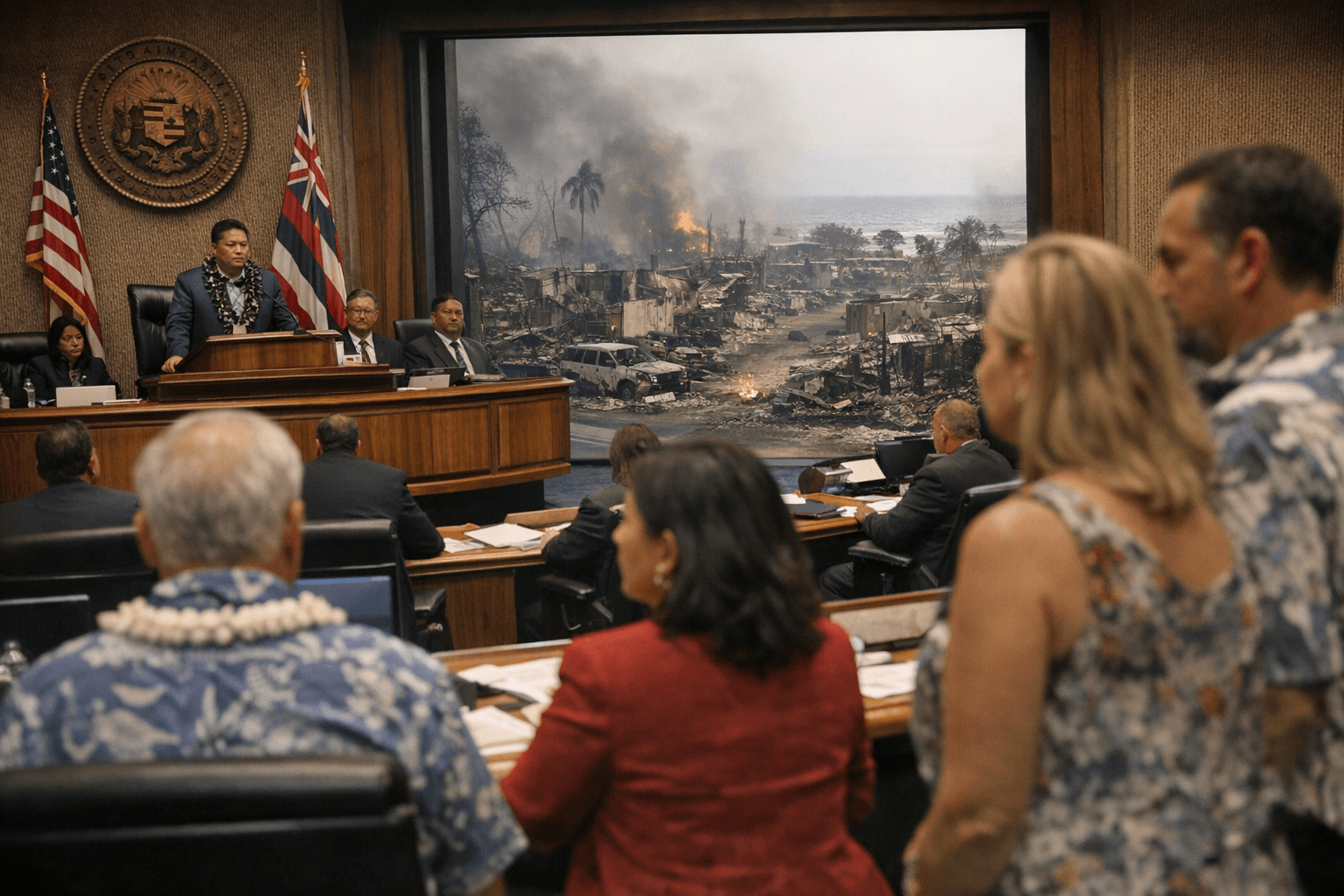
Lawmakers convened in Honolulu for the opening of the 33rd Hawaiʻi State Legislature on Jan. 21, 2026, laying out an agenda built around the "2045 vision" and continued recovery from the 2023 Maui wildfires. Leaders framed the session as one requiring humility and urgent action as uncertainty over the federal budget threatens timelines for disaster relief and other federally supported programs.
House Speaker Nadine Nakamura and Senate President Ronald Kouch used ceremonial remarks to highlight priorities including affordable housing, renewable energy and food security under the 2045 framework, while also emphasizing ongoing work on housing and health care access. The opening-day remarks referenced a recent ethics investigation, an element that lawmakers acknowledged as part of the broader context for public trust and governance as the session begins.
Federal budget uncertainty has particular resonance for residents of Hawai‘i Island. Federal funding mechanisms support recovery efforts, housing programs and infrastructure projects that many communities still rely on after the 2023 wildfires. With the federal appropriations picture unsettled, state leaders signaled concern that delays or gaps could slow rebuilding, complicate long-term housing plans and strain health care services that depend on federal matching dollars.
Hawai‘i Island lawmakers took part in interim task forces and site visits prior to the session, bringing local assessments into statewide planning. Those site visits informed calls for targeted state investment in both immediate recovery needs and resilience measures - such as expanding renewable energy to reduce dependence on imported fuel, and strengthening local food systems to improve food security in isolated or impacted communities.
The Legislature’s emphasis on 2045 frames long-term goals around affordability and sustainability, but the early focus will be on translating those goals into budgets and bills. Lawmakers must navigate appropriations, regulatory changes and program design while keeping an eye on federal decisions that could affect state matching funds and disaster assistance. For Big Island residents, that means the coming weeks will shape timelines for housing projects, access to mental and physical health services and infrastructure repairs.
As committees begin hearings and budget deliberations ramp up, local officials and community organizations are likely to press for clear commitments and timely releases of funds. Residents should monitor legislative calendars and communications from their state representatives for hearings and public comment opportunities. The session’s opening underscored a tension familiar to this island community: balancing long-range visions like 2045 with the immediate, tangible needs of recovery and rebuilding. What happens next in the budget negotiations will determine how quickly those needs are met.
This article was produced by Prism’s automated news system from verified source data, official records, and press releases, then run through automated quality and moderation checks before publishing. The system is built and supervised by the people who set the standards it runs under. Read our full AI policy.
Did this article answer your question?