Hawaii Rental Car Tax Bills Stall, Costing State Millions in Revenue
Six rental-car tax bills that could have raised $80M annually for Hawaii died in committee, with industry warning the change could instead cost the state $162M.
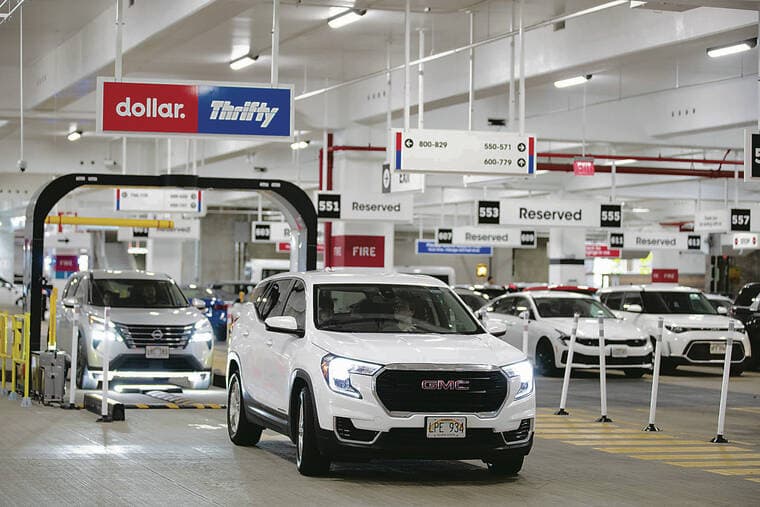
A $242 million gap in competing fiscal projections derailed Hawaii's latest push to tax the rental car industry's wholesale vehicle purchases, ending six bills in a single session and leaving the state without a new revenue source it had been counting on.
House Bill 2575, the last of the six measures to survive the Legislature's midpoint cut requiring House bills to reach the Senate, was deferred by two Senate committees following a contentious public hearing. Supporters, led by the Hawaii State Teachers Association and a national coalition that counted Uber, Lyft and Turo among its members, argued the change would generate roughly $80 million annually by closing what they called a state tax "loophole." Industry representatives put forward a radically different number: if rental companies responded by purchasing fewer vehicles each year, the state would see a $162 million decline in tax collections rather than a gain.
Daniel Chang, vice president of corporate tax at Servco Pacific Inc., one of Hawaii's largest local car dealerships, told the two Senate committees that no loophole exists. Rental car companies already pay the retail general excise tax rate each time a vehicle is rented, Chang argued, on top of a $7.50 daily state surcharge. The Tax Foundation of Hawaii reinforced that position, noting the current wholesale GET structure was deliberately established by the Legislature in 1971 on the principle that the retail rate should apply to rental revenue but not to the acquisition cost of long-lasting assets bought for lease purposes, a structure that applies equally to lessors of construction machinery and farm equipment.
Sen. Angus McKelvey, a member of the Senate Committee on Commerce and Consumer Protection, pressed witnesses on why the reform was being targeted narrowly at one industry rather than as a broader overhaul. "Wouldn't that generate way more revenue?" McKelvey asked, questioning the nexus between the bill's limited scope and its stated goal of funding education. The bill drew 76 pieces of written testimony in opposition and 56 in support before Sen. Lynn DeCoite, chair of the Senate Committee on Economic Development and Tourism, recommended deferral alongside concerns about the fiscal modeling. "I think we need to go back to the drawing board and figure out something that's comparable for everybody and to make sure that the benefits there exist," DeCoite said.

Of the six bills introduced this session, two proposed directing new revenue toward retroactive hazard pay for Hawaii public school teachers, two targeted Hawaiian homestead development through the Department of Hawaiian Home Lands, and two, including HB 2575, proposed routing funds to the state general fund. None earmarked revenue for county infrastructure, a notable absence given that rental car operations at Kona and Hilo airports generate sustained wear on Big Island roads and airport facilities with no dedicated repair funding tied to the source.
For an island where rental cars are the primary means of visitor mobility and public transit options remain limited, the policy debate has direct consequences for daily rental rates, local franchise operators and the tour and lodging businesses that depend on visitor movement. With HB 2575 now deferred, advocates face pressure to produce more credible revenue projections and potentially narrower bills before the next session, while the industry holds its existing tax structure intact.
This article was produced by Prism’s automated news system from verified source data, official records, and press releases, then run through automated quality and moderation checks before publishing. The system is built and supervised by the people who set the standards it runs under. Read our full AI policy.
Did this article answer your question?