High surf advisory issued for east-facing Big Island shores, 10-foot waves expected
10-foot waves and strong shore breaks hit east-facing Big Island shores through Thursday morning, with the highest risk from Hāmākua to Kaū.
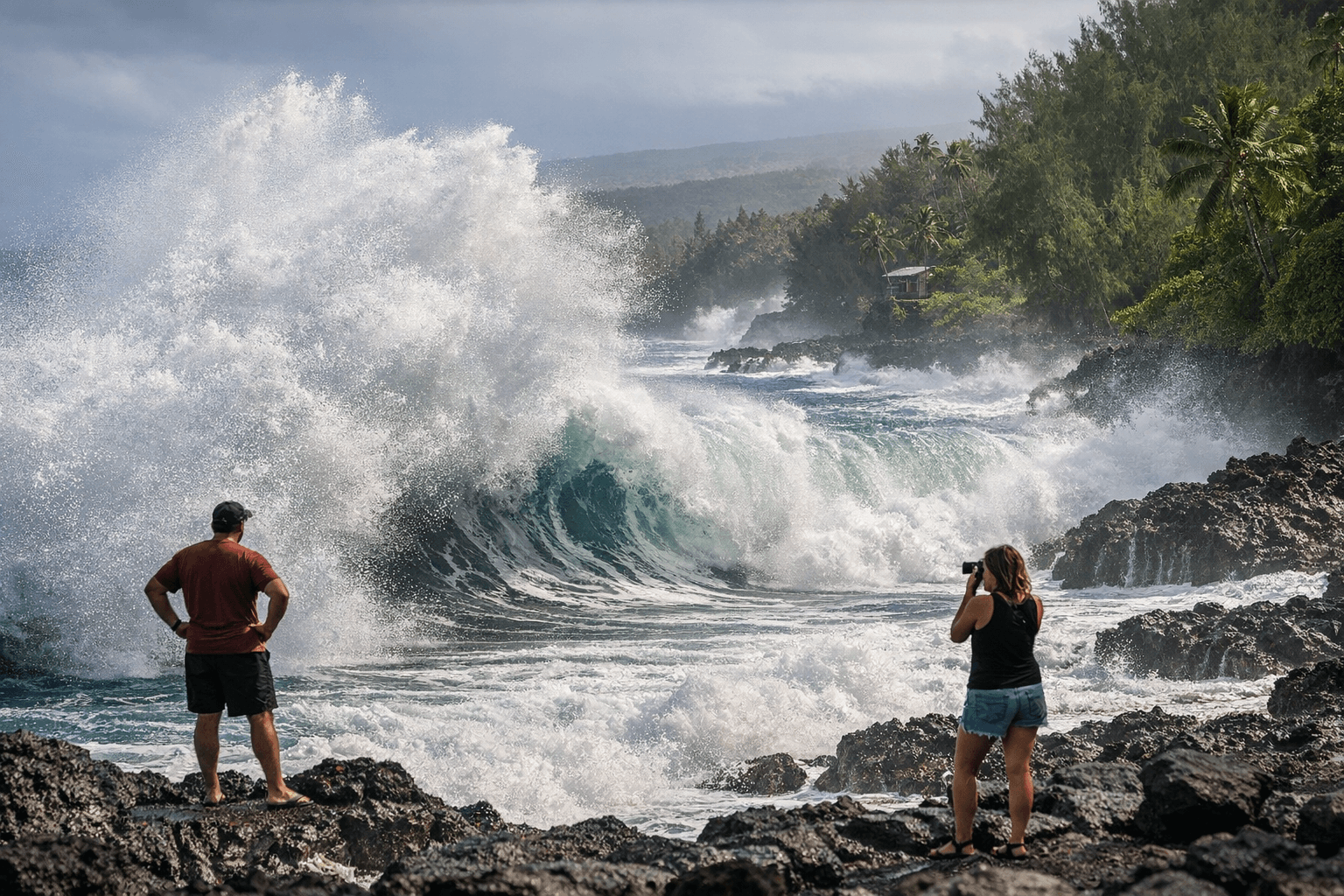
A high surf advisory put east-facing Big Island shorelines on alert for 10-foot waves, strong shore breaks and dangerous currents, with the hardest-hit stretches running from Hāmākua and North Hilo through South Hilo, Puna and Kaū. The advisory was set to expire at 6 a.m. Thursday, April 23, 2026, but the peak arrived Wednesday as the swell built.
National Weather Service Honolulu said a moderate-size, medium-period north-northeast swell was filling in Wednesday morning and was expected to peak later that day, with surf heights above advisory thresholds for east-facing shores. The surf was forecast to ease slowly through the rest of the week, and strengthening trade winds later in the week were expected to bring eastern exposures closer to seasonal averages by the weekend.
For families heading to the coast, the practical message was clear: stay out of the water on the exposed east side, especially where access is over rocks or other hazardous terrain. County shoreline guidance warned that during periods of high surf, strong currents can run along the shoreline and make the ocean unsafe for swimming. That risk mattered most in the most exposed places, where shore breaks can hit suddenly and leave little room to recover.
The swell was not expected to stay confined to Hawaii Island’s east-facing coast. NWS said the same energy could produce above-average surf on select west-facing shores along Maui and near Kua Bay on the Big Island, while small west energy from former Super Typhoon Sinlaku was expected to move through over the next couple of days. That combination kept forecasters watching both sides of the islands, even as the main advisory focused on the eastern exposures.
The warning level itself reflected the current threshold for Hawaii’s south- and east-facing shores. On August 2, 2021, the National Weather Service changed high surf criteria from 8 feet to 10 feet for those coastlines, and it measures surf by full-face height, from trough to crest. NWS Honolulu issues the advisories with county civil defense agencies and water safety organizations in Hawaii, a coordination that turns a swell forecast into a direct call for caution at the shoreline.
This article was produced by Prism’s automated news system from verified source data, official records, and press releases, then run through automated quality and moderation checks before publishing. The system is built and supervised by the people who set the standards it runs under. Read our full AI policy.
Did this article answer your question?