HVO Data Outage Hampers Kilauea Eruption Forecasting Efforts
Storms knocked key Kīlauea sensors offline for nearly two weeks, leaving scientists flying partially blind as they try to pin down when the next lava fountaining episode will erupt.
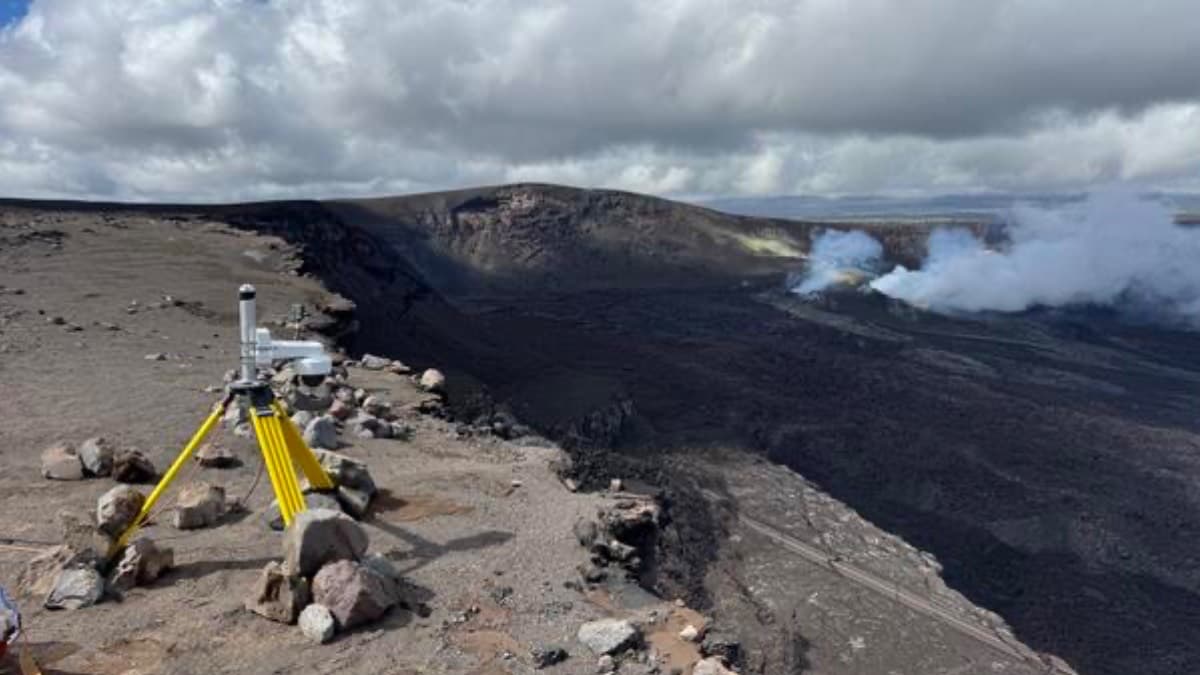
Nearly two weeks of storms battered Kīlauea's summit monitoring network, knocking out several stations and leaving the Hawaiian Volcano Observatory with a blunted ability to forecast when the next episode of lava fountaining will begin. "A data outage continues to affect HVO's monitoring network, and several summit stations, including tiltmeters UWD and SDH, are currently offline," the USGS HVO stated Tuesday. "The forecast window for the onset of episode 44 lava fountaining is April 3–13; however, the ongoing outage has impaired HVO's forecasting ability."
High winds and heavy rain triggered the cascading failures, and a power outage specifically affecting the telecommunications chain HVO uses to transmit data from monitoring stations knocked systems offline. Among the casualties: tiltmeters Uēkahuna and Sandhill, which went dark along with the V2 camera, taken offline by a power failure. The V1 camera remains damaged from episode 43. Of the three summit webcams, only V3 remained functional, providing the observatory's sole visual window into the crater.
Overnight, intermittent glow was observed at the south vent via the V3 webcam. As of the latest update, both vents were quiet and emitting gas plumes. Seismic tremor decreased overall, though tremor bursts persisted at intervals of 5 to 10 minutes, correlating with peak temperatures recorded by the F1 thermal camera at the south vent, consistent with ongoing gas-pistoning within the vents. The Halemaʻumaʻu eruption of Kīlauea remains paused.
HVO's monitoring network began gradually recovering from the power and storm-related outages by Wednesday, March 25. The Uēkahuna tiltmeter, also identified by station code UWD, was revived, but no data was recovered from the gap period, so an offset was applied using trends from other summit tiltmeters. Separately, a crew successfully replaced the V1 camera on March 24, which had been repeatedly struck by tephra during episode 43. The new V1 camera and microphone are now operating on the USGS YouTube livestream channel.
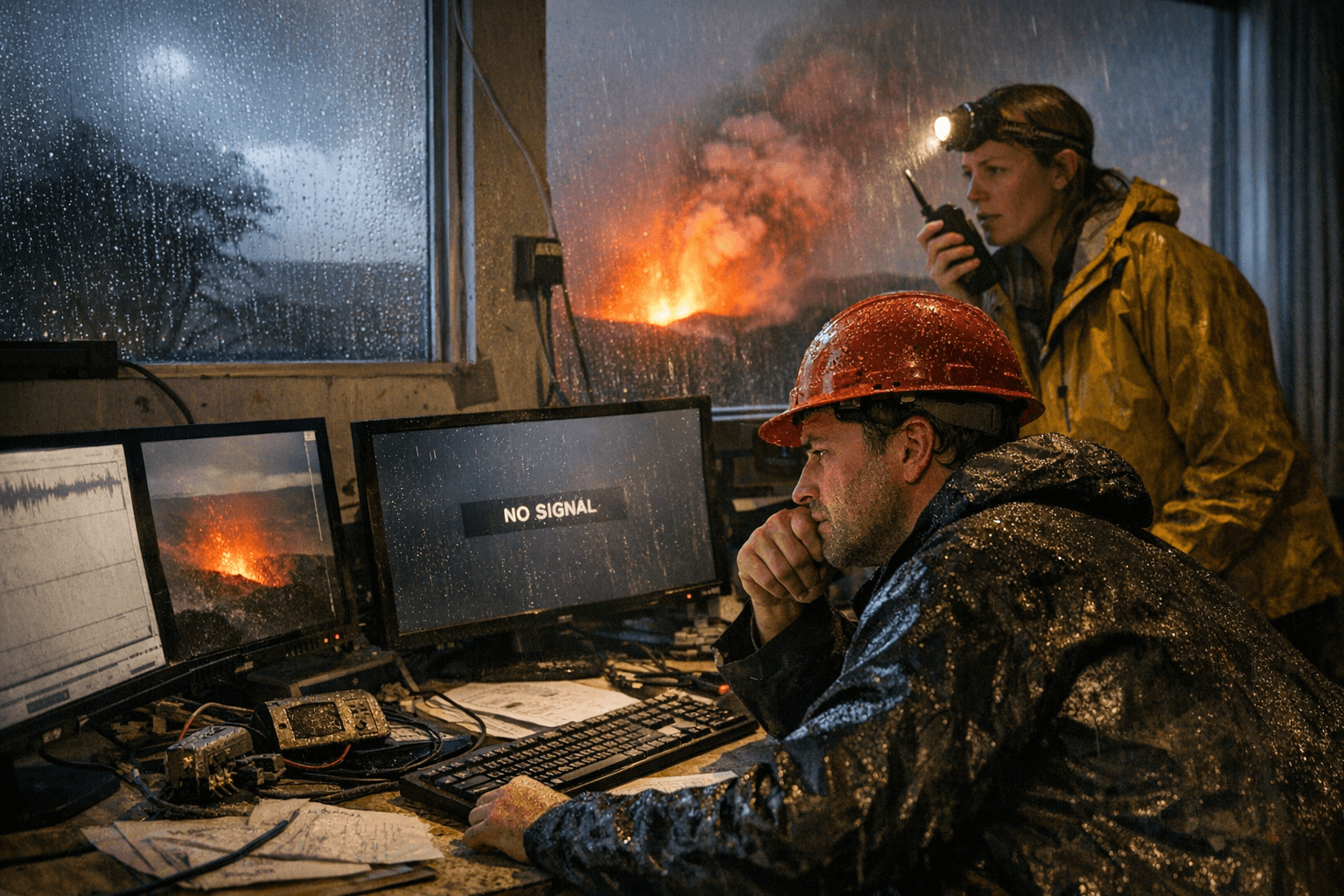
The April 3–13 forecast window for episode 44 remains preliminary, a direct result of the lack of consistent data over the past two weeks. HVO analysis notes that rapid rebound of tilt following episode 43 fountaining, continued tremor, and visible glow from the vents suggest another fountaining episode is likely, but summit inflation remains slow compared to other episodes of repose and is complicated by weather signals and data loss. Preliminary models indicate episode 44 fountains are likely to start between April 3 and April 13, but the forecast window may be pushed further back with additional data.
Episode 43 ended at 6:21 p.m. HST on March 10, after fountaining for just over nine hours from both vents and sending tephra into surrounding communities. Kīlauea has been erupting episodically since December 23, 2024, from two vents in Halemaʻumaʻu, with fountaining episodes generally lasting less than 12 hours and pauses stretching longer than two weeks.
No significant activity has been noted along Kīlauea's East Rift Zone or Southwest Rift Zone. Kīlauea remains at Volcano Alert Level WATCH with an Aviation Color Code of ORANGE. As the summit monitoring network continues to recover and data becomes more consistent, the forecast window for episode 44 should become better defined. Significant changes in activity between daily updates are posted on the Hawaiian Volcano Observatory website.
This article was produced by Prism’s automated news system from verified source data, official records, and press releases, then run through automated quality and moderation checks before publishing. The system is built and supervised by the people who set the standards it runs under. Read our full AI policy.
Did this article answer your question?