HVO, partners maintain live Kīlauea webcams that keep eruption visible
A USGS HVO geologist dried the R3cam enclosure after water accumulated, restoring a summit view as three livestream cameras keep Kīlauea’s episodic eruption visible; the volcano remains at WATCH.
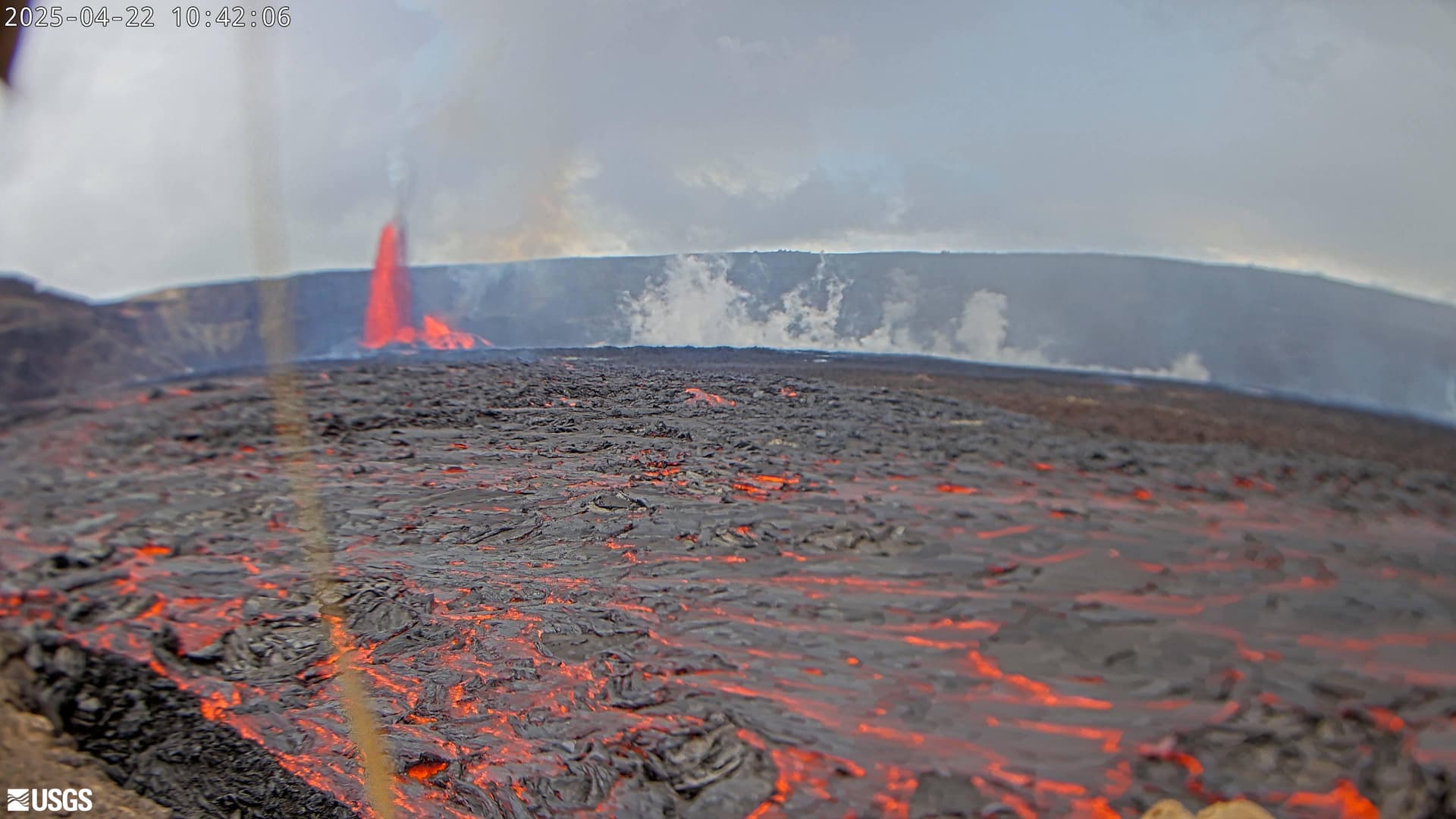
Hawaiian Volcano Observatory field staff recently cleared water from the R3cam enclosure, restoring a summit camera view that had been partially obscured by rainfall while three livestream webcams continue to broadcast Kīlauea’s ongoing activity. “Kīlauea has been erupting episodically within the summit caldera since December 23, 2024. Its USGS Volcano Alert level is WATCH,” the USGS Volcano Activity Update stated on February 19, 2026.
The USGS explains that visual monitoring remains essential and that “Most webcams used by the USGS Hawaiian Volcano Observatory (HVO) take a snapshot every few minutes to conserve bandwidth, but three webcams are currently ‘livestreaming’, meaning they transmit real-time video to the public. All three have been a vital part of monitoring the ongoing episodic lava fountains at the summit of Kīlauea.” Those three livestream feeds have become central tools for scientists and the global public to observe summit lava-fountain behavior in near real time.
The R3cam inspection provides a concrete example of routine upkeep. “A USGS Hawaiian Volcano Observatory geologist inspects the R3cam webcam enclosure, which had a small amount of water accumulation in recent months that obscured the image. This area of the volcano experiences very high rainfall. Drying out the enclosure and adding fresh desiccant should keep the camera views clear in the future,” the USGS caption noted, with the inspection photo credited to M. Patrick. Technicians removed moisture and rotated desiccant to reduce future image loss in the high-rainfall parts of the summit caldera.
Maintaining those views requires a broad field program. “This week’s Volcano Watch from the USGS Hawaiian Volcano Observatory highlights the work of field technicians who maintain more than 200 monitoring stations across Hawaii and American Samoa. From rugged lava fields and dense forests to freezing summits and humid rainforests, they face harsh conditions, wildlife, and logistical challenges to ensure scientists receive vital real-time volcanic data,” HVO wrote, as shared on social media. The same post warned that “herds of cattle or the occasional horse may also be encountered, especially in the upland forests or on ranch land. These large animals can damage equipment or block access to remote sites, and their presence must be carefully managed to avoid injury or loss of gear. Even fencing doesn’t always keep the animals out.”

HVO’s public updates and camera feeds sit atop a formal review system. Natalia Deligne, a geologist at HVO, emphasized that “A critical step we take before sharing information is the ‘scientific review process.’ The USGS review process ensures our scientific approach is sound (how we got and interpreted the data) and that we are providing information that is as accurate as possible.” Deligne also outlined that time-sensitive interpretations such as alert-level changes, status reports, and maps of magma movement may be shared promptly by authorized, trained staff.
USGS communications guidance situates Volcano Watch as an ongoing public narrative. “Keep the story going and you can keep the flow of information going…forever. That’s what a good television series is, an ongoing story, week after week, feeding you information about the characters and story,” Olson wrote in the Cascades media guide referenced by USGS staff. The agency notes that livestream cameras are popular worldwide, and “Livestream cameras are also popular at Etna (Italy), Merapi and Semeru (Indonesia), and Fuego (Guatemala), amongst other volcanoes, helping countless people around the world witness how dynamic the Earth can be.” HVO and partner technicians say they will continue field inspections, desiccant changes, and other maintenance to keep Kīlauea’s summit activity visible while the volcano remains at WATCH.
Know something we missed? Have a correction or additional information?
Submit a Tip

