Kīlauea Eruption Marks One Year, Large Lava Fountains Observed
Episode 39 of the ongoing summit eruption at Kīlauea began the night of December 23, 2025, producing dramatic lava fountains and an estimated 13 million cubic yards of lava. The event underscores continued volcanic activity confined to Halemaʻumaʻu Crater, and it matters to Big Island residents because ash and gas remain health hazards and aviation risks.
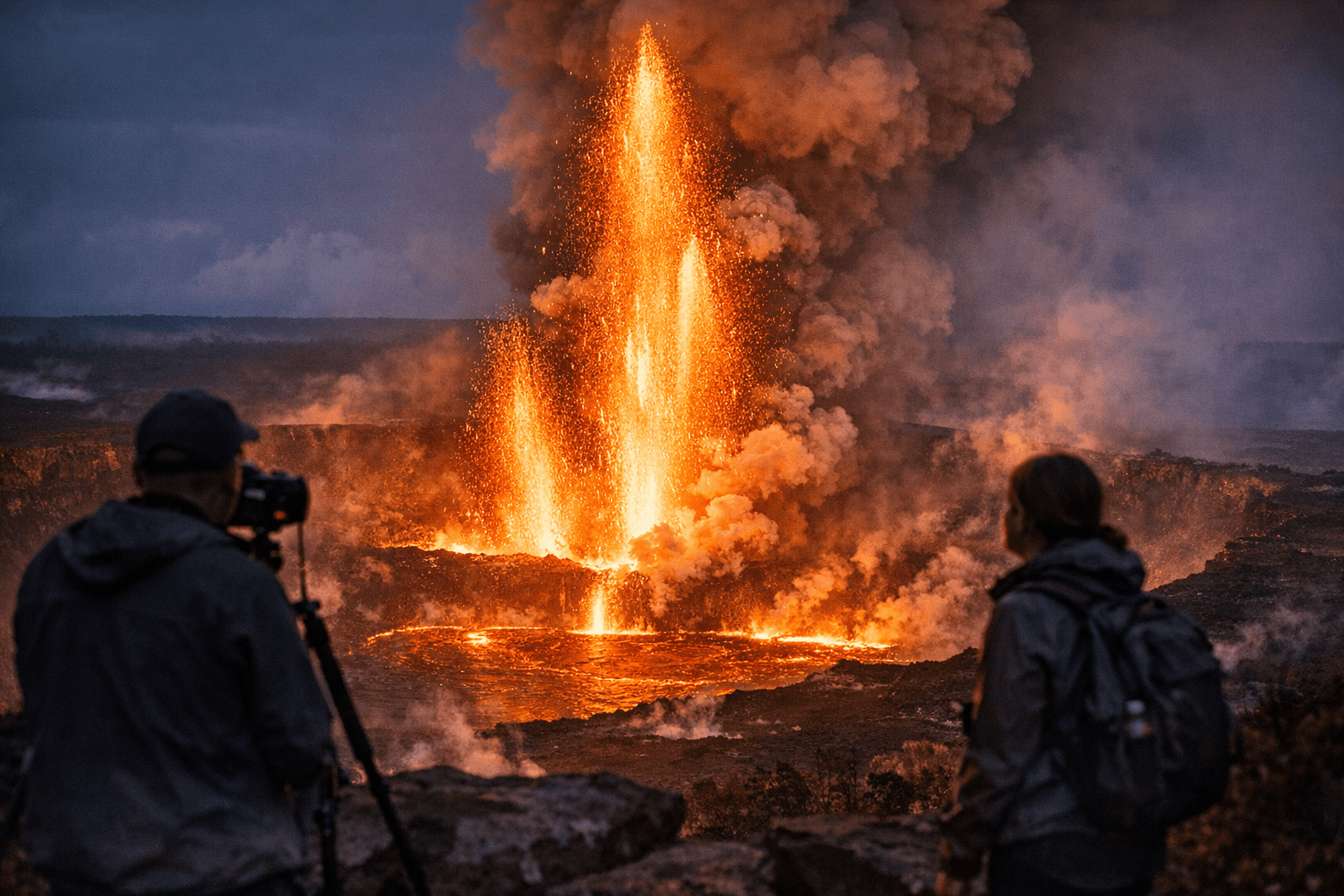
Episode 39 of the episodic eruption at Kīlauea began on the night of December 23 and lasted roughly about 5.9 to 6 hours, marking roughly one year since the current summit eruptive sequence began on December 23, 2024. Scientists with the Hawaiian Volcano Observatory and local observers reported that lava fountains from the south vent reached heights up to about 1,400 feet, while the north vent produced fountains under 1,000 feet. The episode produced an estimated 13 million cubic yards of lava.
Following the episode, volcanic gas emissions were reported to have decreased, and the Volcano Alert Level remained at WATCH with an Aviation Color Code of ORANGE. Officials emphasized that eruptive activity remained confined to Halemaʻumaʻu Crater, but they warned that ash and tephra can act as eye and respiratory irritants. Those with sensitivities were advised to take precautions during periods of ash fall.
For residents of Big Island County the immediate impacts are primarily health and air quality related. Even when activity is confined to the crater, wind can carry fine ash and volcanic gases to communities downwind, affecting outdoor work, school activities, and those with asthma or other respiratory conditions. The Aviation Color Code of ORANGE signals a continued risk to aviation operations, and pilots and flight operators should remain alert to reports of ash in the atmosphere.
Park visitors and tour operators should note that activity is concentrated within Halemaʻumaʻu Crater, and conditions can change quickly. Monitoring data continues to be collected by the Hawaiian Volcano Observatory to track eruptive behavior and gas output. As the summit sequence reaches its one year milestone, the event serves as a reminder that volcanic hazards remain active on the island, and that residents and visitors should heed guidance from scientists and public health authorities.
Know something we missed? Have a correction or additional information?
Submit a Tip

