Koinobori windsocks return to Hilo’s Banyan Drive for Children’s Day
More than 300 koinobori now line Banyan Drive, linking Hilo’s Japanese heritage to Children’s Day, Golden Week and a 1917 garden tradition.

More than 300 koinobori now ripple above Banyan Drive, turning Hilo’s Waiākea peninsula into a public marker of Japanese heritage, family hopes and neighborhood stewardship. The windsocks will remain up through Tuesday, May 5, the end of Children’s Day, as part of a tradition revived in 2017 by Friends of Liliuokalani Gardens.
The display is more than decoration. In Japanese tradition, koinobori symbolize health, strength and perseverance for children, and they are associated with Kodomo no Hi, observed on May 5 during Golden Week. In Hilo, that meaning has been tied to one of the island’s most visible waterfront corridors, where the windsocks catch the trade winds along Banyan Drive and give the peninsula a seasonal identity that is both local and unmistakably Japanese.
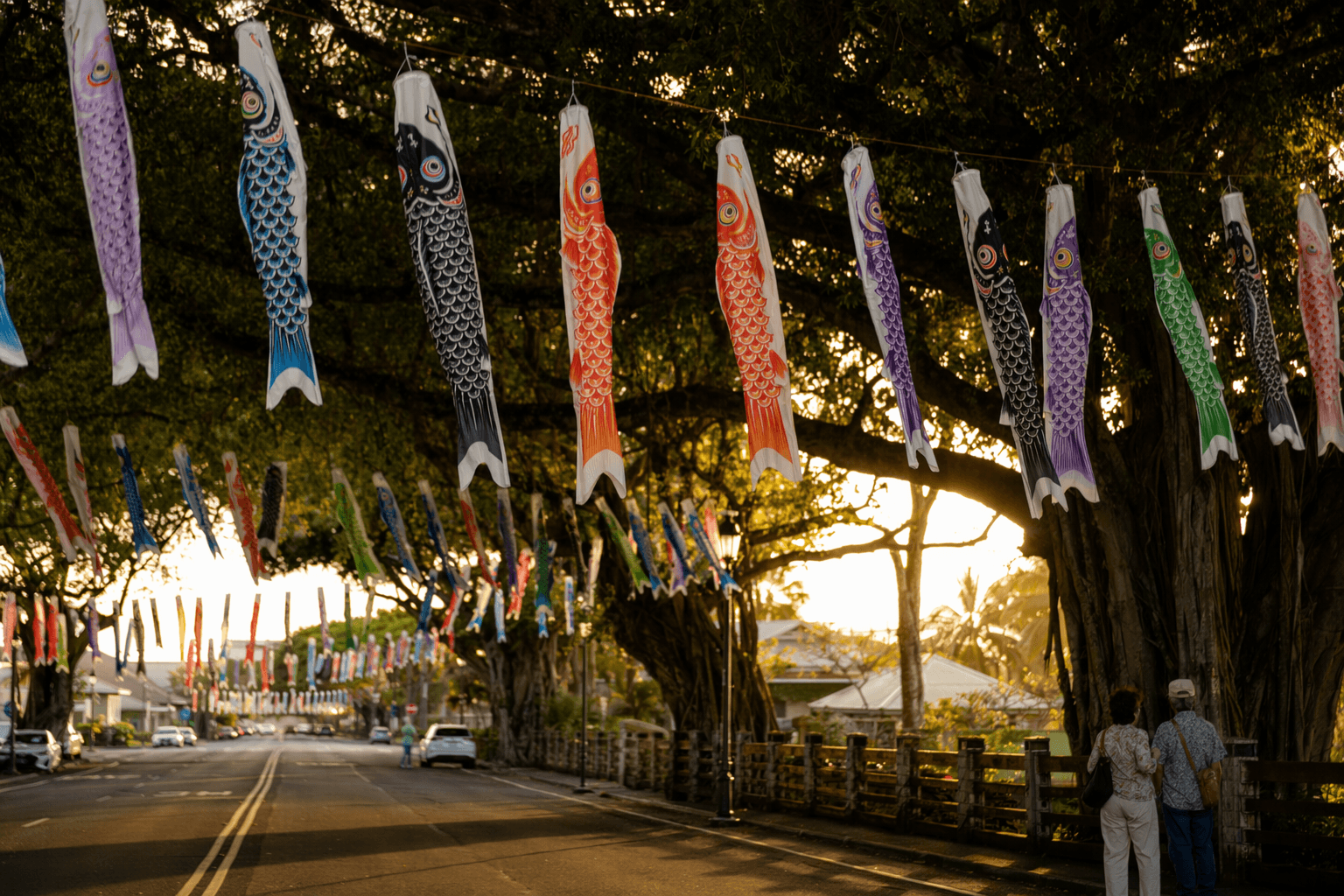
Friends of Liliuokalani Gardens said the display once concentrated on the Moku Ola bridge, where more than 30 poles were attached to the railings. It has since expanded across the peninsula, with HELCO and Ashton’s Tree Service helping install the koinobori on bamboo poles attached to streetlights. Community members also donated large sets that are displayed at the entrances to the Grand Naniloa Hotel and the Hilo Hawaiian Hotel, underscoring how the project depends on both utility support and volunteer energy.
That public partnership reflects the role Liliuokalani Gardens has played in Hilo for more than a century. The garden began in 1917 as a tribute to Hawaii’s first Japanese immigrants who worked in the island’s sugar cane fields. Friends of Liliuokalani Gardens says the park now covers 24.67 acres and includes Moku Ola, Isles, Rakuen and a meadow known as the Bicentennial Garden.
The organization also partners with the County of Hawaii Department of Parks and Recreation to maintain the park and co-sponsor events, including the Banyan Drive Art Stroll, the koinobori display and the Queen’s birthday celebration. Friends says the garden is free and open to all, a detail that helps explain why the windsocks resonate beyond a photo opportunity. They draw families, visitors and longtime residents into a shared public space where Hilo’s Japanese heritage remains visible, active and part of daily life.
This article was produced by Prism’s automated news system from verified source data, official records, and press releases, then run through automated quality and moderation checks before publishing. The system is built and supervised by the people who set the standards it runs under. Read our full AI policy.
Did this article answer your question?