Kona Palisades Greenwaste Removal Program Targets Wildfire Risk, Invasive Beetles
Storm debris in Kona Palisades is feeding wildfire risk and coconut rhinoceros beetles at once. Residents along Kaʻiminani Drive have until May 4 to get it to the curb.
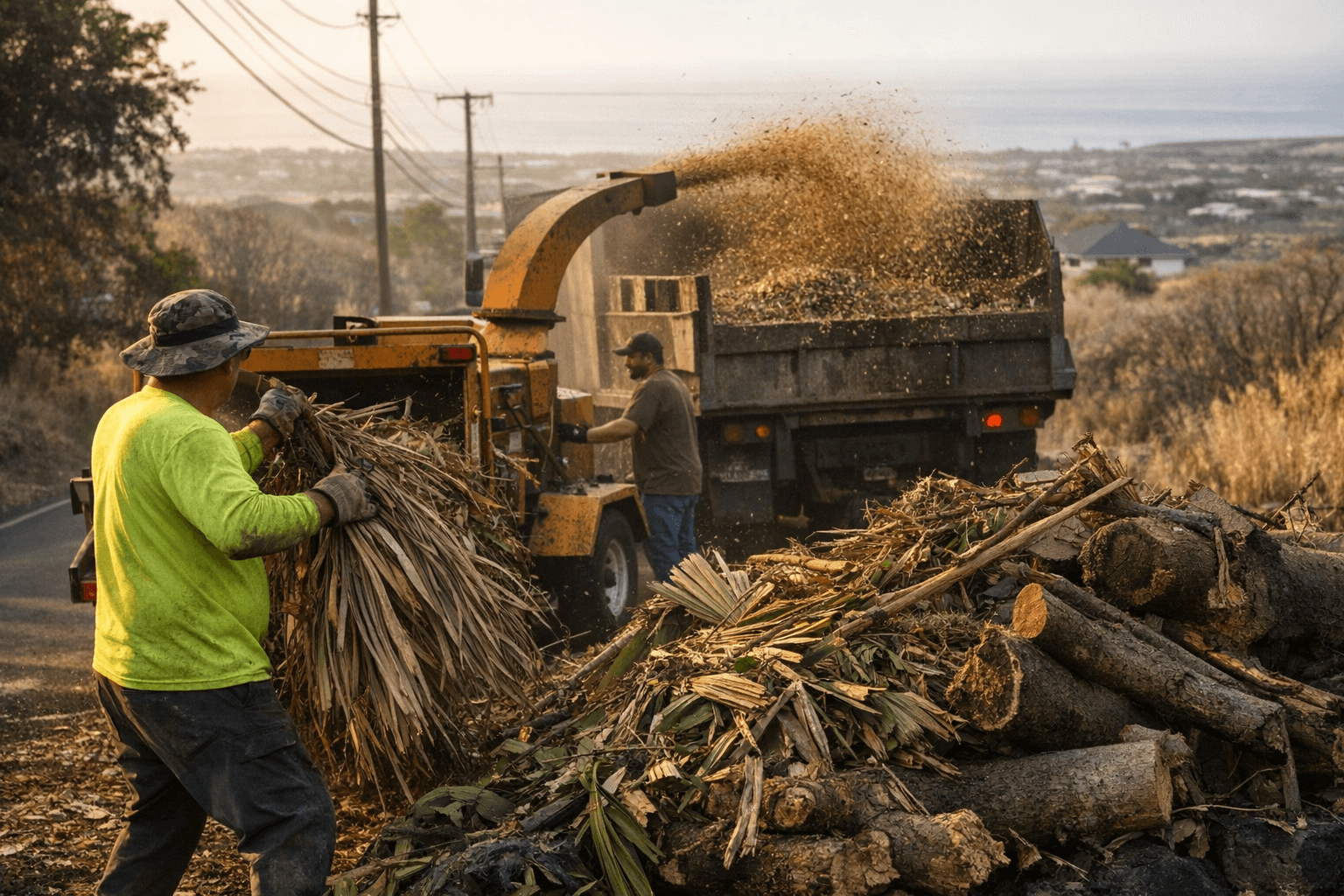
Storm debris stretching along Kaʻiminani Drive through Kona Palisades has been doing double damage since March's Kona lows deposited fresh wood and vegetation on top of pruning piles that had already been building for months. Every heap of downed timber and yard debris is both a fuel load waiting for a dry-season spark and a breeding site for the coconut rhinoceros beetle. A curbside collection program running through May 4 is now the neighborhood's clearest path to eliminating both threats at once.
"Green waste piles may seem harmless, but they create ideal conditions for coconut rhinoceros beetle to reproduce and can significantly increase fire risk near homes," said Franny Kinslow Brewer, manager of the Big Island Invasive Species Committee. "Removing these piles is one of the most effective steps residents can take to protect their properties and their community."
The Big Island Invasive Species Committee and the Hawaiʻi Wildfire Management Organization held a community information meeting April 2 at the West Hawaiʻi Civic Center, detailing logistics for the collection effort. The program targets the corridor along Kaʻiminani Drive between Māmalahoa Highway and Queen Kaʻahumanu Highway, using Hawaiʻi County and partner hauling capacity to clear material before May 4.
The CRB context along that stretch is not abstract. The beetle was first detected in Kona in March 2025, marking its initial spread beyond the Waikoloa area where it had previously been concentrated. By July 2025, adults were being trapped at Kona Airport, Keahole Agricultural Park, HCC Palamanui, HOST Park, and Kohanaiki. The March 2026 storms created a fresh crop of the decomposing woody debris the beetle favors as a breeding medium, compounding an infestation that was already expanding.
Organizers instructed residents to "get it to the curb" and to keep greenwaste strictly separate from household refuse, since contaminated loads will not be accepted for collection. Residents with large or difficult-to-move piles can contact BIISC at 808-933-3340 to request limited assistance. Volunteer days will also give neighbors an opportunity to help sort, chip, and stage material; safety guidance covers PPE, limits on single-person handling of heavy logs, and keeping children and pets away from active work areas.
Grants recently announced by DLNR and HWMO may provide funding for follow-on vegetation management projects once the initial collection closes.
BIISC and HWMO designed Kona Palisades as a pilot. If the program produces measurable reductions in fuel load and beetle habitat, organizers plan to replicate the model in other vulnerable neighborhoods across the Big Island, where similar post-storm debris accumulation has gone largely unaddressed. Residents were also urged to engage their homeowner associations and begin longer-term vegetation management planning so that the next Kona low does not simply reset the cycle.
This article was produced by Prism’s automated news system from verified source data, official records, and press releases, then run through automated quality and moderation checks before publishing. The system is built and supervised by the people who set the standards it runs under. Read our full AI policy.
Did this article answer your question?