Lawmakers back Hilo forestry institute amid shutdown threat
Hilo’s forest institute faced closure even as lawmakers moved to protect the lab that tracks wildfire risk, invasive species and watershed health across the Pacific.
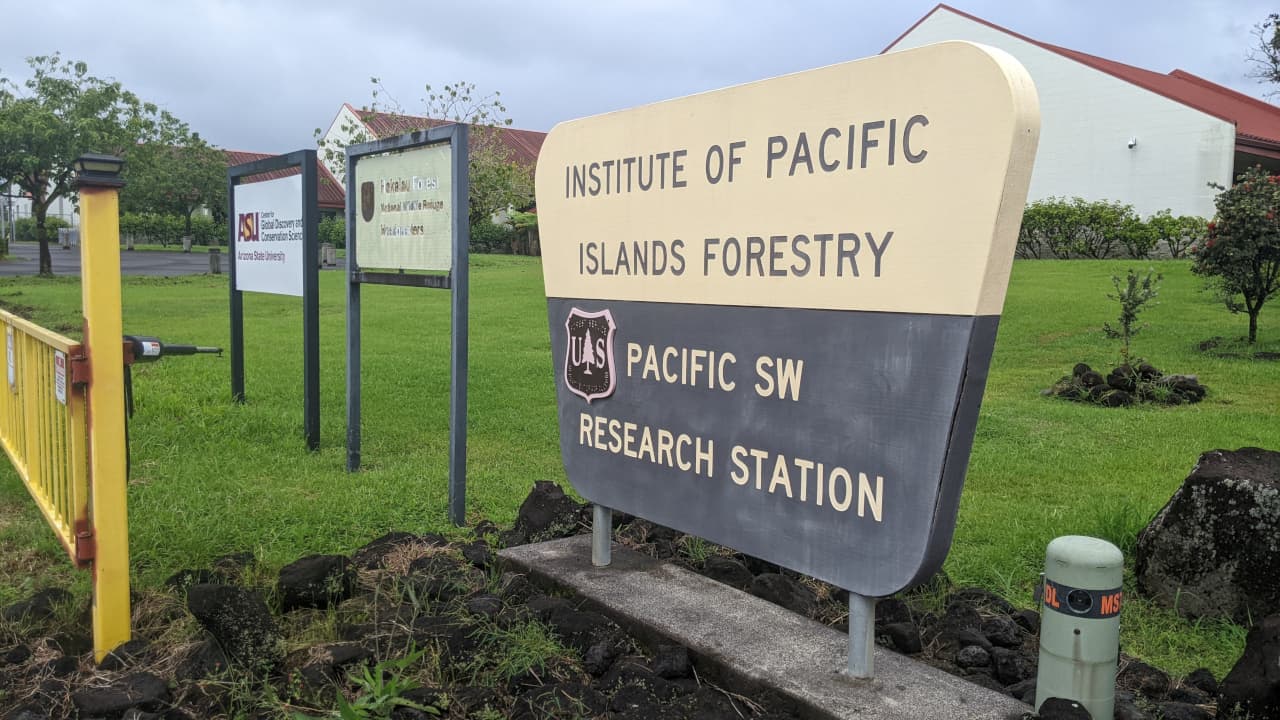
A Hilo research center that helps map wildfire danger, battle invasive species and protect native watersheds faced a shutdown threat this week as Hawaii lawmakers moved to lock in support for the U.S. Forest Service Institute of Pacific Islands Forestry.
The House resolution, H. Res. 1307, was introduced May 20 to mark the institute’s 70th anniversary and defend its continued existence as the Trump administration weighed closing most Forest Service research facilities. The measure said the institute has served the Pacific region since 1956, was later congressionally authorized in the 1990 Farm Bill, and now provides research, development, demonstration and technical assistance for Hawaii and U.S.-affiliated Pacific islands.
The stakes stretch far beyond Hilo. The resolution said the Pacific region IPIF serves is roughly equal in size to the continental United States, and named Guam, American Samoa, the Commonwealth of the Northern Mariana Islands, the Republic of Palau, the Federated States of Micronesia and the Republic of the Marshall Islands as part of its reach. Forest Service material says the institute, headquartered at 60 Nowelo Street, provides the scientific and technical information needed to restore, conserve and sustain tropical forests and wetlands of the Pacific.

The fight has sharpened around what could be lost if the institute is moved or shut down. The resolution said IPIF’s wildfire mapping, risk analysis and fire-mitigation work, developed with Forest Service Fire and Aviation Management, improved response capacity across the Pacific while reducing long-term risk and costs. On Hawaii Island, those capabilities matter in places where forest health, watersheds, wildlife habitat, invasive species and fire risk are tightly linked.
That includes Rapid Ōhia Death, one of the most destructive threats to Hawaii’s native forests. Forest Service material says the disease has killed millions of ōhia trees since it was first detected in 2012, and a fact sheet says the initial partnership response formed in 2014 with university, federal, state, local and nonprofit partners. IPIF played a central role in that work, alongside groups such as the University of Hawaii, Kamehameha Schools, The Nature Conservancy, the Hawaii Division of Forestry and Wildlife and the Big Island Invasive Species Committee.
Sen. Mazie Hirono had pressed Forest Service Chief Tom Schultz for the full Hawaii National Forest Study Report Congress required in December 2022, including analysis of eight separate areas, after a May 8 USDA letter recommended against establishing a unit of the National Forest System in Hawaii, according to her office. Hirono, Brian Schatz, Jill Tokuda, Ed Case and Delegate Kimberlyn King-Hinds backed the resolution as local and regional voices warned that relocating the Hilo headquarters and a Volcano biocontrol lab, among at least 57 Forest Service facilities targeted for closure, would leave no real backup for work that has no mainland substitute.
This article was produced by Prism’s automated news system from verified source data, official records, and press releases, then run through automated quality and moderation checks before publishing. The system is built and supervised by the people who set the standards it runs under. Read our full AI policy.
Did this article answer your question?