Magnitude 4.1 earthquake rattles Hawaiian Ocean View, smaller quakes follow
A 4.1 quake struck north-northwest of Hawaiian Ocean View at just 4.1 km deep, followed by smaller tremors, as Pāhala’s active seismic zone stayed busy.
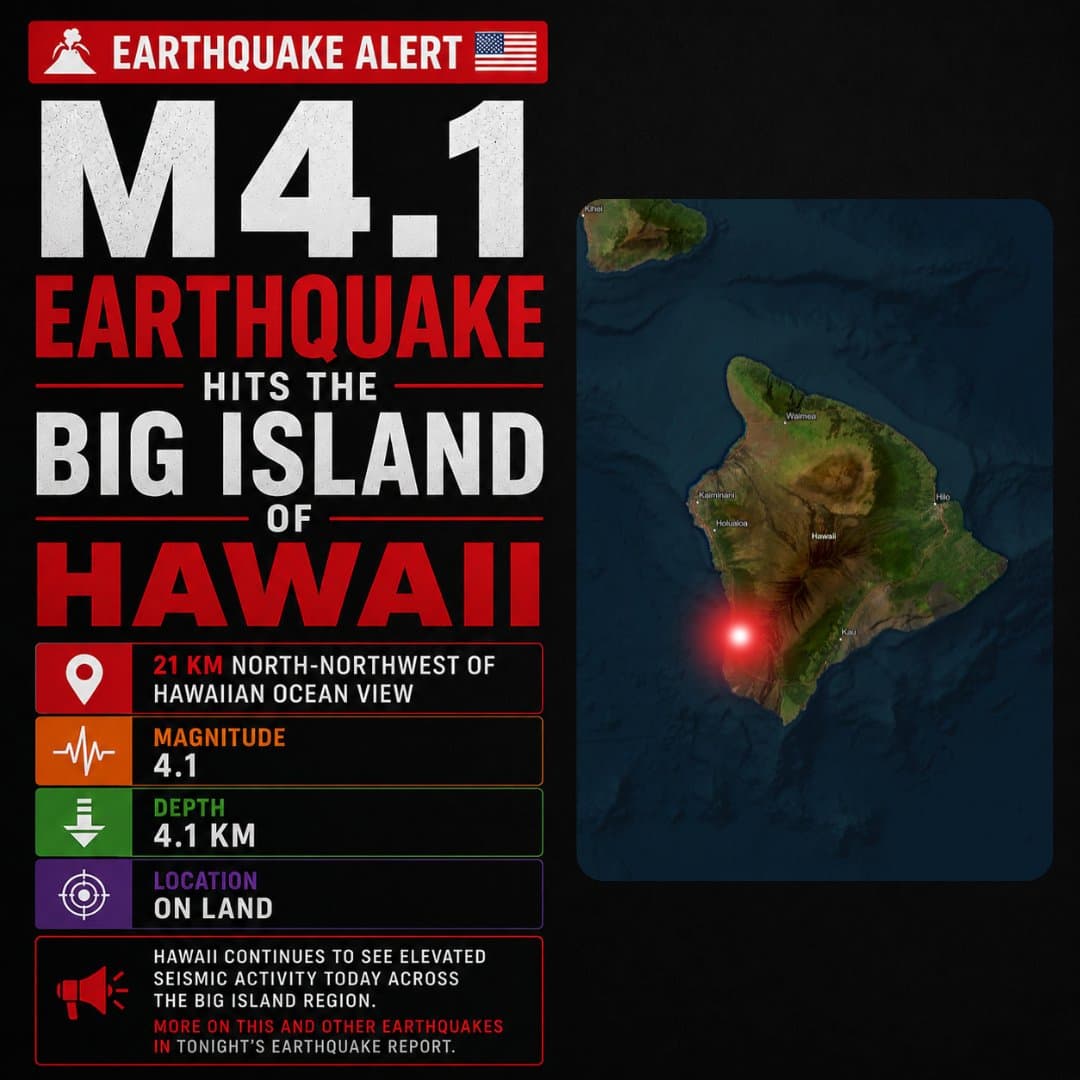
A magnitude 4.1 earthquake shook the area 21 kilometers north-northwest of Hawaiian Ocean View on June 22, and smaller quakes followed across the island, including near Pāhala. The quake was shallow, at a depth of 4.1 kilometers, which can make shaking feel stronger near the epicenter even when the event does not point to a larger emergency.
The cluster drew attention because Pāhala sits above what the U.S. Geological Survey Hawaiian Volcano Observatory calls the most seismically active area in Hawaii. Deep earthquakes there are common, often felt by residents, and in some cases felt across the entire Island of Hawaii. USGS said the Pāhala swarm zone has been especially active in recent years, with some studies linking the activity to magmatic processes tied to the deep plumbing of Kīlauea and Mauna Loa.
The June 22 shaking came just days after another notable event in the same region. On June 17, USGS reported a magnitude 4.5 earthquake 17 kilometers southeast of Pāhala at a depth of 33 kilometers below sea level, underscoring the continuing pattern of seismic unrest in and around the Pāhala zone.

County officials have been urging residents and businesses to report earthquake damage so Hawaii County can prioritize resources and determine whether state or federal disaster assistance may be needed. That push has remained especially relevant after the May 22 magnitude 6.0 South Kona earthquake, when the County of Hawaii said its Civil Defense Agency received about 207 damage reports, many concentrated in Kaū, North Kona and South Kona.
That larger quake also caused debris and rockslides along Highway 11 between Captain Cook and Ocean View, disrupting travel and reminding many Big Island households how quickly the ground can turn dangerous. By comparison, a magnitude 4.1 event and its smaller follow-on quakes are far less likely to cause major damage, but the shallow depth means they can still be felt sharply in communities nearest the source.

For residents near Hawaiian Ocean View, Pāhala and surrounding areas, the key takeaway is preparedness, not alarm. Repeated quakes in this part of the island are consistent with a known active seismic zone, but a burst of smaller shaking only becomes more concerning if it is paired with damage, widening impacts or a clear change in the pattern of activity. For now, the county’s message remains the same: check for damage, report it, and be ready for more shaking in one of Hawaii Island’s most closely watched earthquake corridors.
This article was produced by Prism’s automated news system from verified source data, official records, and press releases, then run through automated quality and moderation checks before publishing. The system is built and supervised by the people who set the standards it runs under. Read our full AI policy.
Did this article answer your question?