Mayor Alameda Declares Emergency as Second Kona Low Threatens Saturated Big Island
Ground already soaked by 15+ inches of rain in some Kona areas, Mayor Alameda declared a second emergency March 20 as another Kona low threatened to push saturated Big Island soil past its breaking point.
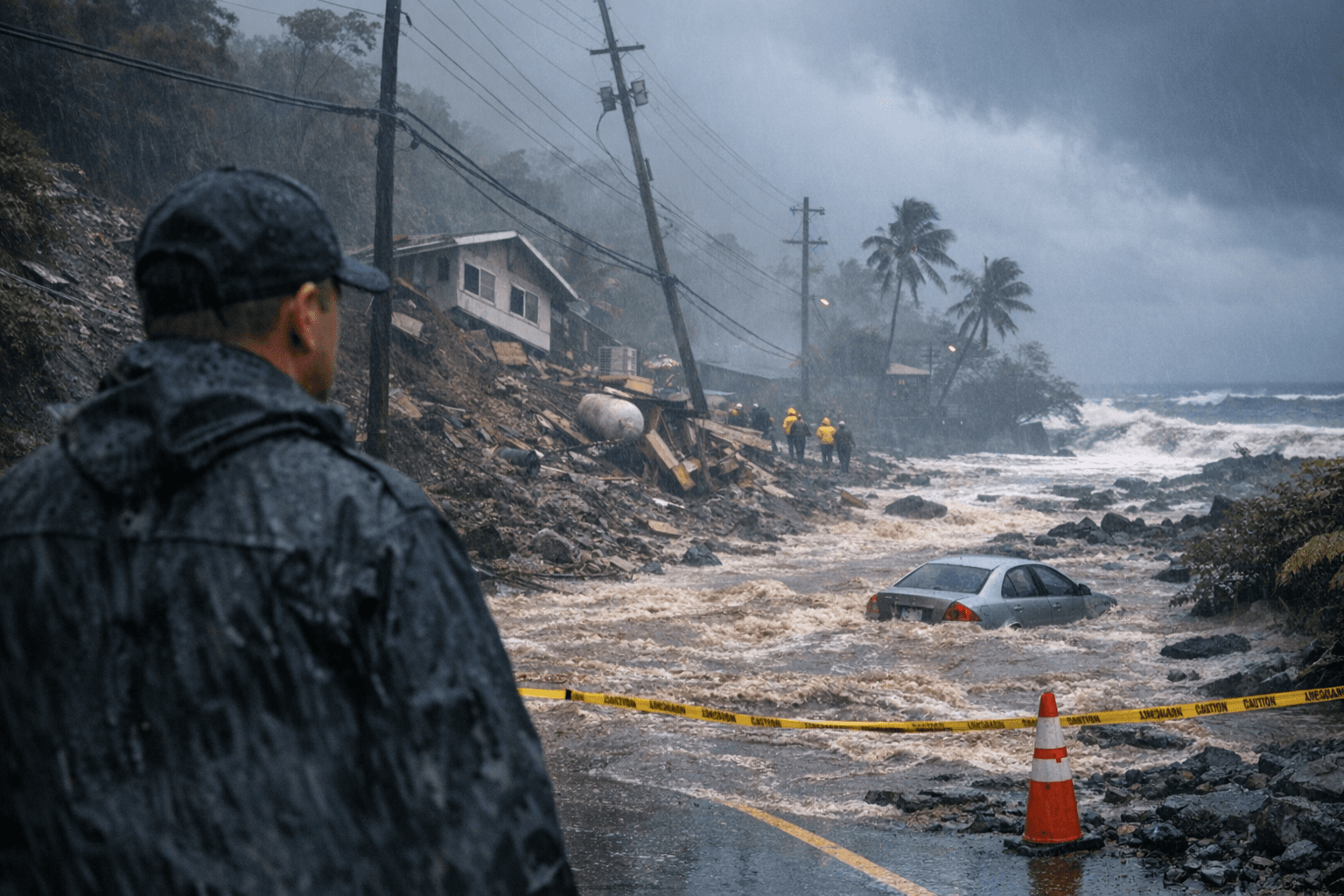
With emergency crews still clearing boulders and downed trees from every district on Hawaiʻi Island, Mayor C. Kimo Alameda declared a second local state of emergency March 20, warning that another Kona low bearing down on already-saturated ground posed what his proclamation called "an imminent danger or threat of an emergency or disaster to the County of Hawaiʻi."
The declaration, posted at 2:00 p.m. and invoking authority under HRS § 127A-14(b), CCH § 13-23, and HCC § 7-1-7(a), came just eight days after Alameda issued his first Kona low emergency proclamation on March 12. As of 4:00 p.m. on March 12, the National Weather Service had issued a flood watch, a high wind watch for lower elevations, and a high wind warning for the County of Hawaiʻi in connection with that first storm. The damage it left behind set the stage for the second declaration.
Some of the most significant damage from the first Kona low was on the Kona side, with severe flooding in Nāʻālehu and Waiōhinu and wind damage in Puna that caused power outages. Preliminary five-day precipitation reports through March 15 showed Kahuku Ranch in the Kaʻū District recorded 19.44 inches of rain, Kealakekua in South Kona recorded 11.11 inches, and Kaloko-Honokōhau in North Kona recorded 7.77 inches.
The March 20 proclamation cited that accumulated damage directly. Alameda had said days earlier: "We just took a big hit, especially on the south side, the west side, and Kaʻū. The west side, it's so saturated. It's gonna be a concern if this new system takes shape into a larger system."
The county proclamation warned that soil, waterways, drainage systems, and flood-prone areas across Hawaiʻi Island had "a substantially diminished capacity to absorb or disperse additional rainfall, which significantly increases the risk of flash flooding, landslides, debris flows, and overflowing streams from any subsequent rainfall event." The concern was not hypothetical. Alameda had warned ahead of the second system: "We have loose debris still, very saturated. It still could be a possibility for landslides."
Emergency officials had been working nonstop for the past week responding to and assessing damage from the previous Kona low when word of the approaching second system arrived. Alameda told his crews: "I just told everybody, please go get some rest. We may be at it again. We're hoping not, but we've got to be prepared."
Governor Josh Green, whose office had issued its own statewide emergency proclamation on March 9 in advance of the first storm, backed the county action. "Our priority is keeping the people of Hawaiʻi safe," Governor Green said. "By issuing this emergency proclamation now, we are ensuring that state and county agencies have the resources and flexibility needed to respond quickly to flooding, severe weather and any impacts this storm may bring." The Hawaiʻi Emergency Management Agency coordinated closely with county emergency management offices, the National Weather Service, and state agencies to monitor conditions and stage response resources.
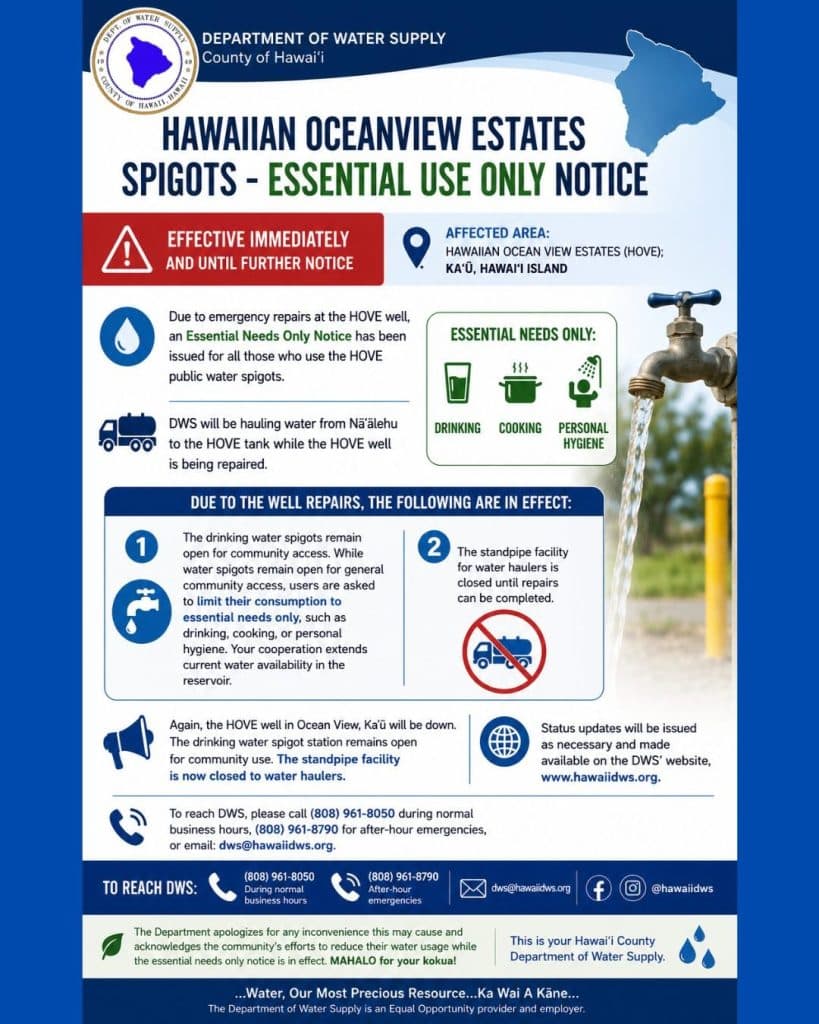
The second Kona low ultimately brought as much as 32 inches of rainfall to parts of the islands by Saturday morning. On the Big Island, Highway 11 became what witnesses described as "a raging river," cutting off the communities of Pāhala and Nāʻālehu, and residents in Kaʻū reported the worst flooding in 20 years. Konawaena High School, Konawaena Middle School, and Ke Kula ʻO ʻEhunuikaimalino remained closed to allow for cleanup and repair work.
Governor Green formally requested a presidential major disaster declaration and sought a federal cost share of up to 90 percent as the scope of damage across the state sharpened. The state suffered an estimated $1 billion in damages, according to Governor Green. For Hawaiʻi Island, still tallying losses from two storms in less than two weeks, the full recovery is only beginning.
This article was produced by Prism’s automated news system from verified source data, official records, and press releases, then run through automated quality and moderation checks before publishing. The system is built and supervised by the people who set the standards it runs under. Read our full AI policy.
Did this article answer your question?