Parker Ranch history reveals Waimea roots of Hawaii's paniolo culture
Parker Ranch still shapes Waimea’s economy and civic life through land, jobs, and trust giving, while its paniolo legacy remains a living force.
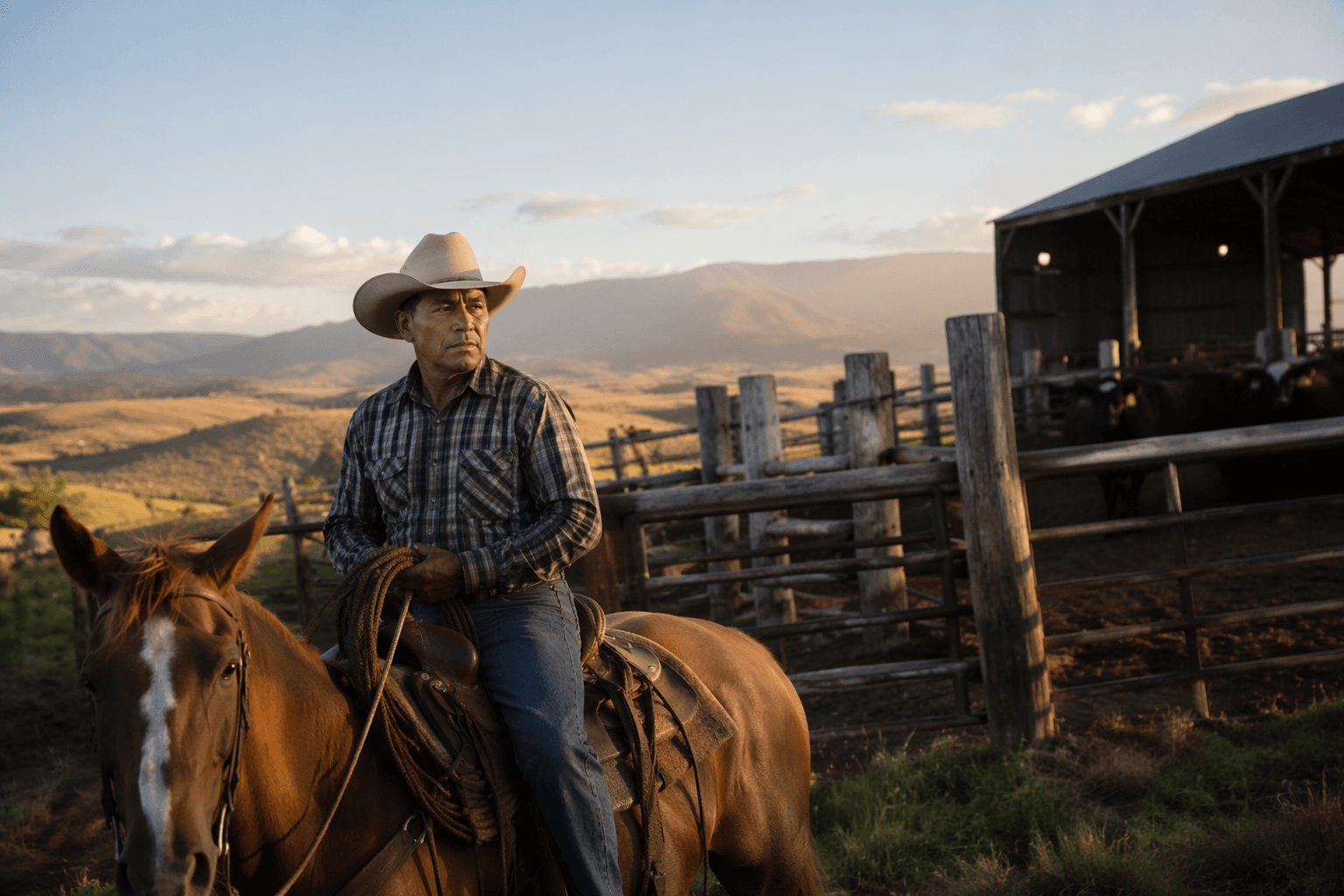
Parker Ranch is not a museum piece in Waimea. It still sits on 130,000 acres of volcanic grassland on the slopes of Mauna Kea and the Kohala mountains, and the way it manages that land continues to shape jobs, land stewardship, tourism pressure, and the local argument over who gets to define Hawaii Island heritage.
The ranch’s history reaches back to the first cattle on the islands and the first Hawaiian cowboys on Hawaii Island. Parker Ranch marks the story’s beginning in 1793, when Captain George Vancouver gave King Kamehameha I seven head of cattle. The National Park Service tells a closely related version, saying six cows and a bull arrived that year and were placed under kapu so the herd could grow. Either way, the result was the same: cattle took root in Hawaii, and Waimea became one of the places where that new ranching world would matter most.
John Palmer Parker arrived at Kawaihae in 1809, married Kipikane in 1817, and received royal permission in 1819 to hunt the wild cattle that had multiplied across the island. Parker Ranch dates its formal founding to 1847, when Parker purchased two acres at Mānā for $10. University of Hawaii Press describes Parker Ranch as one of the United States’ largest working ranches and one of its oldest and most historic, and Waimea has been home to the ranch for 175 storied years.
How Waimea became paniolo country
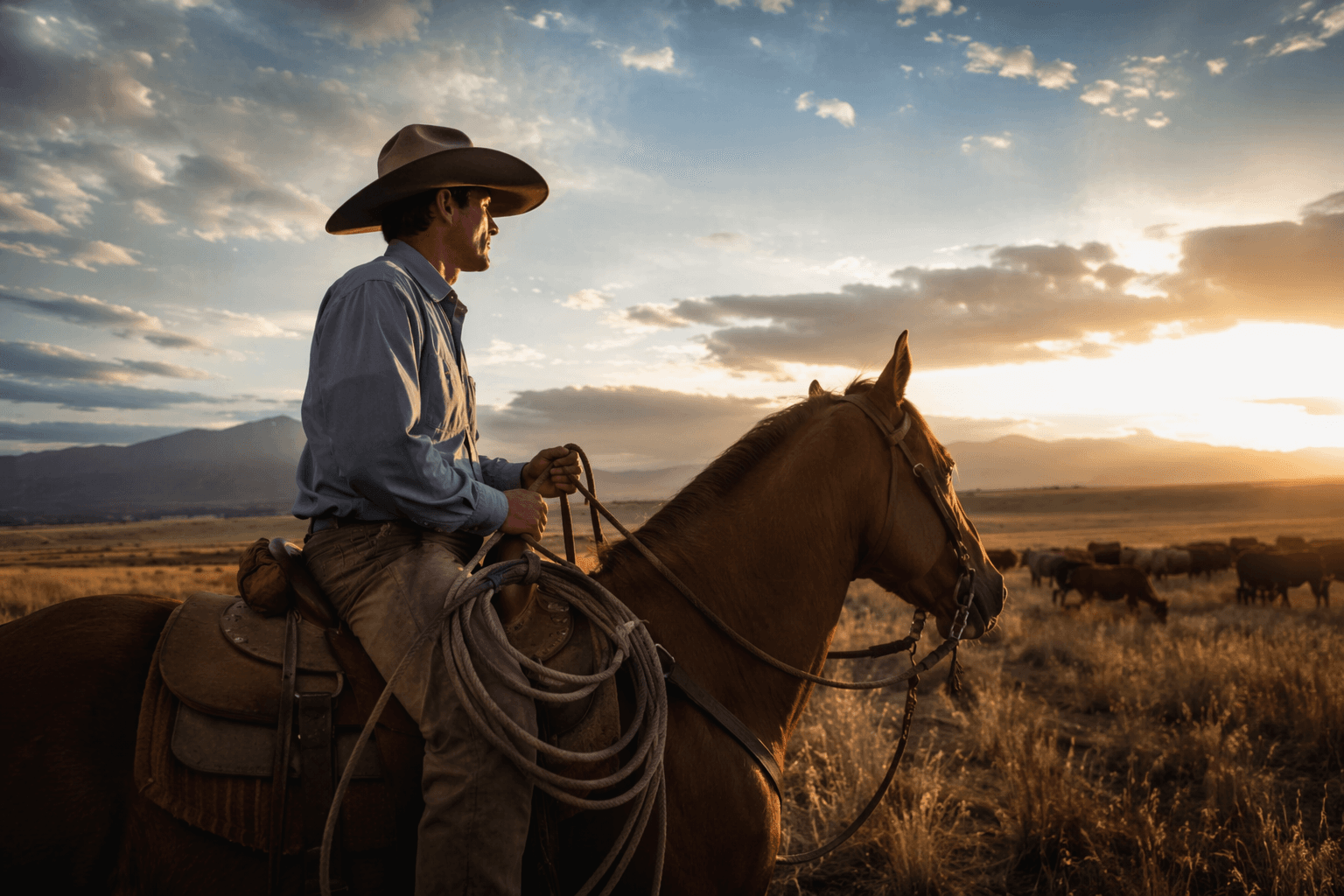
Paniolo culture on Hawaii Island developed from more than imported cattle. University of Hawaii Press points to the Hispanic vaquero roots of ranching in Hawaii, a reminder that the cowboy identity here was shaped by ocean crossings, not just by the mainland West. The National Park Service also says Hawaii Island paniolo were wrangling longhorn cattle before the mythology of the American cowboy was popularized on the mainland.
That matters in Waimea because the ranch story is also a place story. A University of Hawaii study describes Waimea Kālana as a traditional land unit that covered much of modern South Kohala, which helps explain why Parker Ranch has never been just a private business in the local imagination. It sits on a landscape with deep historical use, and its scale has long influenced how the town grew around it.
The names that built the legend
Parker Ranch’s own history highlights the figures who turned ranching into a defining local craft. A.W. Carter became trustee and manager in 1899, helping guide the ranch through a period when it was consolidating both land and influence. In 1908, Waimea paniolo Ikua Purdy, Jack Low, and Archie Kaaua traveled to Cheyenne, Wyoming, and came away with a triumph that still anchors local pride.
The National Park Service treats that Cheyenne appearance as a defining moment in paniolo history. For Hawaii Island, it was proof that Waimea cowboys were not a side note to Western ranching culture. They were part of its competitive edge, and their success helped cement the paniolo as a local identity with national reach.
A ranch that still governs local life
Parker Ranch says it remains home of the paniolo and says its purpose includes cultivating value in and around Waimea while preserving its heritage and community role. That mission is not abstract. In a community where land is scarce and development pressure is real, a private landholder of this size helps determine where open space remains, how much ranch land stays intact, and what kind of economic activity can coexist with a rural town center.
The ranch also ties its identity to stewardship rather than nostalgia. Its sustainability work focuses on energy, water, land management, and food production, with economic development folded into the same framework. That matters in Waimea because land use is not an archival question here. It affects ranch jobs, local suppliers, grazing leases, traffic, housing pressure, and the balance between working agriculture and visitor interest in paniolo culture.
Why the trust still matters to Waimea
Richard Smart made sure Parker Ranch’s influence would not end with cattle. Parker Ranch says he established the Parker Ranch Foundation Trust to support the betterment of the Waimea community, with a strong focus on healthcare, education, and charitable giving. The ranch identifies support for Parker School, Hawaii Preparatory Academy, the Hawaii Community Foundation’s Richard Smart Fund, and Queen’s North Hawaii Community Hospital.
That trust structure gives the ranch a civic role that extends beyond its gates. It links ranch land and ranch wealth to the institutions that families in Waimea and nearby Kohala rely on for schooling and care. Smart left the ranch in trust when he died in 1992 for those same community purposes, making the trust part of the region’s long-term infrastructure, not just an endowment attached to a famous name.
Parker Ranch also dedicated 24 acres for a district park. Hawaii County records show ground was broken for the 24-acre Waimea District Park in November 2015. Hawaii County Parks & Recreation lists Waimea Park as a district park with a community center, sports fields, a playground, and other amenities, showing how ranch land and county civic planning still overlap in the middle of town.
The scale of the ranch, past and present
The ranch’s land history reaches far beyond Waimea. The National Park Service says Parker Ranch acquired Kahuku in 1912, when it totaled 159,000 acres, for $100,000. Kahuku later became part of Hawaii Volcanoes National Park in 2003, and the park service now describes it as a 116,000-acre landscape.
That arc says something important about Hawaii Island’s changing land economy. Ranch acreage has not simply disappeared; it has been sold, conserved, repurposed, or absorbed into public land management. For residents, that means Parker Ranch is part of a broader story about how large private holdings shape the island before and after development, tourism, and conservation pressures arrive.
What the paniolo story means now
In Waimea, the paniolo story is not only about historic saddle leather and rodeo trophies. It is about who controls land, who benefits from its use, and how a ranch with deep roots can still anchor a modern town. Parker Ranch’s history ties together cattle imported by royal gift, a Hawaiian partnership through Kipikane, vaquero techniques, a famous Cheyenne victory, and a trust that still funds schools and hospital care.
That is why Parker Ranch remains one of the most consequential institutions on Hawaii Island. Its legacy is visible in open pasture, in community giving, in county park land, and in the way Waimea still sees itself. The ranch is not just part of the past. It is one of the structures that continues to shape the present.
This article was produced by Prism’s automated news system from verified source data, official records, and press releases, then run through automated quality and moderation checks before publishing. The system is built and supervised by the people who set the standards it runs under. Read our full AI policy.
Did this article answer your question?