Police warn Big Island residents about fake court text scam
A fake Hawaii District Court text is pressuring Big Island drivers with threats of fines and suspension, and police say anyone who clicked should change passwords now.
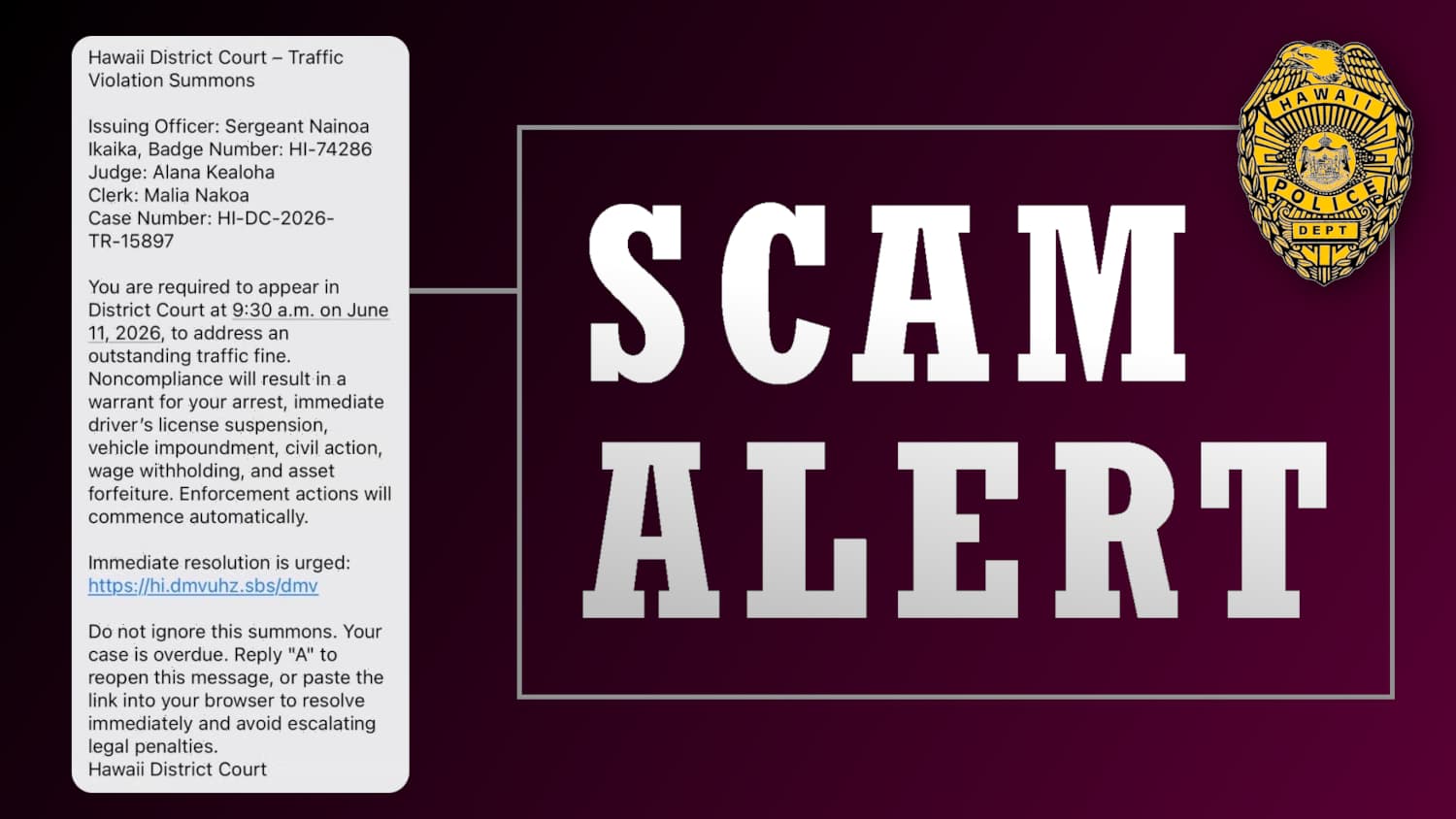
A new court-summons text scam is circulating on the Big Island, and Hawaii Police Department is warning residents not to trust messages that claim an outstanding traffic fine must be paid immediately. The fake texts impersonate Hawaii District Court officials, threaten court appearances and penalties, and are designed to push people into clicking before they stop to verify the notice.
The scam is effective because it borrows the language people expect to hear from the courts and from traffic enforcement. In the version flagged by police, the message tries to sound official enough to make a driver think a license suspension, registration problem, or added fees are just around the corner. That urgency matters: many people will act fast when a text suggests a legal problem, especially one tied to a moving violation or missed payment.

State agencies have spent the spring warning that those claims are false. The Hawaii State Judiciary said on March 26 that it does not call, email, or text people to demand payment or personal information for court-related matters, and that official notices are generally sent by U.S. mail unless a person first contacts the Judiciary with a specific question. The Judiciary also said people can verify traffic citations through eCourt Kōkua, its public case look-up system. Hawaii Department of Transportation separately warned on March 11 and again on March 17 that traffic citations are never sent by text message, there is no “Hawaii Department of Motor Vehicles,” and there are no toll roads in Hawaii.
The Federal Trade Commission said on April 14 that it had seen a spike in reports of the traffic-violation text scam in the prior month. The agency described messages that can include a QR code, a fake case number, a fake hearing date and time, and threats of default judgments or enforcement actions if the recipient does not pay right away. That kind of structure can make the text feel credible even when the details are fabricated.
Police said anyone who entered information on a fake site should change passwords immediately, turn on multifactor authentication, and watch bank and credit accounts for suspicious activity. HDOT also advised people who clicked a scam link to close the page, scan the device for malware, change passwords, and monitor financial accounts, then report the scam to the FTC. The June 10 warning fits a longer Hawaii Island pattern that already included a 2025 phone scam in which callers used real officers’ names and claimed money was owed for missed court appearances or warrants, making this latest text threat part of a familiar fraud playbook.
This article was produced by Prism’s automated news system from verified source data, official records, and press releases, then run through automated quality and moderation checks before publishing. The system is built and supervised by the people who set the standards it runs under. Read our full AI policy.
Know something we missed? Have a correction or additional information?
Submit a Tip