Public invited to weigh in on Kona airport master plan update
Residents got a look at Kona airport’s 20-year plan as planners weigh traffic, parking and a forecast of 1 million more departing passengers by 2044.
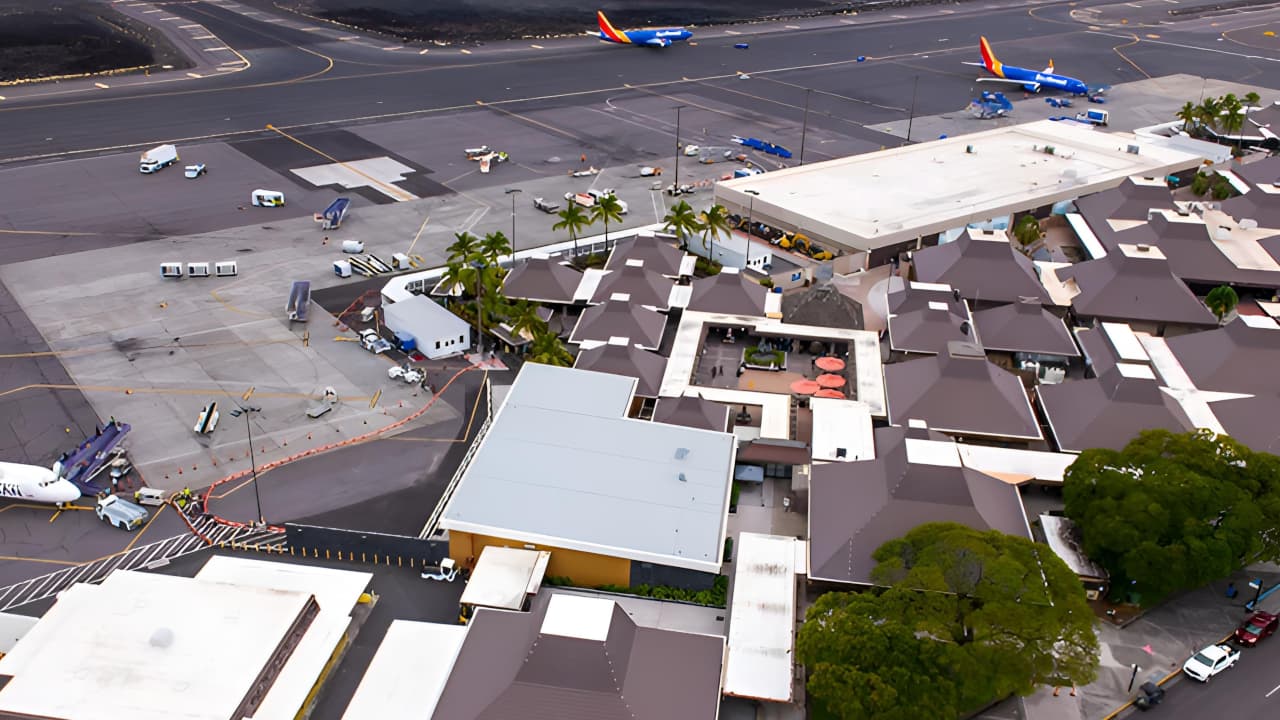
West Hawaii residents had another chance to press state transportation officials on parking, traffic congestion, rental car flow, noise and disaster resilience at Ellison Onizuka Kona International Airport at Keāhole. The Hawaii Department of Transportation held the third community information meeting for the KOA Master Plan Update at the West Hawai‘i Civic Center in Kailua-Kona, with a presentation at 6:30 p.m. and a question-and-answer session afterward.
The meeting was meant to give the public a look at the initial master plan alternatives before final recommendations take shape. HDOT describes the master plan as the long-range planning document that will guide future improvements at the airport, and the project website frames the update as a 20-year vision to enhance safety, modernize facilities, improve operations and support sustainable growth.
That matters because the airport is one of the Island of Hawaii’s main gateways. It sits about 10 miles from Kailua-Kona and serves transpacific and interisland flights, so decisions made in the master plan can affect how residents get off island, how visitors arrive, how cargo moves and how airport traffic spills onto local roads. A September 2025 community meeting focused on draft aviation activity forecast results, showing the update has already moved through an early planning stage and is now seeking broader feedback.

Traffic is already a live issue in the planning documents. A February 2026 PAC/TAC meeting document said existing roadways at the airport generally operated at Level of Service C or better, except for outbound Keāhole Airport Road, which is expected to worsen as traffic volumes rise through the planning activity levels. For residents driving through the west side’s airport corridor, that is the clearest warning in the update so far: growth at KOA will not stay inside the terminal.
The numbers behind that pressure are large. Big Island Now reported in March 2026 that the airport handled about 4.1 million passengers in 2025, and that the FAA forecast used in the master plan projects about 1 million more departing passengers by 2044 than in 2025. That growth would ripple through parking demand, curb access, rental car circulation and the daily commute around Kailua-Kona.

KOA’s history shows how quickly the airport has had to adapt before. It opened on July 1, 1970, replacing the old Kailua-Kona Airport, and was built on lava fields with a 6,500-foot runway and a Polynesian-inspired terminal design. Today, the airport is in the middle of a separate runway rehabilitation effort backed by two FAA grants totaling $64.7 million, underscoring how much construction is converging on the site at once.
HDOT identified Christina McWhorter as the project manager for accommodation and information requests tied to the June 2026 notice. As the master plan advances, the real question for West Hawaii is not whether KOA will change, but how much of the island’s future travel, traffic and resilience will be shaped by the choices made now.
This article was produced by Prism’s automated news system from verified source data, official records, and press releases, then run through automated quality and moderation checks before publishing. The system is built and supervised by the people who set the standards it runs under. Read our full AI policy.
Did this article answer your question?