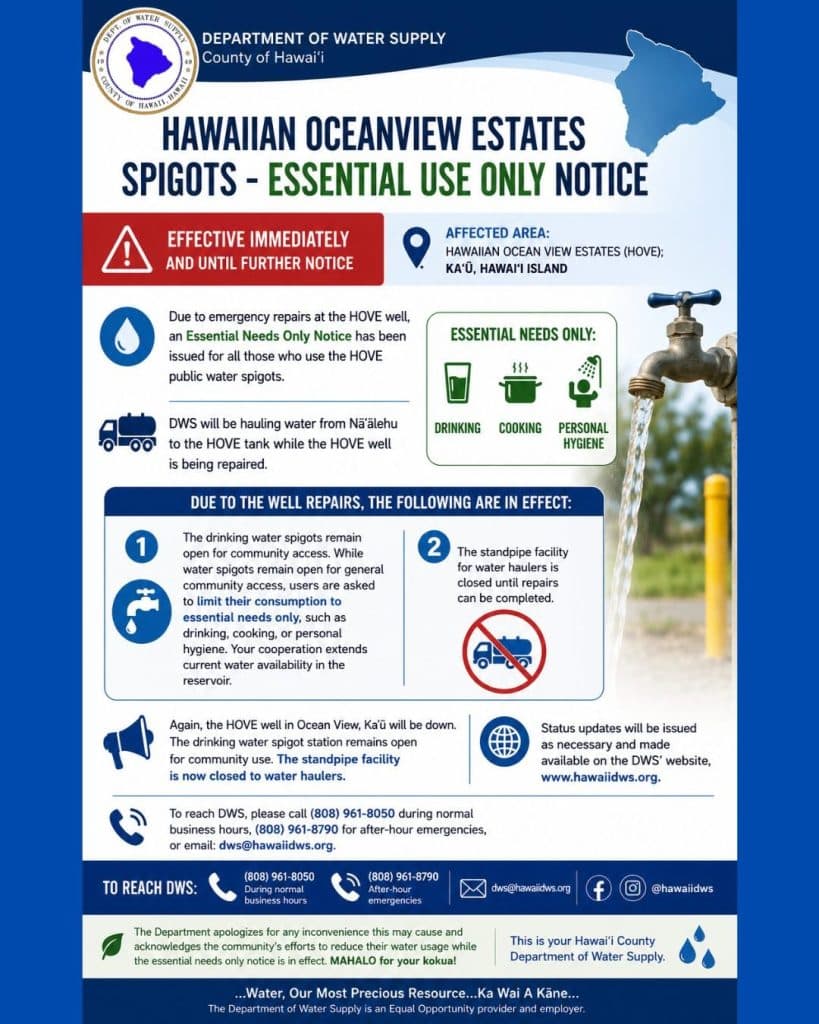
Second Kona Low Triggers Flood Watch, Relief Efforts Across Big Island
Civil Defense opened relief sites at Hawaiian Acres and Billy Kenoi Sports Complex as a second kona low put the Big Island under a new Flood Watch through Sunday.

With roughly 960 Hawaiian Electric customers still waiting for power to be restored, a second kona low pushed the National Weather Service to issue a new Flood Watch for Hawai'i Island through Sunday, and Hawaiʻi County Civil Defense opened distribution sites at Hawaiian Acres and the Billy Kenoi Sports Complex to hand out ice, water, and food to residents still reeling from the first storm.
The timing is unforgiving. Meteorologists describe the incoming system as slightly weaker than its predecessor but warn that saturated soils and elevated stream levels mean even "moderate" rainfall could trigger immediate flash flooding and new landslides. Hawaiian Electric, which watched more than 100,000 customers go dark at the peak of the initial event, is warning that the approaching system could cause new outages before restoration work is complete.
The first kona low, which meteorologists called "one of the most significant weather events the state has seen in years," unloaded more than 20 inches of rain on parts of the Big Island and 46 inches on sections of Maui over five days. Honolulu broke a single-day rainfall record that had stood since 1951. Governor Josh Green declared a State of Emergency, and damage assessment forms have since been released for residents on O'ahu, Maui, and the Big Island to self-report property losses.
On the Big Island, the storm's worst hours arrived Saturday evening, March 14, when Hawaiʻi Fire Department crews pulled three residents from a flooded home near Whittington Beach Park and relocated them to the Nāʻālehu shelter. First responders also extracted two visitors from a stranded vehicle near South Point. A Hawaiʻi National Guard high-water vehicle was dispatched to Nāʻālehu Fire Station to support ongoing response. No injuries or deaths have been reported in connection with those rescues.
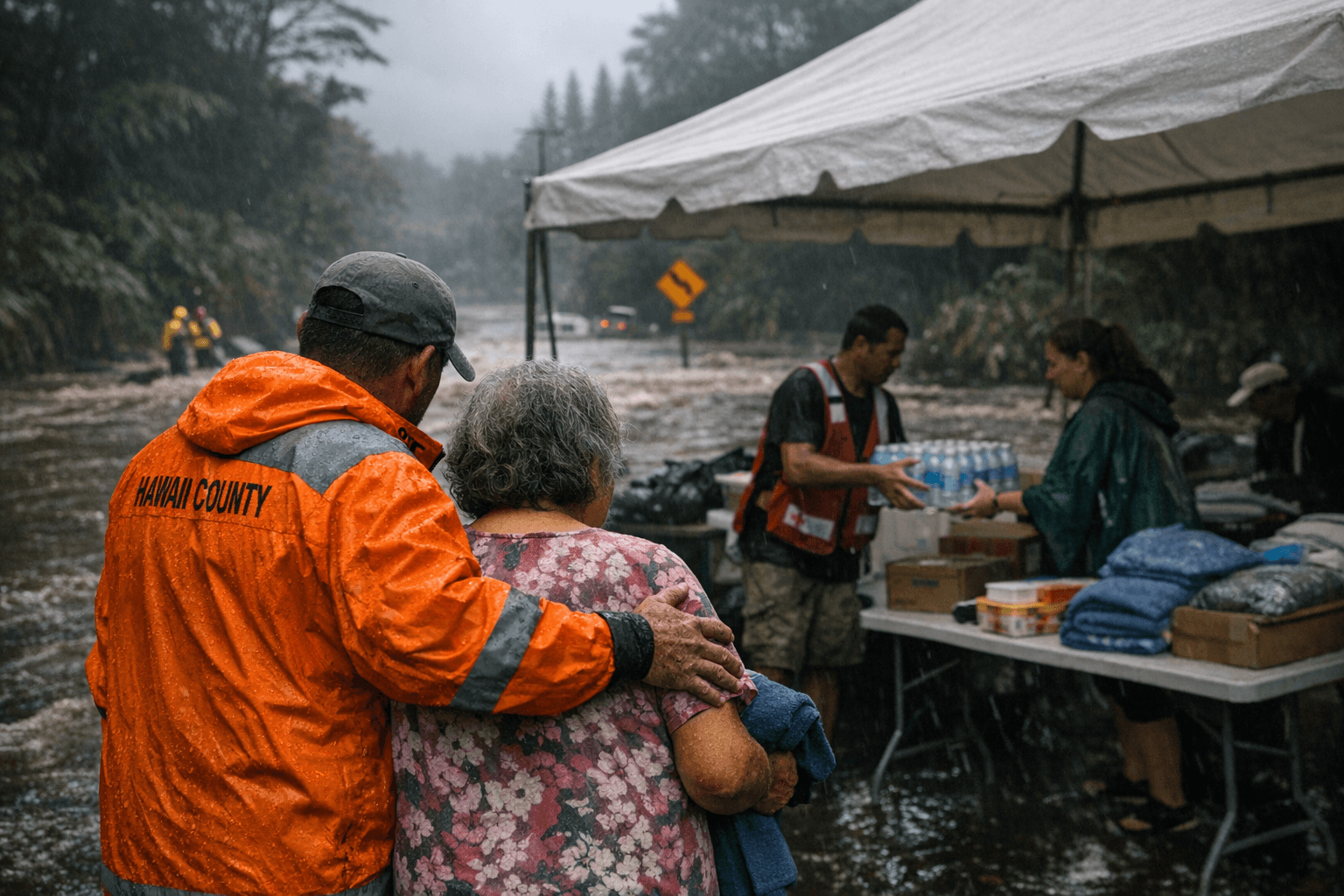
Multiple sections of Highway 11 in Kaʻū were closed as flood waters moved through the district, and county officials urged all residents to avoid unnecessary travel. Shortly after 9 p.m. on March 14, the entire Big Island came under a flash flood warning; active warnings also covered Puna, Kaʻū, and the Kona area, while a high wind warning blanketed the whole island and a high surf advisory remained in effect for south-facing shores.
The brief lull that followed the first storm is ending. With the ground unable to absorb additional moisture, any rainfall from the second kona low will move directly into runoff, posing acute risks for coastal roads and stream-side properties across the island. Authorities repeated their standing directive as the system approaches: "Turn around, don't drown.
This article was produced by Prism’s automated news system from verified source data, official records, and press releases, then run through automated quality and moderation checks before publishing. The system is built and supervised by the people who set the standards it runs under. Read our full AI policy.
Did this article answer your question?