Senate bill could force Army to negotiate Hawaii Island lease renewals
A Senate bill would steer future Pōhakuloa lease renewals into negotiation, after the state rejected the Army’s environmental review and the 2029 lease deadline loomed.
The practical change for Hawaii Island is stark: future Army lease renewals would have to start with negotiation, not condemnation. That shift could reshape the long fight over Pōhakuloa Training Area, where state and community leaders have spent years pressing the Army to justify its use of public trust land and answer unresolved cultural and environmental concerns.
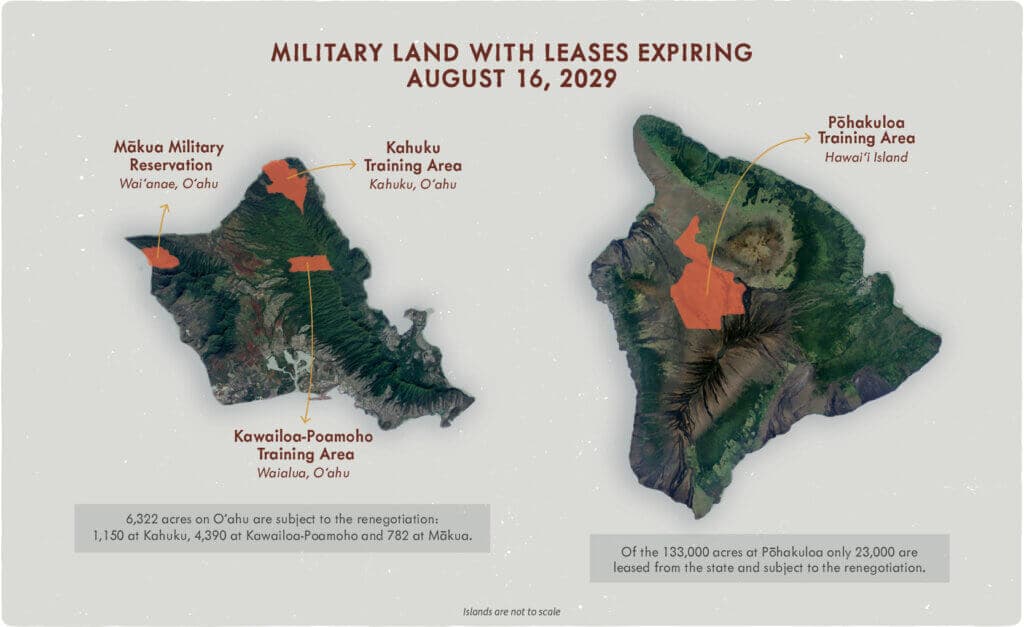
The language cleared by the U.S. Senate Armed Services Committee on June 15 would affect Hawaii military-leased lands in the next defense policy bill. At Pōhakuloa, the Army leases about 23,000 acres of state land, and the current 65-year lease expires on August 16, 2029. The training area itself spans about 132,000 acres between Mauna Loa, Mauna Kea and Hualālai, making it the largest contiguous live-fire and maneuver training area in Hawaii. The Army originally secured the state land lease in 1964 for $1.
For Hawaii Island, that matters because it changes leverage. Under the Senate language described by the Office of Hawaiian Affairs, the Army secretary would have to pursue renewals for about 19,700 acres at Pōhakuloa and 450 acres at Kahuku on mutually acceptable terms. The proposal also reportedly reaches other Army leases in the state, including Kahuku Training Area on Oahu, Kawailoa-Poamoho, Makua and Pōhakuloa. The annual National Defense Authorization Act sets policy direction for the Pentagon, but it does not itself provide budget authority.
The bill’s timing also follows a major state rejection. On May 9, 2025, the Board of Land and Natural Resources voted not to accept the Army’s Final Environmental Impact Statement for the proposed retention of state-owned lands at Pōhakuloa. State agencies raised concerns about an incomplete archaeological inventory, insufficient data on endangered biological resources and weak cultural consultation. The State Historic Preservation Division also said iwi kupuna and other historic and cultural properties are present in the live-fire impact area.

That rejection is the deficiency the Senate language appears designed to address. OHA said it remains opposed to both forcible and so-called friendly condemnation of public trust lands, and it is continuing work on a Ka Paakai Analysis for Pōhakuloa to document customary and traditional practices, natural resources and public-trust concerns. OHA Chair Kaialii Kahele said the removal of federal taking as an option and the requirement for renewed environmental review align with OHA’s long-standing position.
The broader stakes reach well beyond one lease. A negotiated process could set a new precedent for how the Army deals with state land across Hawaii, especially on an island where military readiness, sacred places, endangered habitat and public trust obligations collide. For residents watching Pōhakuloa, the next fight may be less about whether the Army stays and more about what terms the island can force it to accept.
This article was produced by Prism’s automated news system from verified source data, official records, and press releases, then run through automated quality and moderation checks before publishing. The system is built and supervised by the people who set the standards it runs under. Read our full AI policy.
Did this article answer your question?