State begins interim rule-making to curb coconut rhinoceros beetle on Big Island
State Department of Agriculture and Biosecurity began interim rule-making to contain the coconut rhinoceros beetle, a move that could affect growers, landscapers and backyard coconut owners.
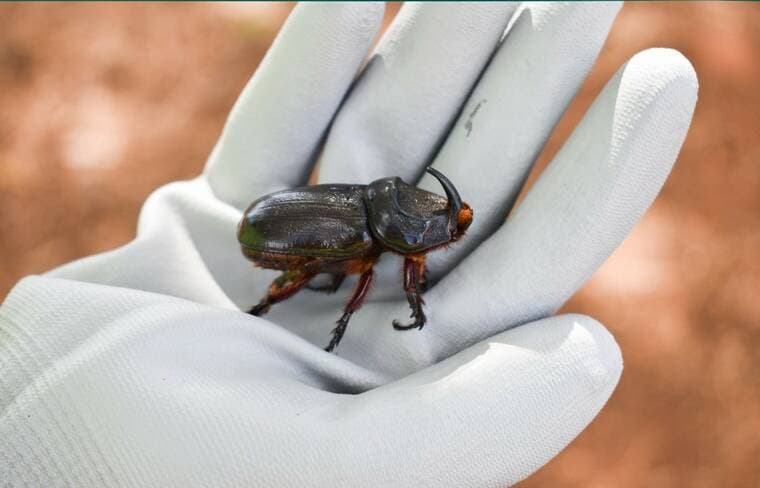
The State Department of Agriculture and Biosecurity initiated an interim rule-making process to help contain and slow the spread of the invasive coconut rhinoceros beetle (CRB) on Hawai‘i Island. The department's board heard public comment and reviewed a petition filed Jan. 12 by Hawai‘i Wildlife Fund during a meeting held Jan. 29, 2026.
The move elevates CRB control to a regulatory level that can produce temporary rules while the department develops permanent regulations. Officials framed the effort as a response to community concern and to the risk CRB poses to coconut and other palm species that are part of Big Island landscapes, cultural practices and small-scale agriculture. Public comment at the Jan. 29 hearing gave residents, growers and environmental advocates an early opportunity to shape the emerging rules.
Coconut rhinoceros beetle is an established invasive pest in Pacific islands that bores into palm crowns and can kill trees or reduce copra and other yields. For Big Island residents, damage to coconut trees affects backyard food sources, traditional uses such as thatch and lei materials, and the aesthetic and ecological values of rural and shoreline properties. Commercial landscapers and small-scale farmers also face potential costs for monitoring, removal and replacement of damaged palms.
Interim rule-making signals the department's intent to move faster than a standard rule-making timetable would allow. That process typically allows the department to impose temporary controls aimed at immediate containment while it completes stakeholder consultation and environmental review necessary for permanent rules. For local governance, the step raises questions about enforcement capacity, funding for surveillance and response, and coordination among county, state and federal partners responsible for quarantine and biosecurity response.

Hawai‘i Wildlife Fund’s Jan. 12 petition prompted the board review and demonstrates how civic groups can use formal petitions to trigger regulatory action. The public hearing on Jan. 29 also highlighted community demand for both stronger protections and clarity about how rules will affect routine activities such as transporting plant material, handling green waste, and managing coconut palms on private property.
Residents can expect the department to draft interim measures and provide further opportunities for public input as the rule-making proceeds. The pace and content of the rules will determine whether controls focus on inspections, movement restrictions for host materials, mandated reporting and disposal procedures, or a combination of measures.
The department’s next steps will shape how quickly CRB spread is checked on the Big Island and how costs and responsibilities are distributed across homeowners, growers and local government. Continued public participation in the rule-making will be essential for ensuring the measures balance effective containment with community needs and cultural practices.
This article was produced by Prism’s automated news system from verified source data, official records, and press releases, then run through automated quality and moderation checks before publishing. The system is built and supervised by the people who set the standards it runs under. Read our full AI policy.
Did this article answer your question?