Two bills in Big Island County would allow killing of feral chickens
Two bills, HB 1852 and a revived HB 980, would let residents kill feral chickens under specified conditions, affecting nuisance control, public safety and potential legal exposure.
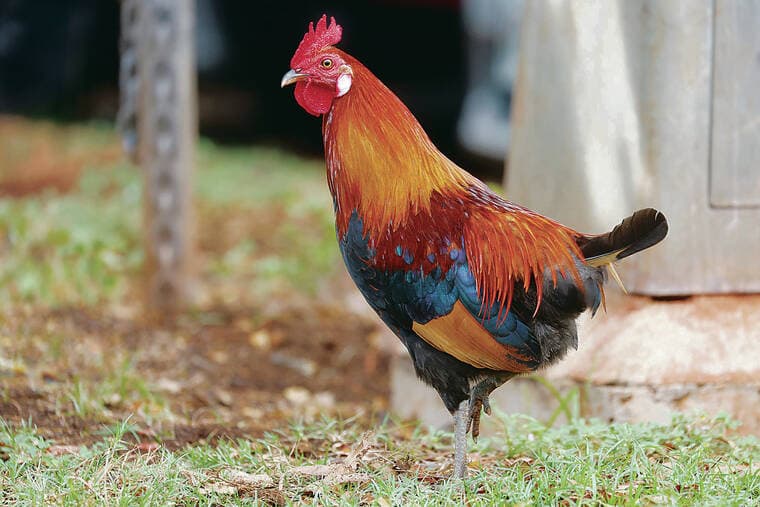
Two pieces of legislation circulating in the current session would allow residents to kill feral chickens under specified conditions, reviving a long-running debate over nuisance control, public health and neighborhood norms. House Bill 1852 and a revived HB 980 are packaged as responses to "long-standing nuisance and public-safety complaints" tied to birds overrunning homes, parks, businesses and schools.
The bills differ in key respects as described in available summaries. One fragment of reporting states HB 980 "would restrict killing to private land with written permi" while local online discussion underscored a contrast: "Unlike HB 980, HB 1852 does not limit where a person can kill a chicken nor requires landowner permission." Both measures, as publicly reported, would not prescribe specific killing methods but would outlaw "torture and extreme abuse." HB 980 previously stalled in 2025 and was carried forward into the current session.
The legislative push follows several years of activity on the issue. In 2023, lawmakers pursued fines for feeding feral chickens, statewide control measures and authorization of trapping using electronic devices. Other proposals since then have ranged from complaint hotlines and more traps to a five-year eradication program, legal liability for property owners and public education programs. Representative Scott Nishimoto (D, Moiliili-McCully) is carrying a measure from 2023 that would require the Department of Health to operate a feral chicken complaint hotline and set up more traps; he said, "We get so many complaints about it that I actually custom-ordered a chicken trap to loan out to constituents."
Residents and students describe tangible damage. A 23-year-old University of Hawaii student, Peter Miller, said the feral chicken problem has "gotten out of hand." He added, "Not only do they add so much noise pollution, they also destroy all the landscaping," and urged a hotline akin to "pest control for chickens" for reporting large flocks. Local online forums captured the split along familiar lines: one poster quipped about integrating birds into meals while another warned that clarifications in law should not be taken as license to ignore existing animal-cruelty, trespass, weapons and discharge statutes. As one forum user put it, property owners must take care not to run "afowl" of those laws.
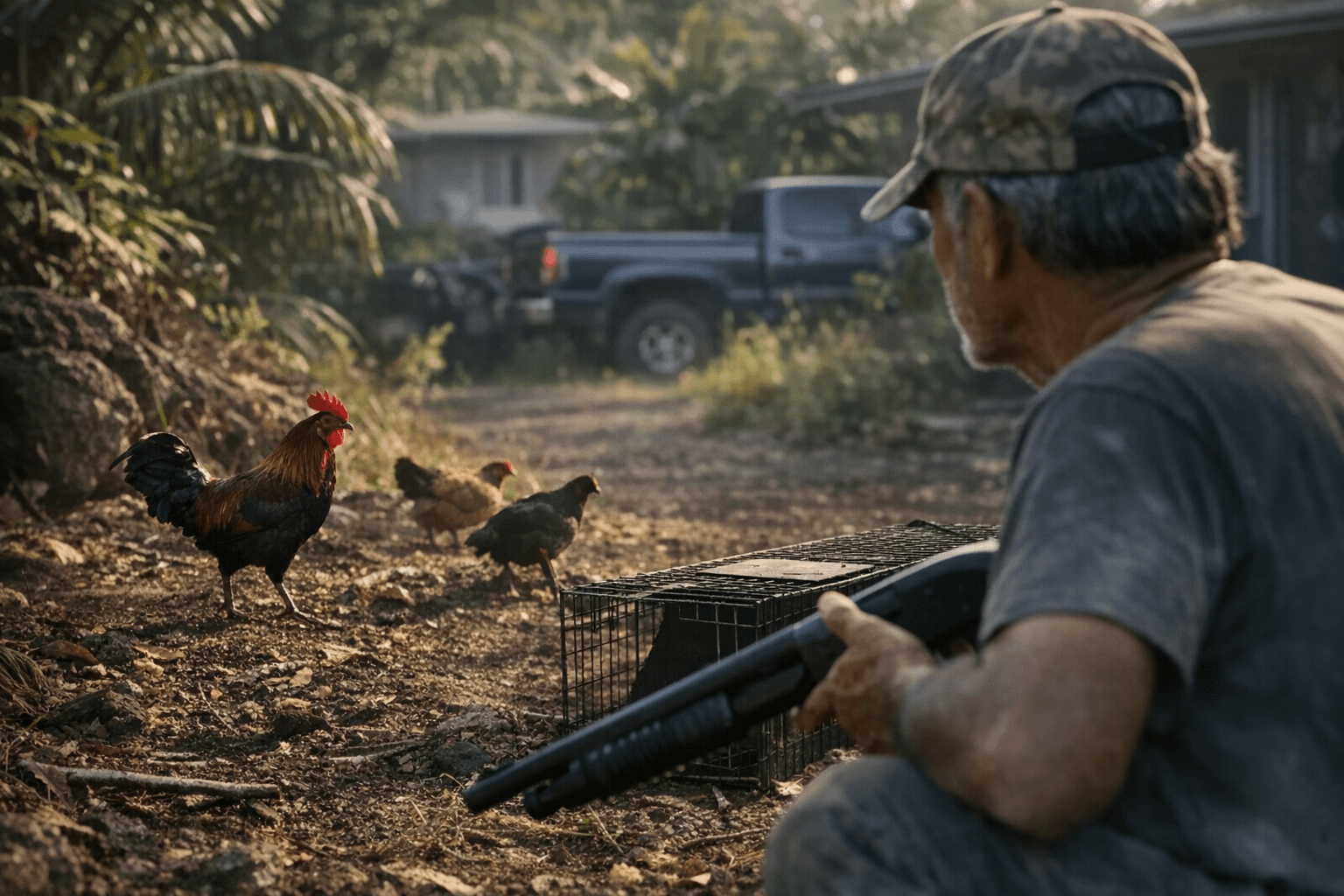
Policy and enforcement questions remain unresolved. The available summaries include truncated statutory language and do not provide complete sponsor lists or full bill texts, leaving open how the measures would intersect with trespass, weapons, public-safety and disease-control statutes, or which enforcement mechanisms would apply. A photograph circulated with reporting showed a feral rooster at Beretania Community Park, underscoring the neighborhood visibility of the issue.
For Big Island County residents, the debate matters because changes could shift who controls local responses, how complaints are handled and the legal risks for neighbors acting on nuisance complaints. The next phase will hinge on committee hearings and the release of full bill text and sponsor statements; residents seeking clarity should watch the legislative docket and contact their state representative to weigh public-safety, animal-welfare and community consequences.
This article was produced by Prism’s automated news system from verified source data, official records, and press releases, then run through automated quality and moderation checks before publishing. The system is built and supervised by the people who set the standards it runs under. Read our full AI policy.
Did this article answer your question?