Buena Vista County conservation system spans 1,200 acres of public lands
Buena Vista County’s 1,200-acre conservation system gives families low-cost campsites, cabins and day-trip options, anchored by Buena Vista County Conservation Park.
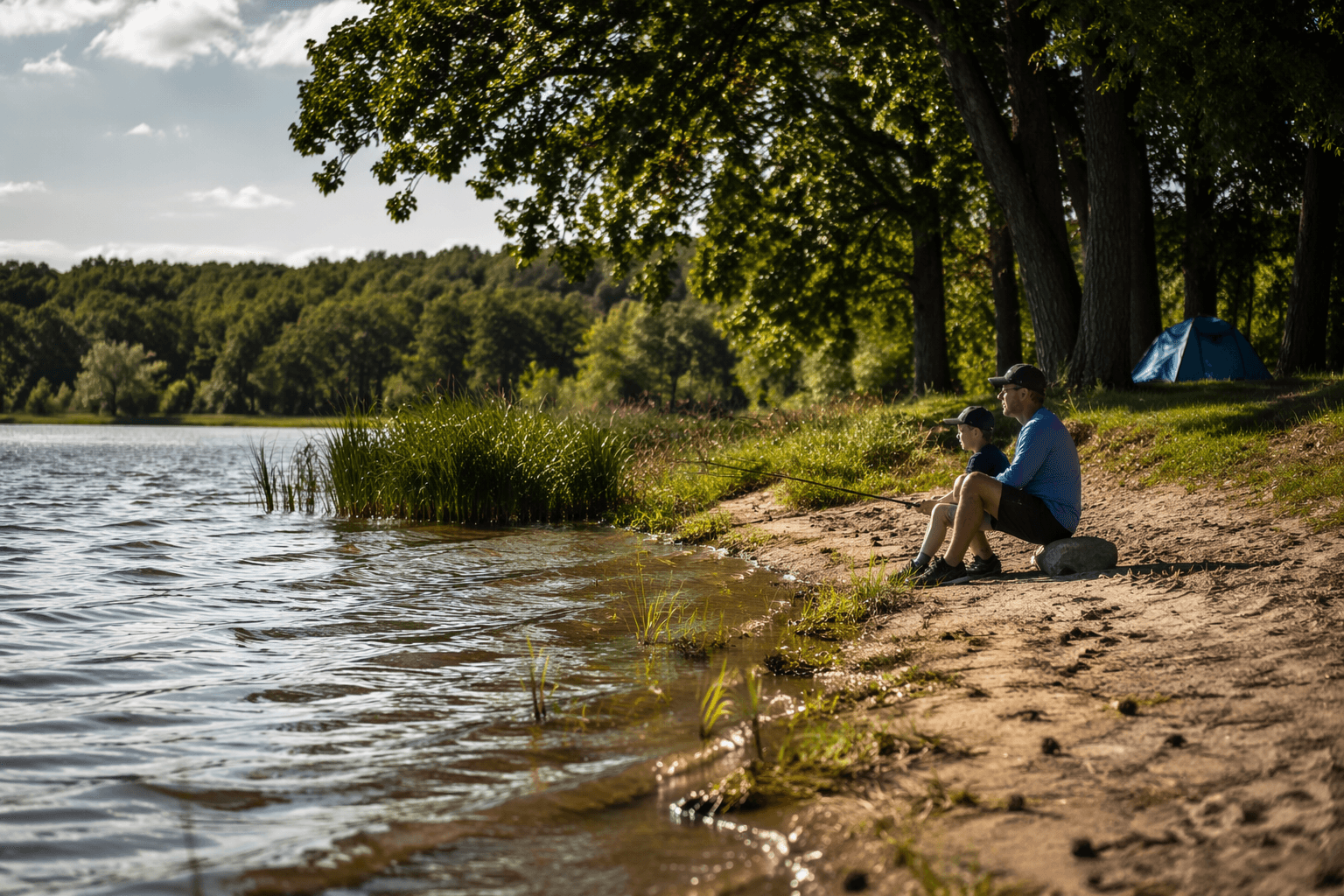
Buena Vista County’s public land network stretches across 17 areas and more than 1,200 acres, giving residents a place to camp, fish, hike, picnic, boat, hunt, trap and watch birds without leaving county lines. The system is built for more than recreation: county conservation pages tie it to water-quality protection and wildlife habitat work, which makes each site part of a larger public investment.
A county system shaped by local control
The Buena Vista County Conservation Board is a five-member body authorized under Chapter 350 of the Iowa Code, with the Buena Vista County Board of Supervisors holding final authority over county programs and budget. The 2026 board includes Chair Tyrone Seaman, Vice-Chair Rick Meyer, and members Erica Larson, Jeff Kestel and Sarah Vanderhoff. That structure matters because land use, campground upgrades and habitat work in Buena Vista County are not abstract state programs, but county decisions that shape how close-to-home outdoor access is maintained.
The county’s acreage is spread across parks, wildlife areas and historic sites, which gives the system a practical role for weekend planning. Some parcels are built for overnight stays and shelter rentals, while others are smaller wildlife tracts or river-adjacent spaces that fit a short drive, a quick hike or a day spent birding. The result is a county system that works as a low-cost recreation network as much as a conservation tool.
Buena Vista County Conservation Park is the best starting point
The most visitor-friendly base is Buena Vista County Conservation Park near Linn Grove, 2 miles east of M-27 on 400th Street in the Little Sioux River Valley, just off the Glacial Trails Scenic Byway. The park combines camping areas, a cabin and lodge, a day-use shelter, an arboretum, prairie grass plantings and miles of trails through woodland, making it the closest thing the county has to a full-service outdoor hub.
Its overnight options are specific and useful for families trying to keep costs down. The rustic oak log cabin sleeps 10 to 12 people and rents for $125 per night plus tax. The North Lodge, completed in 2020, sleeps 8 to 10 and rents for $150 per night plus tax. The South Shelter rents for $40 a day, which gives day users a low-cost gathering spot without committing to a campsite.
Camping is spread across several price points. Timber Ridge offers 23 sites with water, 20/30/50 amp electric hookups, sewer, showers and a dump station for $25 per night. Bur Oak has 12 sites with 20/30/50 amp hookups and water for $20 per night. The North and South primitive camping areas cost $10 per night, which keeps the park within reach for families, scout groups and anyone looking for a simple weekend outside town.
The county has also been actively managing the park. County minutes say conservation director Greg Johnson reported that the Bur Oak Campground Renovation Project was underway in late 2024, and that year also saw a cattle-grazing project begin at BV Park to support habitat-management goals. Those details show a park system that is being adjusted to serve both campers and wildlife.
Smaller county sites fill in the rest of a weekend
Beyond the main park, Buena Vista County’s lesser-known areas offer shorter trips and more specialized uses. Brooke Wildlife Area is a 60-acre timbered property west of Linn Grove where hunting and trapping are allowed. Its size and setting make it a different kind of county land, one aimed more at habitat and access than at crowds or facilities.
The Buena Vista Swan Restoration Refuge near Sioux Rapids uses a 10-acre site, a kiosk and an observation deck to support trumpeter swan restoration. Elk Wildlife Area north of Alta brings together creek, prairie and oak timber on a 65-acre tract. Together, these places show the range inside the county system: one site for a family cabin, another for a morning wildlife stop, another for hunting, and another for a quick pull-off with a view.
The county also includes the Linn Grove Dam area, where a 2025 community conversation covered the dam’s history, archaeology uncovered during campground development, flooding on the Little Sioux, FEMA aid and the long-term plan for the site. That mix of history, infrastructure and flood recovery makes the area more than a scenic stop.
The river is becoming part of the county’s public outdoor map
Buena Vista County’s conservation work is not limited to land-based parks. In January 2024, the conservation board agenda included a resolution for financial support to help with Little Sioux River State Water Trail designation and public information booklets. In 2025, the Iowa Department of Natural Resources, Iowa Lakeside Laboratory, Buena Vista County Conservation and the Flandreau Santee Sioux Tribe promoted a speaker-and-paddling series centered on the Little Sioux River.

That partnership matters for anyone looking for a low-cost weekend close to home, because water access changes how residents can use the county. It also shows that county conservation staff are thinking about the Little Sioux as both a recreation corridor and a public-information project, not just a river that runs through the county on its way downstream.
Wildlife, history and the county’s wider conservation role
The Buena Vista Swan Restoration Refuge carries added weight because of what Iowa lost and what the state has tried to rebuild. Iowa Department of Natural Resources materials say trumpeter swans once nested throughout Iowa, then disappeared after wetland drainage and unregulated harvest, with the last nesting pair recorded in 1883. The state restoration program began in 1993, and the first modern nest followed in 1998 in Dubuque County.
That state context helps explain why a small county site can matter. The refuge is part of a broader recovery story, not just a place to look at birds from an observation deck. It also sits inside a larger statewide land system: the Iowa DNR manages more than 410,000 acres in Wildlife Management Areas, funded largely through hunting, fishing and trapping license revenue.
History runs through the county system as well. Buena Vista County was organized in November 1858 and named after the Mexican War battlefield of Buena Vista, meaning “beautiful view.” Near Linn Grove, the Chan-Ya-Ta Site contains the remains of a 1,000-year-old prehistoric village and is listed on the National Register of Historic Places. That pairing of scenic land and deep local history gives the county’s conservation network a stronger civic identity than a simple park list ever could.
County conservation records also show the system is still expanding. In 2024, the Storm Lake Marina was added to the county park system through a DNR management agreement, adding another public-water asset to the county portfolio. Together, the marina, the river trail work, the campgrounds and the wildlife areas form a county system that keeps outdoor access local, affordable and tied to ongoing public stewardship.
This article was produced by Prism’s automated news system from verified source data, official records, and press releases, then run through automated quality and moderation checks before publishing. The system is built and supervised by the people who set the standards it runs under. Read our full AI policy.
Did this article answer your question?