Buena Vista County GIS maps zoning, roads and flood risks
Buena Vista County’s map tools show more than parcel lines: they tie zoning, roads, drainage, floodplain rules and land records into one place.
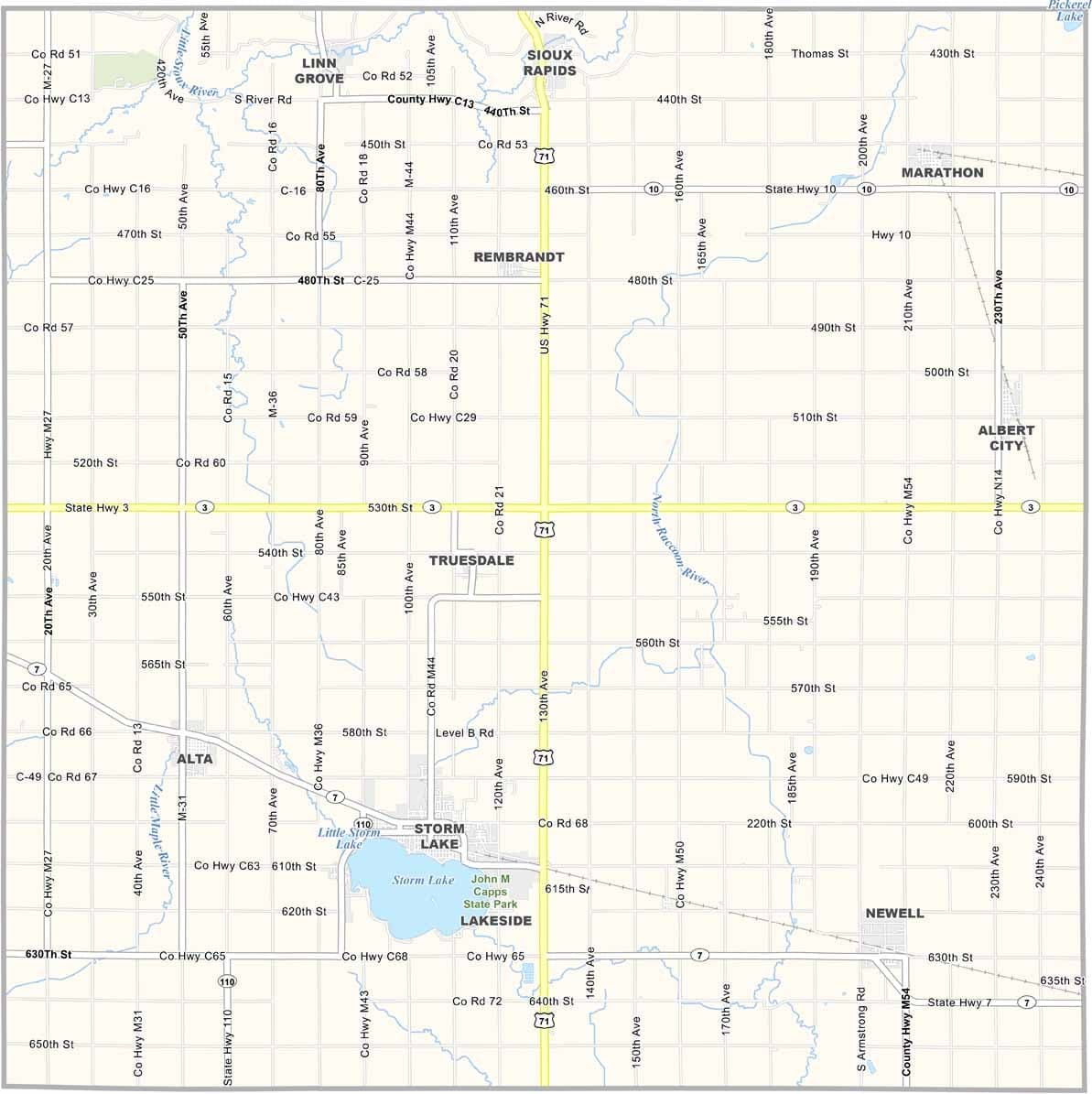
Buena Vista County’s GIS map layers cover the whole county, including zoning, hydrology, roads and recreation areas. The assessor and public property portal handle ownership and valuation. In a county of 20,823 people centered on Storm Lake, residents can use the two systems to check what sits on a parcel, what surrounds it and what rules may apply before they call the courthouse.
Start with the county’s GIS layers
The county’s Information Technology & GIS department supports a dependable, secure technology infrastructure and uses GIS applications to improve county efficiency and productivity. For residents, the practical result is a large database of digital mapping layers that turns public information into something you can actually use on a screen. Those layers do not stop at parcel outlines; they make the map useful for questions about the ground around a property, not just the property itself.
The county maps the physical and regulatory setting around a parcel, including where waterways run, where roads sit, and where recreation areas and other features may affect use. If you are comparing two farm tracts, checking whether a house sits near a water feature, or trying to understand whether a lot backs onto public land, the GIS layers are the first place to look.
Use the map for the questions residents ask most
The county’s public mapping system is especially useful when the question is less about ownership and more about context. A buyer looking at rural land can use the GIS layers to see how a property relates to roads, hydrology and nearby recreation areas before making a trip out to the site. A homeowner can use it to see whether drainage patterns or water features appear close by, and a builder can use the zoning layer to check whether the land sits in the right part of the county for the kind of development being considered.
The county’s broader comprehensive plan includes map sets for school districts, rescue districts, fire and first-responder districts, existing and future land use, future and existing transportation, wetlands, general soils, slope, prime farmland, onsite wastewater treatment, sewage-lagoon limitations, local roads and streets, landfill limitations, soil permeability, hydric soils, flooding frequency and recreation planning. A single property search can help answer questions about service areas, physical constraints and future development patterns, not just where a property line sits.
Floodplain rules are part of the map, not an afterthought
Buena Vista County works with the Iowa Department of Natural Resources on floodplain management and enforces floodplain ordinances to reduce damage from future flood events. Hydrology and flooding layers are especially important for anyone near a creek, drainageway or low-lying ground. What looks like a simple location question can quickly become a building, insurance or permitting question once floodplain rules are brought into the picture.
For a resident, the practical step is to check the relevant GIS layers before assuming a site is clear. If the map shows nearby hydrology, a flooding history layer or other land constraints, that is the cue to ask more detailed questions before moving ahead with a purchase or a project. The map will not replace a formal review, but it can prevent avoidable surprises.
Zoning gives the rules behind the map
Buena Vista County adopted zoning in 1966 to help protect agricultural land, encourage uniform development and help ensure property values. Buena Vista County has seven zoning classifications, which means the same parcel viewer that shows roads and waterways also sits inside a countywide land-use system with real rules attached.
A lot that looks straightforward on a screen may sit in a zone with different expectations for use, access or development than a nearby parcel.
Use the assessor and property portal for records, not just maps
The county assessor’s office handles value, while the GIS system handles mapping. The assessor estimates value but does not determine tax rates, calculate taxes or collect them. Real property is reassessed in odd-numbered years, and property owners must be notified by April 1 if there was a value change.
For basic land records, the public property portal through Beacon and qPublic.net is the most direct tool. Residents can search assessment, tax, sales, ownership and other property information, or use the interactive map to view property locations and layers of community information. If you are checking who owns a parcel, whether a sale has been recorded, or what the assessment history looks like, that portal is the place to start before making a phone call.
Know the appeal calendar
When a value change arrives, the county’s appeal process runs on a tight schedule. Board of Review protest filings generally run from April 2 through April 30. A later June 5 deadline applies if a state or federal disaster proclamation is issued after March 1 and before May 20.
If a notice arrives and the numbers do not look right, the first step is to check the assessment details, then act within the Board of Review window. The assessor’s office does not set the tax rate, so value questions and tax bill questions are not the same thing.
A current example of how the system affects owners
In Buena Vista County’s 2026 reappraisal project notice, Assessor Joe Cronin said the county conference board approved a contract with Vanguard Appraisals of Cedar Rapids in February 2021 to reappraise residential, agricultural dwelling, commercial and industrial property.
This article was produced by Prism’s automated news system from verified source data, official records, and press releases, then run through automated quality and moderation checks before publishing. The system is built and supervised by the people who set the standards it runs under. Read our full AI policy.
Did this article answer your question?


