Schaller tombstone hid bootleggers’ Prohibition-era dead drop
A plain Sargent tombstone in Schaller Cemetery concealed a hollow dead drop, tying one rural marker to Iowa’s long, complicated Prohibition history.
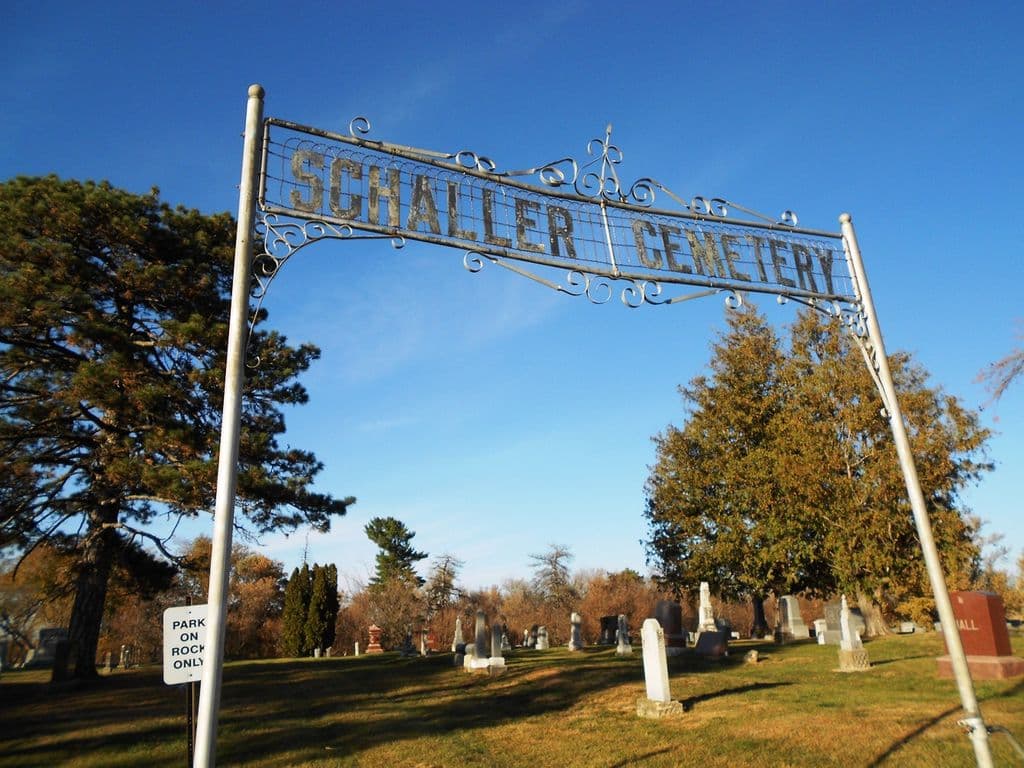
A tombstone that was never just a tombstone
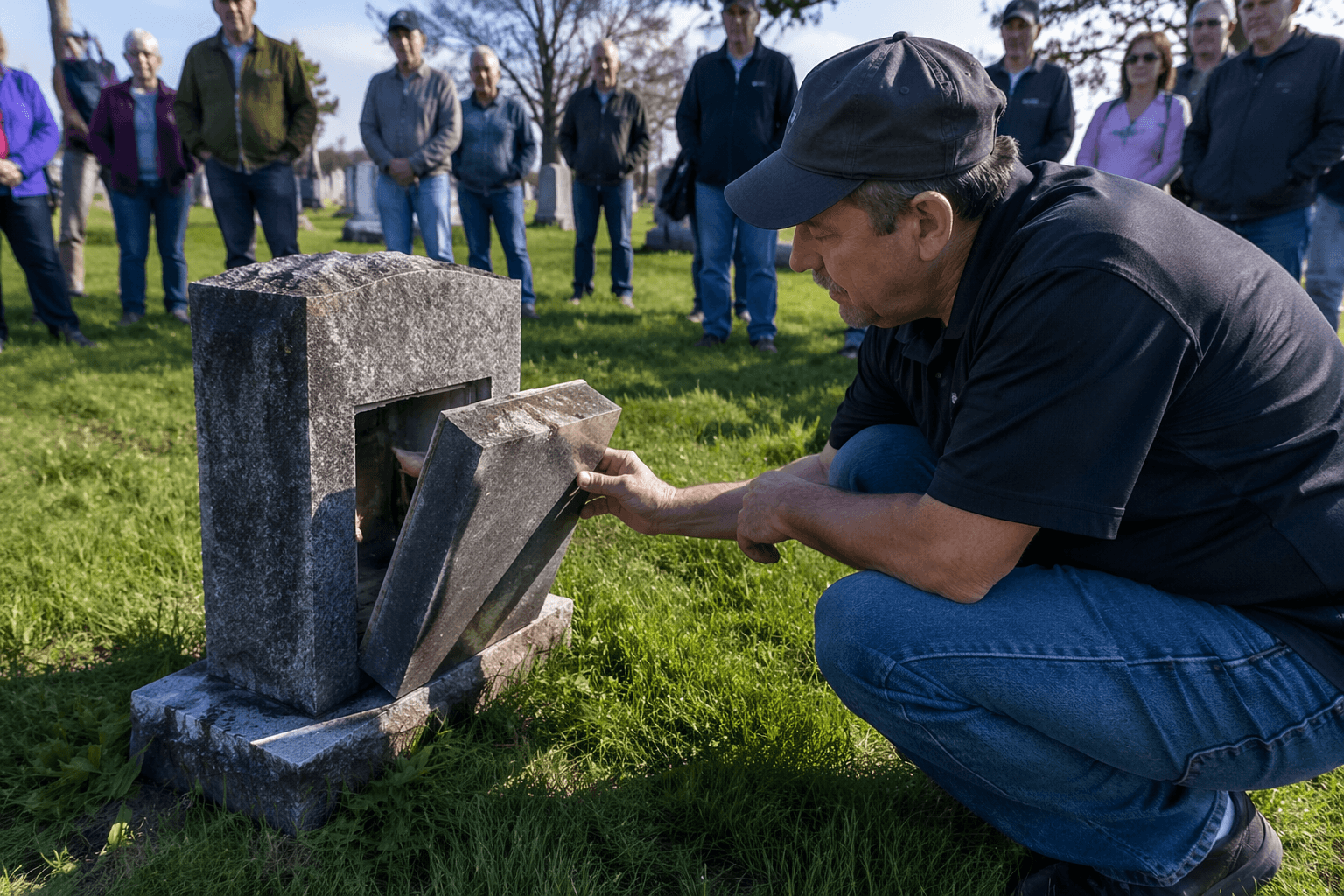
The marker looked ordinary from a distance: Sargent, 1851 to 1907, standing in the cemetery just west of Schaller. Up close, though, the stone tells a far stranger story, one rooted in the economics of secrecy that flourished during Prohibition. Its decorative side panels could be removed, revealing a hollow interior that local lore says served as a discreet drop point for bootleggers and customers.
That detail is what turns this into more than a cemetery curiosity. It is a reminder that rural landscapes in Buena Vista County have long held hidden functions, and that some of the county’s best local history survives not in grand monuments but in objects that looked too ordinary to question.
How the dead drop worked
The logic of the tombstone was simple and effective. A cemetery offered cover, privacy, and a place where authorities were less likely to linger after dark. In an era when alcohol was illegal or tightly restricted, those conditions mattered. A stone with removable metal panels on all four sides could hide cash, liquor, or instructions without drawing much attention from anyone passing through.
According to the account preserved in local reporting, the façade was a ruse. What appeared to be a fixed memorial was actually built with access in mind, making it an ideal exchange point for corn-distilled moonshine and whiskey. The structure fit the practical mind-set of bootleggers: blend in, avoid crowds, and use a place no one would think to search twice.
Why Schaller fits the story
Schaller Cemetery is not a small roadside burial ground with only a handful of graves. Find a Grave lists 1,681 memorial records there, a scale that helps explain why the site could sustain both family memory and local legend. A place that large carries generations of names, dates, and stories, some documented and some passed along by word of mouth.
That is also why Jarid Currie matters to the story. As Schaller Cemetery trustee, he is the present-day steward who showed the tombstone to reporters and helped anchor the anecdote in the real geography of the cemetery. His role underscores an important point: local history is often preserved by people who know the ground, the families, and the stories that do not always show up neatly in official records.
What Iowa’s liquor history reveals
The tombstone’s hidden use makes more sense when placed inside Iowa’s broader anti-alcohol history. Iowa instituted statewide prohibition in 1916, four years before the 18th Amendment took effect in 1920 and created national Prohibition. That timeline matters because it shows the state was not merely following federal policy; it had already been experimenting with restrictive liquor laws and the social consequences that came with them.
State historical sources add another layer: Iowa went in and out of prohibition three times even before national Prohibition. That kind of churn helps explain why bootlegging, moonshining, and improvised exchange systems had such room to develop. When law changes repeatedly, people adapt quickly, and the black market often learns the landscape faster than the regulators do.
After repeal, the state built a new regulatory framework. The Iowa Liquor Control Commission was created in March 1934, signaling a shift from outright prohibition to controlled oversight. The commission’s creation marks the end of one era and the beginning of another: alcohol would remain tightly managed, but no longer hidden in the same way.
What the record can confirm
The Sargent tombstone is the kind of local story that benefits from careful checking against family records, cemetery records, and newspaper archives. The State Historical Society of Iowa preserves Buena Vista County materials that can help piece together those connections, including births, marriages, deaths, wills, probates, and naturalization papers. Those records can establish who lived where, when a family name appeared, and how a burial might connect to wider county history.
The society’s newspaper collections are equally important. It says its holdings include more than 400,000 pages of digitized historic Iowa newspapers through Chronicling America, a vast record that can surface old notices, obituaries, legal advertisements, and references to local disputes or oddities. For a story like this, those pages are often where oral tradition meets documentary evidence.
- Cemetery records can confirm names and burial dates.
- Vital records can establish family relationships and timelines.
- Probate and will files can show property transfer and household connections.
- Historic newspapers can capture local references that never made it into formal histories.
Taken together, those sources show how a legend can be tested without stripping away what makes it valuable. Even if every detail of the dead-drop tale cannot be pinned down, the setting, the dates, and the state’s liquor history all point in the same direction: this was a county where secrecy had a market.
Why the tombstone still matters
The real value of the Schaller tombstone is not simply that it hid a place for contraband. It is that it exposes how ordinary places can carry extraordinary histories. A cemetery marker, meant to memorialize one life, may also preserve evidence of a secret economy shaped by Prohibition, rural ingenuity, and the practical need to stay unseen.
In Buena Vista County, that makes the Schaller Cemetery more than a resting place. It is a record of how people used familiar ground for unfamiliar purposes, and how the county’s past survives in the objects, records, and stories that still wait in plain sight.
This article was produced by Prism’s automated news system from verified source data, official records, and press releases, then run through automated quality and moderation checks before publishing. The system is built and supervised by the people who set the standards it runs under. Read our full AI policy.
Did this article answer your question?