Storm Lake shoreline anchors recreation, tourism and daily life
Storm Lake’s shoreline is more than scenery. It is the county’s year-round gathering place for fishing, walking, family time and visitors, all in one compact public space.
Storm Lake’s shoreline does something many public places only promise: it brings recreation, tourism and daily life together in one stretch of water and parkland. Anglers cast lines, walkers take the path, families spread out near the shore and visitors come for longer stays or a quick sunset view, all using the same lakefront in different ways. That mix gives Buena Vista County a shared outdoor living room, one that says as much about local identity as it does about leisure.
A shoreline built for everyday use
What makes the lakefront stand out is how little planning it takes to use it. Residents do not need to leave town for open water, a place to sit, a trail to walk or a park space that works for an afternoon outing or a spontaneous stop. The City of Storm Lake says its parks division maintains more than 100 acres of public parks and open spaces, with a majority along the north shore of Lake Storm Lake, so the waterfront is not an afterthought but a core part of the city’s public landscape.
That matters in a city like Storm Lake, which had 11,269 residents in the 2020 Census and just 5.3 square miles of land area. In a place that compact, access to a well-used shoreline affects how people move, gather and spend time together. For many residents, the lakefront is where the city’s public life is most visible.
The Lake Trail links the waterfront together
The best place to see that pattern is the Lake Trail. The city describes it as prime recreation territory stretching from Frank Starr Park in the west to Sunset Park in the east, with almost all of the multi-use trail located along the lakefront. That makes the shoreline more than a scenic edge; it is the spine of a connected public corridor that invites walking, biking and lingering.
The city says its parks system includes more than five miles of hiking and biking trails, and much of that mileage reinforces the lake’s role as a place people return to again and again. In warm weather, the trail and shoreline become a natural meeting point for youth activity, family recreation and civic events. In colder months, the same stretch still draws people outside for a walk, a view or a mental reset, proving that the waterfront serves the county in every season, not just during summer.
Accessible spaces widen who can use the lake
The shoreline’s value also lies in the variety of people it accommodates. Families with children can use the parks and beaches. Walkers and cyclists can stay on the trail. Anglers can find all-year-around fishing on Storm Lake, which the city says is stocked annually with walleye. Visitors can arrive for events or simply to experience the lakefront as part of a stay in town.
The Little Lake Discovery Boardwalk adds another layer to that access. The city describes it as an accessible interpretive trail and boardwalk into Little Storm Lake, paired with a two-story observation tower and designed for first-hand viewing of the natural environment. That kind of facility broadens the shoreline’s appeal beyond standard park use and makes the waterfront more inclusive for people who want a quieter, more observational experience of the landscape.
The city’s park system also includes public docks, campgrounds, golf courses, open and enclosed shelters, sports fields and other amenities. Together, those features make the shoreline useful for residents who want an easy outing close to home and for visitors who want a concentrated outdoor experience without chasing activity from one part of the county to another.
Chautauqua Park shows the lake’s deep civic roots
Storm Lake’s shoreline is not just busy today. It has been central to the city for a long time. The city says the Chautauqua Park area dates to the earliest settlement of Storm Lake, linking the waterfront to the town’s beginnings rather than to a recent wave of development. That history helps explain why the lakefront continues to function as a place where local memory, recreation and public gathering overlap.
The park also keeps evolving. The city says a soccer mini-pitch complex was added at Chautauqua Park in 2022, a sign that the shoreline continues to adapt to how people actually use public space. That kind of addition matters because it creates room for more kinds of play in a setting that already serves walkers, anglers, families and eventgoers. The lakefront is not frozen in time; it keeps absorbing new forms of community life.
A waterfront that supports the local economy
The shoreline’s impact reaches beyond parks and personal recreation. A waterfront that feels active and welcoming helps support nearby restaurants, lodging and retail, and it strengthens the city’s case for events that bring people into Storm Lake. The city’s visitor information pairs lakefront recreation with annual events and festivals, underscoring how the shoreline functions as part of the tourism economy as well as daily life.
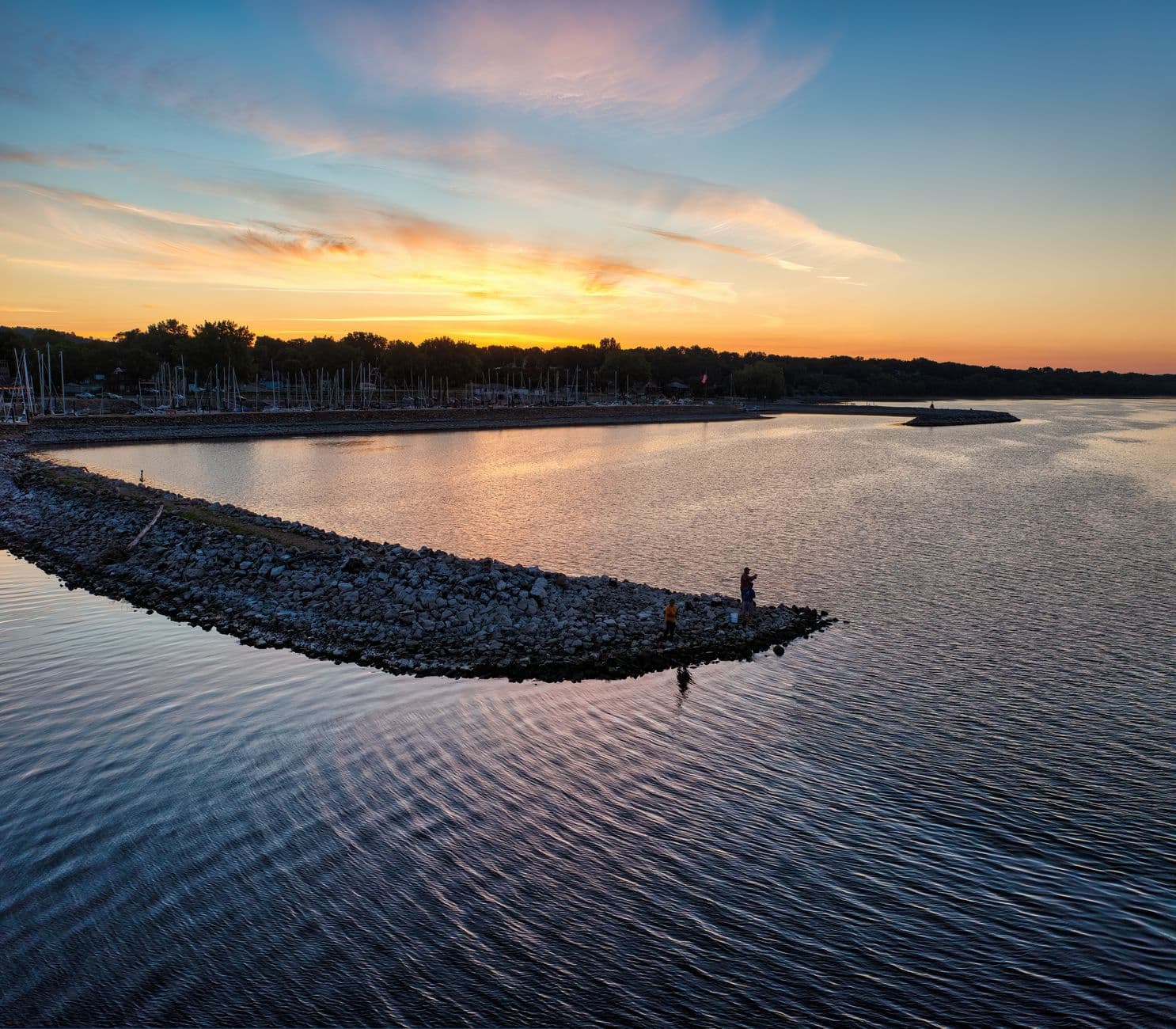
That economic role is easy to overlook because the lakefront is so familiar to residents, but the effect is real. People who come for a festival, a weekend stay or a family visit often spend time near the water, and that traffic helps sustain the businesses around it. In a county seat city, the condition of public space often shapes how outsiders judge the community, and the lakefront is one of the first places that judgment begins.
Stewardship keeps the shoreline working
The strength of the waterfront depends on more than good weather and good views. It also depends on maintenance, dredging and regular coordination among local entities. The Lake Improvement Commission was formed in 2003 by the City of Storm Lake, the City of Lakeside, Buena Vista County and the LPA to continue dredging operations, and Buena Vista County purchased a dredge and related equipment to allow a local dredging operation. That history shows that the shoreline’s present-day appeal rests on deliberate public investment.
The commission meets monthly from March through November, giving the lakefront a formal structure for stewardship rather than leaving it to chance. That matters because a shared public space only remains shared if it is maintained well enough for people with different needs and schedules to use it comfortably. For Storm Lake, lakefront care is not just an environmental task. It is part of preserving a civic asset that serves the entire county.
A county gathering place with broad meaning
Storm Lake’s shoreline matters because it reflects how people actually live here. It is where a quick stop turns into a longer visit, where a fishing trip can sit beside a family picnic, where a trail can serve both exercise and quiet, and where public space still feels central to the city’s identity. In a county of 20,823 people, the waterfront gives residents a common point of reference and a common place to gather.
That is why the shoreline continues to anchor recreation, tourism and daily life. It is a public space that works in every season, for many ages and for many purposes, and it remains one of Buena Vista County’s clearest expressions of shared civic life.
This article was produced by Prism’s automated news system from verified source data, official records, and press releases, then run through automated quality and moderation checks before publishing. The system is built and supervised by the people who set the standards it runs under. Read our full AI policy.
Did this article answer your question?