Asheville breaks nearly century-old rainfall record, flooding roads in Buncombe County
Asheville got 2.89 inches on May 25, toppling a rainfall record nearly 100 years old and forcing closures on key roads in Buncombe County.
A burst of 2.89 inches of rain in Asheville on May 25 turned into flooded roads, closures and a fresh reminder that Buncombe County’s drainage systems are still under strain. The rain broke a nearly century-old record and sent runoff across parts of Asheville and neighboring mountain communities as more thunderstorms loomed later in the week.
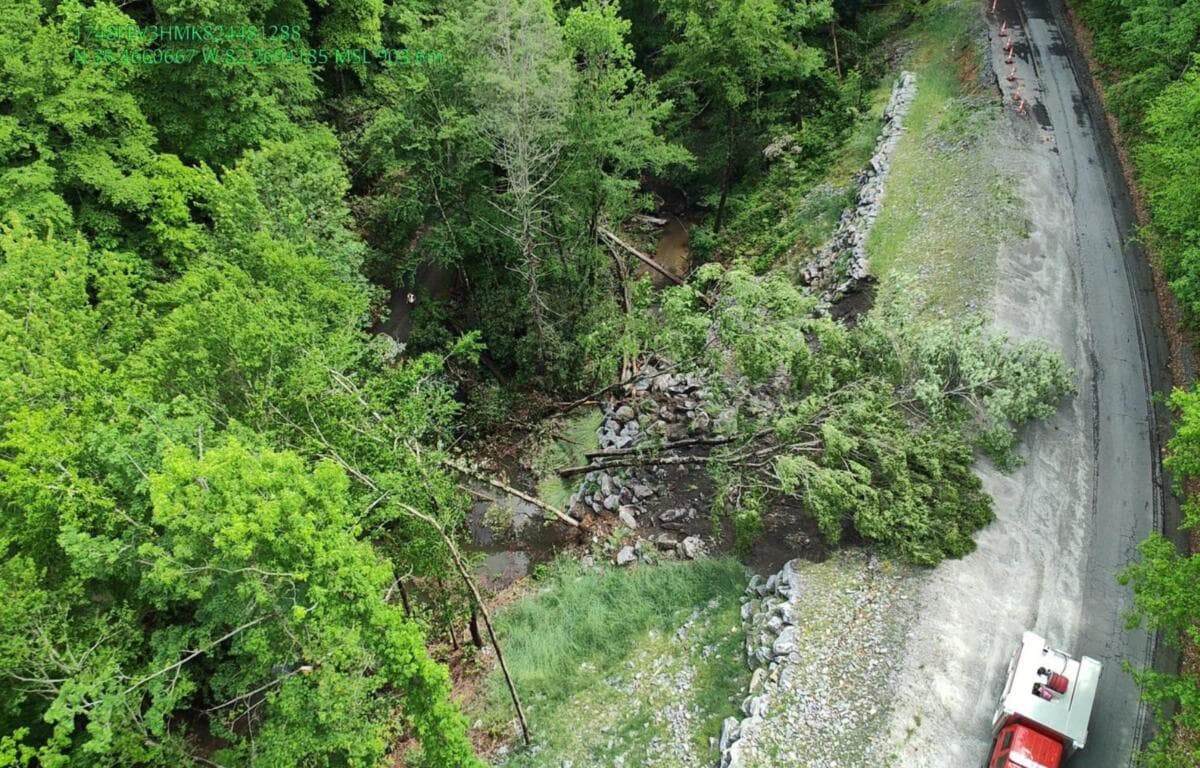
The immediate fallout reached travel routes in both Buncombe and Henderson counties. The North Carolina Department of Transportation said a 48-inch culvert collapsed on U.S. 74A near the Buncombe-Henderson County line, closing the road between Sugar Hollow Road and the county line. Drivers were sent onto Cane Creek Road, U.S. 25 South, Interstate 26 East and U.S. 64 East before looping back to U.S. 74A.
That kind of disruption carries extra weight in a county still working through Helene recovery. Buncombe County and its six municipal partners have a Helene Recovery Plan built around 114 projects, with top priorities that include water, roads, bridges, telecommunications, floodplain management, restoring streambanks and landslide stabilization. Those are not long-term planning abstractions in a week like this. They are the systems that determine whether a heavy rain becomes a nuisance or a safety problem.
The record also stands out because Asheville’s climate history is unusually long. National Weather Service records for the city go back to 1869, giving a deep backdrop to a late-May rainfall total that still managed to reset the books. In a region where roads often run along steep slopes, creeks and fill slopes, even a short period of intense rain can expose washed-out shoulders, clogged culverts and weak spots left behind by earlier storms.

That vulnerability has already been seen across Western North Carolina. WLOS reported a mandatory evacuation in part of the Swannanoa River valley during flooding tied to earlier severe weather, and the same outlet has noted that Helene changed rivers, streams and flood paths in ways that make future flooding harder to predict. Regional coverage after Helene also documented just how extreme the storm was, with 30.78 inches in Busick, more than 13 inches in Swannanoa and nearly 22 inches in Hendersonville.
For Asheville and Buncombe County, the next 24 to 48 hours still matter. Saturated ground, storm-damaged slopes and already vulnerable culverts mean more rain could bring more closures, especially on low-lying routes and roads near creeks, drainage channels and the county line. Residents moving through Fairview, the Swannanoa River valley and other flood-prone areas face a familiar warning: slow down, expect detours and treat any water-covered roadway as closed until it is proven safe.
This article was produced by Prism’s automated news system from verified source data, official records, and press releases, then run through automated quality and moderation checks before publishing. The system is built and supervised by the people who set the standards it runs under. Read our full AI policy.
Did this article answer your question?