Asheville pickleball group boosts access, courts and community play
Asheville’s pickleball boom is now a parks-and-access story, with shared courts under pressure and a planned 8- to 10-court complex moving forward.
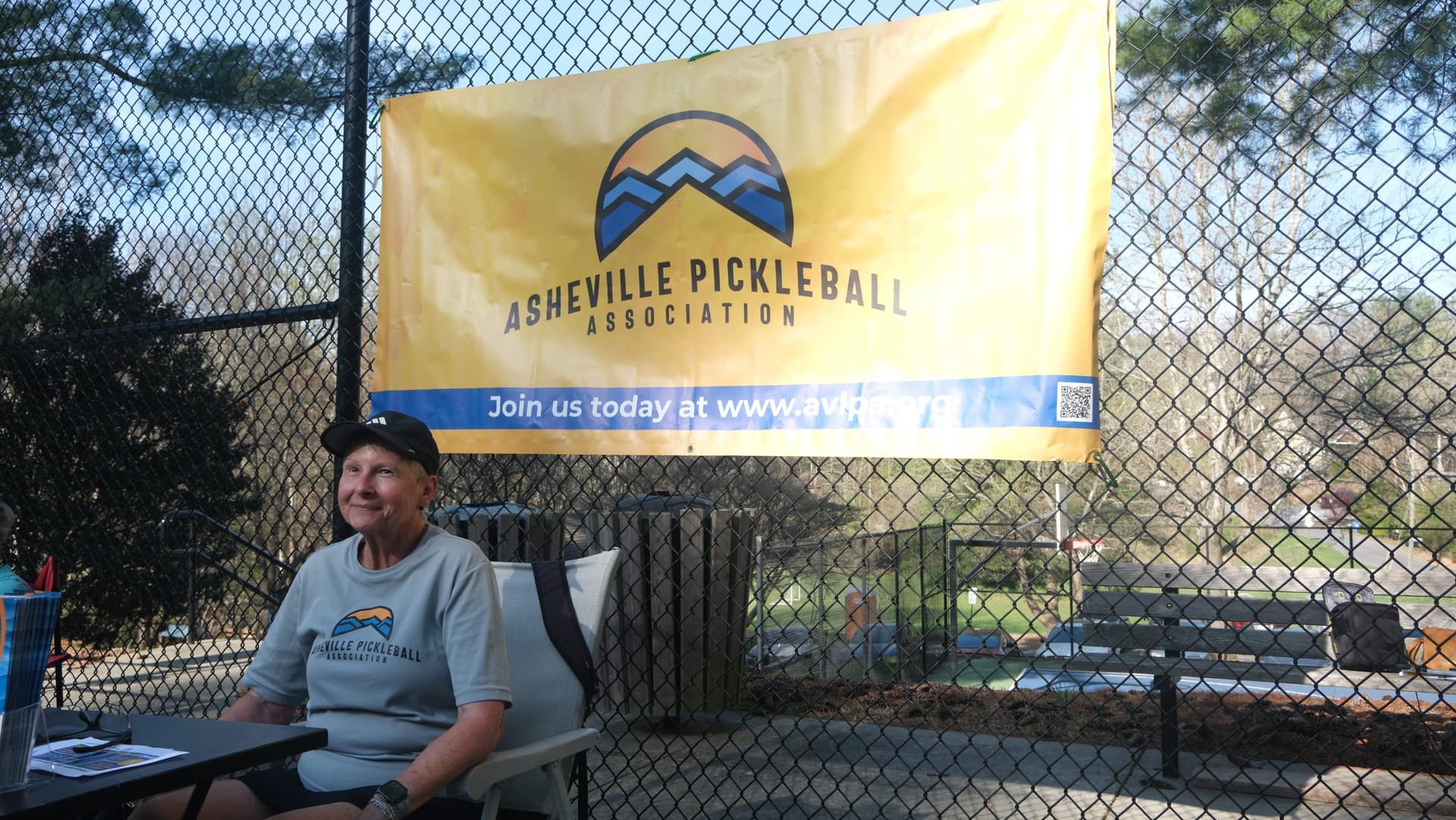
Asheville’s pickleball surge has pushed the sport from a weekend pastime into a public-space issue. The city is now planning its first dedicated pickleball complex, a sign that shared courts, posted time limits and rising demand are no longer enough to meet what residents want.
At the center of that shift is the Asheville Pickleball Association, a nonprofit founded in 2022 by local enthusiasts. It has helped raise funds for underserved players, worked with Asheville Parks & Recreation and built a case that pickleball is not just about competition, but about access, affordability and who gets to use neighborhood recreation space.
A sport that is changing park priorities
Pickleball now sits inside Asheville’s larger debate over how parks should serve a growing and changing city. Asheville Parks & Recreation says pickleball, tennis and bike polo are all seeing significant participation increases, and the department has already adapted much of its court inventory to keep pace. In practical terms, that means the sport is no longer fitting neatly into spare corners of existing facilities.
The city’s response reflects a broader planning problem: pickleball is easy to start, but it still needs court space, nets, scheduling and maintenance. That creates pressure on parks that already serve families, seniors, beginners and longtime tennis players. As more people show up, the question is not whether the sport is popular. It is how Asheville decides who gets access, when, and on what terms.
Where residents are playing now
Asheville already has a patchwork of public places to play, but most of them rely on shared-use courts rather than dedicated pickleball space. The city says all public outdoor hard-surface tennis courts in Asheville Parks & Recreation are dual-lined for both tennis and pickleball, and courts are first-come, first-served with posted time limits.
Current public play is listed at:
- Kenilworth Park
- Malvern Hills Park
- Montford Park
- Murphy-Oakley Park
- Weaver Park
- Linwood Crump Shiloh Community Center
- Stephens-Lee Community Center
The city also offers rollaway pickleball nets at Malvern Hills Park, Murphy-Oakley Community Center Park and Weaver Park. In addition, select recreation centers provide free net checkouts for up to seven days, a small but important detail for players who do not have their own gear or who want to try the sport before buying equipment.
That mix of shared courts, portable nets and checkouts shows how Asheville has tried to keep the game accessible. It also shows the limits of the current setup. When a court must serve multiple sports, access becomes a scheduling question, and the fastest-growing groups are often the ones pushing hardest against the boundary.
How the nonprofit is widening access
The Asheville Pickleball Association’s role goes beyond organizing play for existing players. The organization says it is a 501(c)(3) nonprofit that provides free clinics, including youth clinics for underserved communities, in partnership with Asheville Parks & Recreation and city schools. It also organizes league play for all ages and advocates for new or improved public facilities across western North Carolina.

That matters for the way the sport grows. Free clinics lower the barrier for beginners, while youth programs and older-adult play help keep the game from becoming only a niche for people who already know where to go and how to get started. In a city where affordability and access shape recreation choices, the association’s work makes pickleball feel less like a trend and more like an entry point.
Its emphasis on underserved communities is especially important. A sport can grow quickly and still leave people behind if lessons, court time and equipment are concentrated among those who already have social networks or spare money. By pairing fundraising with clinics and public-facility advocacy, the association is trying to keep Asheville’s pickleball boom from becoming an exclusive club.
A dedicated complex is now on the table
The biggest sign that the sport has outgrown the old model is Asheville’s plan for its first public complex with dedicated pickleball courts. The city is proposing an 8- to 10-court site, with Aston Park and Roger Farmer Park identified as possible locations after professional site analysis by Surface 678. The project is funded by Asheville’s 2024 general obligation bonds.
That proposal is more than a facilities upgrade. It is the city acknowledging that shared courts alone cannot carry the load forever. A dedicated complex would give pickleball players a more predictable place to gather, reduce pressure on multi-use courts and make it easier to program leagues, clinics and community play without constantly negotiating with other sports.
The project also fits into Asheville’s larger planning framework. City Council adopted Recreate Asheville, the city’s 10-year parks and recreation vision, on August 27, 2024. City officials say the pickleball complex was identified as a need in that plan, which places the sport inside a longer-term strategy for how Asheville invests in public recreation.
The city said in April 2026 that it was seeking public input on the proposal and expected to choose a final site by the end of summer 2026. That timeline matters because it shows the city is moving from temporary fixes to capital planning, with pickleball now part of the same public-realm conversation as other major park investments.
Why the local pressure keeps building
Asheville’s situation mirrors a national boom. SFIA reported 19.8 million pickleball players in the United States in 2024, a 45.8% jump from 2023. USA Pickleball’s 2025 annual growth report said the Pickleheads database had more than 18,258 locations and 82,613 known courts nationwide. When a sport grows that quickly, local park systems feel it first.
Asheville has already made one major adjustment before. In November 2022, Asheville Parks & Recreation announced that all outdoor hard-surface public tennis courts would become dual-lined shared-use courts, a short-term move that increased public pickleball courts from 12 to 22. That earlier decision solved an immediate shortage, but the current push for a dedicated complex shows the city has moved into a second phase: building enough room for the sport without squeezing out everyone else.
For Asheville, pickleball is now a measure of how the city balances recreation, access and public space. The challenge is not just to accommodate a popular game, but to make sure newcomers, seniors and lower-income players can still find a court, get a lesson and stay in the rotation as demand keeps climbing.
This article was produced by Prism’s automated news system from verified source data, official records, and press releases, then run through automated quality and moderation checks before publishing. The system is built and supervised by the people who set the standards it runs under. Read our full AI policy.
Did this article answer your question?