Asheville residents report panhandling, drug use, encampments after Helene
Residents say panhandling, tents and open drug use have spread from downtown to major corridors after Helene, while Buncombe’s unsheltered count jumped 50%.
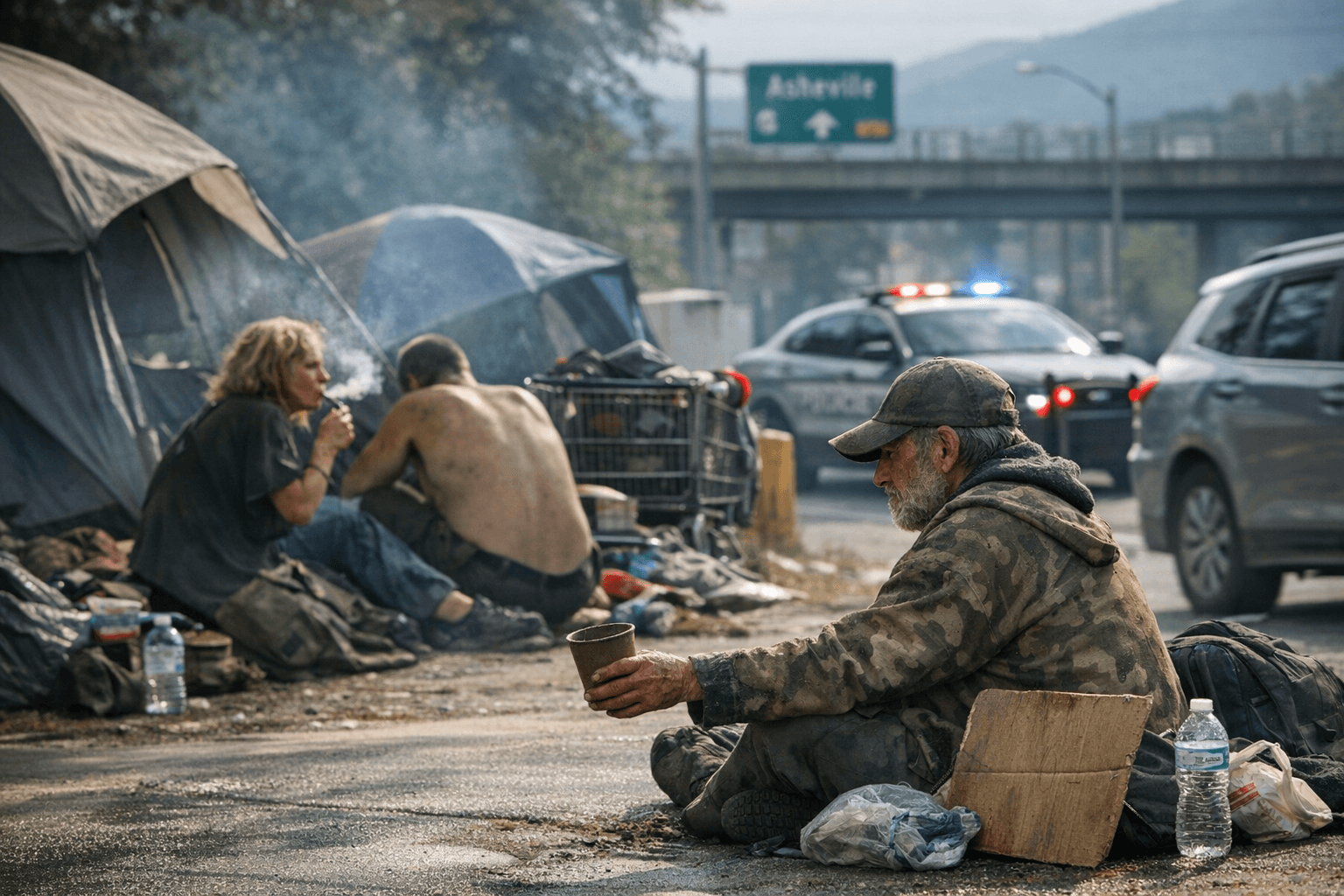
Complaints about panhandling, public drug use and encampments have sharpened across Asheville, with residents and business owners saying the problem is now affecting foot traffic, tourism and everyday errands from downtown to Tunnel Road, Long Shoals Road and Patton Avenue.
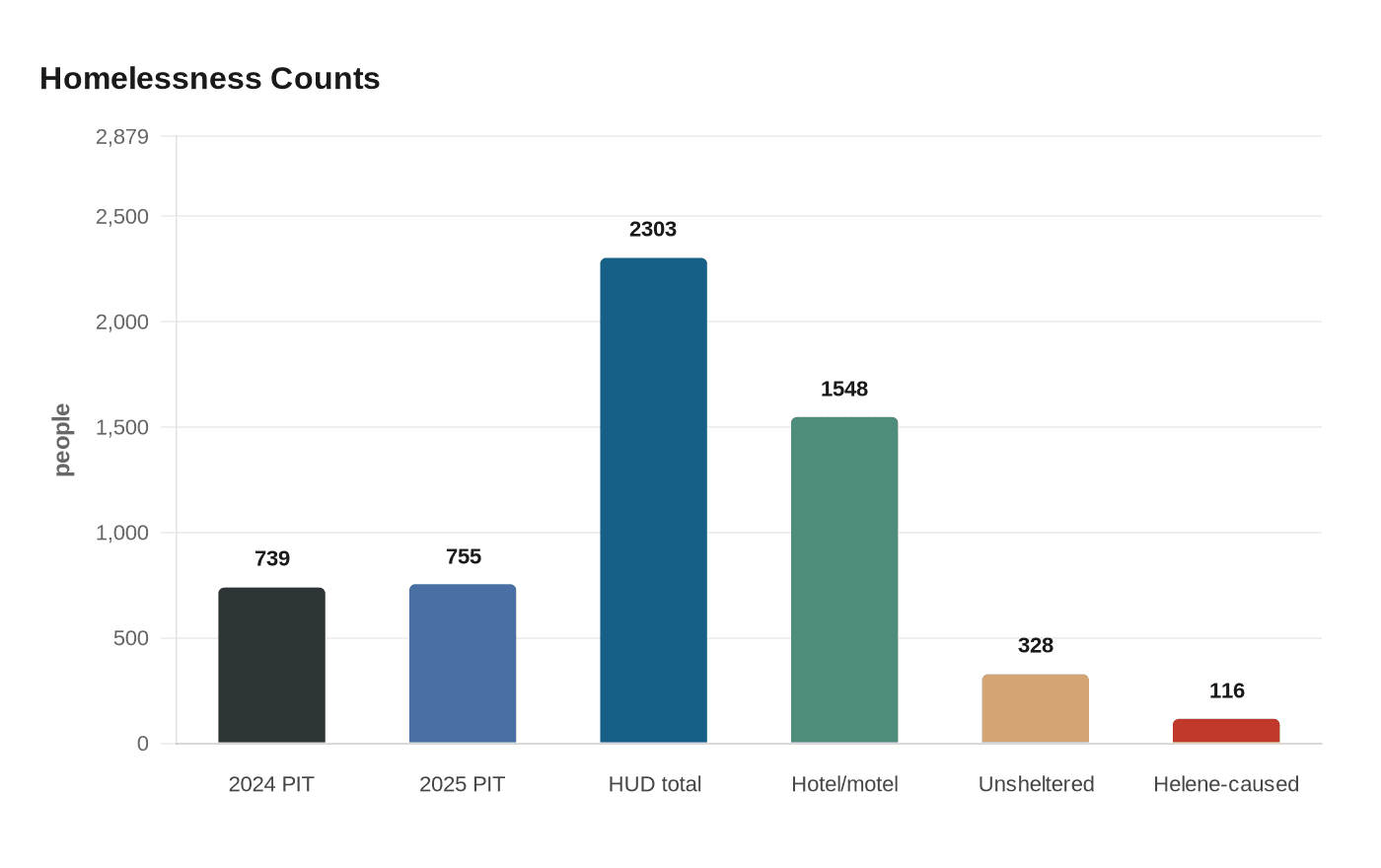
That pressure is landing on a shelter system already strained by Hurricane Helene. Buncombe County’s 2025 Point-in-Time count found 755 people experiencing homelessness, up from 739 in 2024, but the official HUD total rose to 2,303 once 1,548 people staying in agency-paid hotels or motels through FEMA’s Transitional Sheltering Assistance were included. Of the people counted directly, 328 were unsheltered, a 50% increase from 2024, and 116 said they were homeless because of Helene.
County and city leaders have said the storm was a major driver of the increase. The annual count, which local agencies conduct even though federal rules require it only every other year, took place Jan. 28-29, 2025 with 135 volunteers, street outreach, expanded service locations and encampment outreach. Officials also said shelter and transitional housing numbers were down 18% from 2024, in part because ABCCM’s Veterans Restoration Quarters lost beds after heavy storm damage.
Asheville police responded on April 9, 2026 with a new Downtown Plan aimed at open drug use, homelessness and repeat offenders. APD said the plan will add coordination with support services, bring police-fire co-response with Vaya Health, and shift staffing so more officers are downtown. The department said it issued 73 panhandling citations in 2026 after the ordinance change last August, the highest total in three years, even as officers continued to see panhandlers at regular spots along major roads and said illegal panhandling in traffic was still happening.
The city had already expanded panhandling enforcement zones in October 2025, but the complaints have kept coming. City and county officials have been working from the Within Reach report, a five-strategy, 112-action-step plan developed with the National Alliance to End Homelessness and support from Dogwood Health Trust. The county update also said Buncombe funded Code Purple with $50,000 in matching money from the City of Asheville, and those emergency shelter nights totaled 57 during the period covered. For downtown businesses, park users and families trying to navigate the city, the message is the same: Helene did not create Asheville’s homelessness crisis, but it pushed an already fragile system into a far more visible and costly phase.
This article was produced by Prism’s automated news system from verified source data, official records, and press releases, then run through automated quality and moderation checks before publishing. The system is built and supervised by the people who set the standards it runs under. Read our full AI policy.
Did this article answer your question?