Asheville weighs historic designation for Walton Street Park and Pool
Walton Street Park and Pool carry Southside Asheville’s Black recreation history into a new planning phase, with historic designation and fresh design concepts on the table.
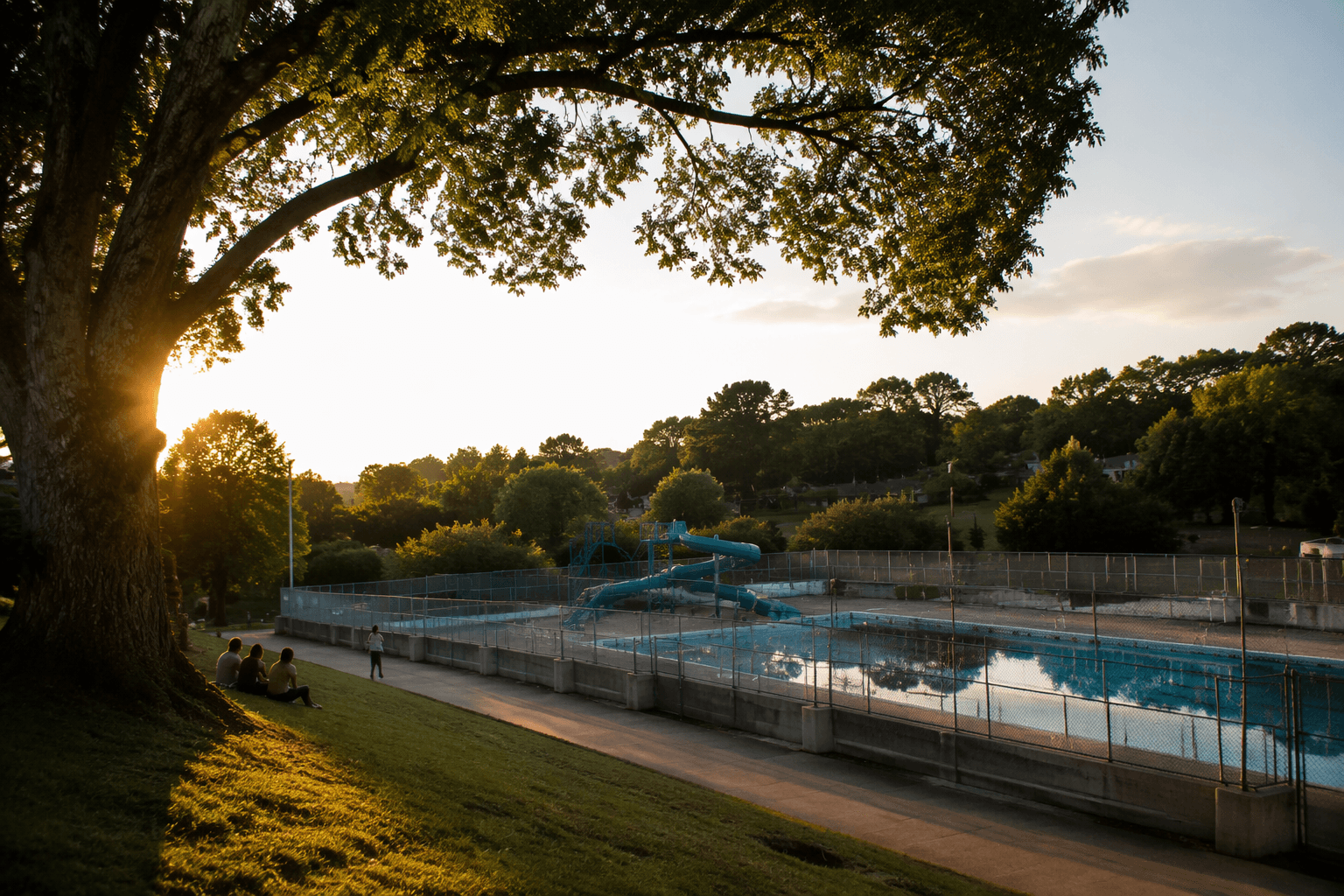
Walton Street Park sits in Southside Asheville as more than a patch of green and pavement. The park and pool have long carried neighborhood memory, and the city is now weighing how to preserve that history while reshaping the site for the next generation of users. What happens there will help define how Asheville treats one of its most recognizable public spaces tied to Black recreation, local identity, and civic investment.
A neighborhood landmark built in two chapters
Walton Street Park opened in 1939, and the pool and bathhouse followed in 1948. That timeline matters because the site grew alongside the Southside community rather than arriving as a later amenity dropped into the neighborhood. City and media materials describe Walton Street Pool as the longest-serving public pool established for Asheville’s Black families and community members, and it filled a void left by the closure of Mountain Street Pool.
The pool has been closed since summer 2021, which turned an everyday gathering place into a planning question. For longtime neighbors, the site is not just remembered for summer recreation but for what it represented in a city where access to public space was once divided by race. That history is why Walton Street keeps resurfacing in Asheville’s public conversation: the place is both familiar and unfinished.
Historic designation is part of the planning, not separate from it
Asheville City Council approved Walton Street Park as a local historic landmark on Oct. 25, 2022. Later city and preservation materials describe the Walton Street park and pool area as holding both local landmark status and a place on the National Register of Historic Places, with the North Carolina Department of Natural and Cultural Resources keeping a National Register registration record tied to the site. The city’s Walton Street Pool Historic Designation page makes clear that preservation is being considered alongside future use, not instead of it.
That framing matters because historic designation can protect a place’s story without freezing it in time. At Walton Street, the question is how much of the original setting, character, and memory should remain visible if the city adapts the space for new programming, a new layout, or a new mix of uses. The city’s Walton Street Park project page and Park Views series show that Asheville is treating the park as an evolving civic asset, not a sealed relic.
Residents have been pulled into the process from the start
Public input has been central to the Walton Street conversation. Asheville has used PublicInput, surveys, open houses, and feedback events to gather community ideas, and city materials have invited residents to help guide the future development of Walton Street Park and Walton Street Pool. Event titles like open houses and “Flapjacks & Feedback” meetings make the approach explicit: this is a neighborhood process, not just a staff exercise.
That public engagement has also been tied to neighborhood organizations. Southside United Neighborhood Association, working with Asheville Parks & Recreation, launched a community-wide survey in 2025 to shape the future of the historic pool area. The survey’s stated goal was to preserve the park’s historic character while adding modern amenities that could serve the community for generations, a balance that has sat at the center of every discussion since the pool closed.
The public-facing portal for Walton Street Park also gives residents a direct place to sign in, comment, and review project materials. In practical terms, that means the future of the site has been debated in public, through a process that asks who has used the space, who should use it next, and what should remain recognizable when the work is done.
What the current design concepts would change
The city’s posted concepts point toward a space that would function more broadly than a traditional pool site. Among the ideas under review are a renovated pool house with flexible space, an outdoor kitchen, and room for food trucks. Other elements include a new playground, a paved walking loop, additional lighting, and safety enhancements.
Those details tell you a lot about how Asheville sees the site’s next chapter. The pool basin itself has been closed, but the design concepts suggest the city is trying to keep Walton Street active as a place to gather, walk, play, and host food or community events. A city-linked post said the designs and renderings were created from public feedback and were ready for review, which signals that resident input has already shaped the direction of the project rather than being collected after decisions were made.
Safety has also stayed in the foreground. A city parks post said safety fencing would be erected around the pool area, basketball courts, and horseshoe pits in preparation for upgrades. That kind of detail may sound procedural, but it is part of the lived reality of the site right now: the park is in transition, and the physical work on the ground is changing how people move through a familiar neighborhood space.
What comes next for Walton Street
The Walton Street project has stayed visible because it sits at the intersection of memory and design. It is one of Asheville’s clearest examples of how a city handles a place that means different things at once: a historic site, a former segregated-era pool, a neighborhood gathering spot, and a candidate for new public use. That complexity is why the site keeps drawing residents back into the process.
A 2026 Asheville Citizen Times story said a final design for the reimagining could be shared in the spring. Until that happens, Walton Street Park and Pool remain in the middle of a civic test Asheville cannot avoid: whether it can preserve the story of a place that served Black families for decades while making sure the next version still feels like it belongs to the neighborhood that made it matter in the first place.
This article was produced by Prism’s automated news system from verified source data, official records, and press releases, then run through automated quality and moderation checks before publishing. The system is built and supervised by the people who set the standards it runs under. Read our full AI policy.
Did this article answer your question?