Black Stories in Census Tract 2 preserves Asheville's Black neighborhood history
Stumptown’s story is on view at Pack Memorial Library, and the exhibit closes with a screening that ties Asheville’s Black past to today’s fights over redevelopment and memory.
Black Stories in Census Tract 2 is not just a display to walk past at Pack Memorial Library. It is a reminder that Stumptown, Hill Street, and South Montford still sit inside Asheville’s present-day debates over preservation, displacement, and whose stories get publicly remembered. The exhibit remains open through April 21, and it closes with a documentary screening and discussion at 5 p.m. in Lord Auditorium, turning a library visit into a timely look at how neighborhood history still shapes Buncombe County planning fights.
What the exhibit brings into view
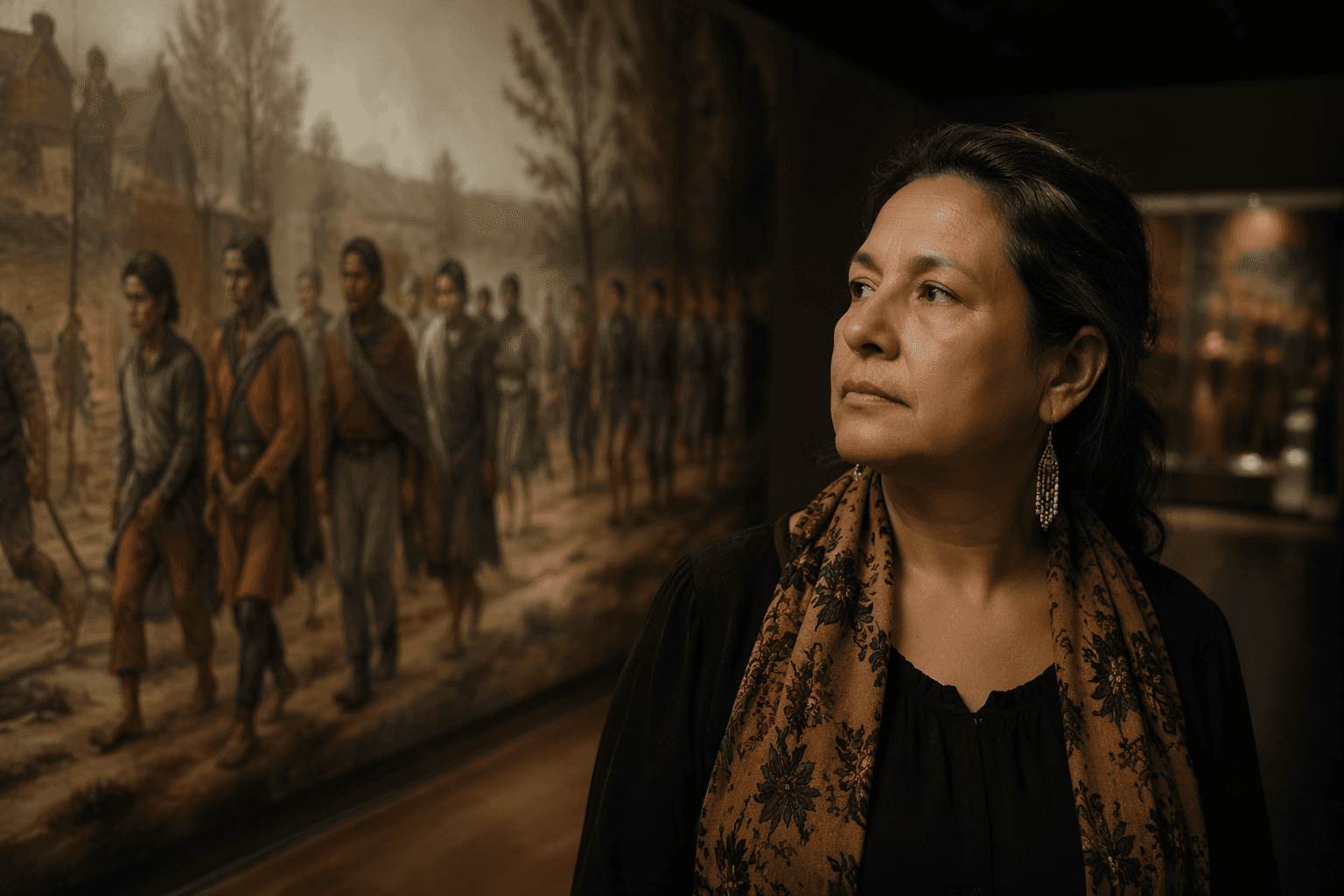
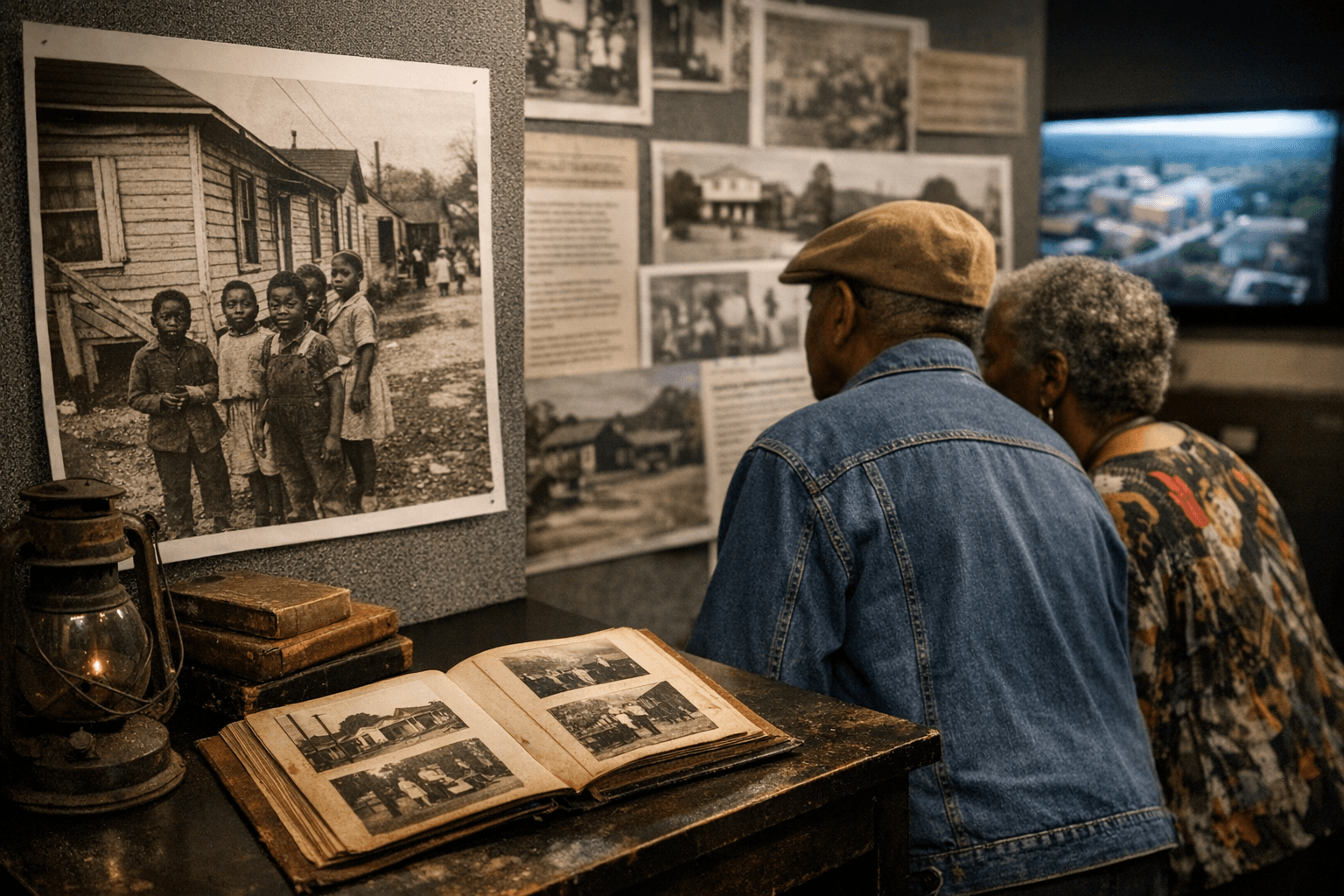
Buncombe County Special Collections describes the exhibit as a curated multimedia project created by Garnet Prose + Projects and STM Multimedia in partnership with the Historic Stumptown Neighborhood Association. It draws on community-based research and oral history collected by Ami Worthen, then layers those voices with archival materials and contemporary multimedia work. The result is a public record of Black Asheville that shows not only where people lived, but how they built community under pressure.
Visitors will find a focus on the families whose roots shaped Stumptown, Hill Street, and South Montford. That emphasis matters because the exhibit is built around lived experience, not only dates and maps. It asks viewers to see neighborhood history as family history, and family history as part of the larger civic story of Asheville.
Support for the project comes from the Friends of Buncombe County Special Collections, the Preservation Society of Asheville and Buncombe County, and Dogwood Health Trust. That mix of partners underscores the exhibit’s larger role: it is both a cultural project and a preservation tool, making local memory visible in a place where the public can still encounter it directly.
Why Census Tract 2 matters now
The exhibit’s title points to a specific geography, but its meaning reaches much farther. In Asheville, memory is often the only thing that survives after streets are altered, homes are removed, and familiar landmarks vanish from the map. Black Stories in Census Tract 2 treats memory itself as a form of preservation, one that can keep family stories and neighborhood identity alive even when the physical landscape has changed.
That perspective is especially important in a city still wrestling with redevelopment and gentrification. Advocates and former Stumptown residents have pushed in recent years to make sure the neighborhood’s history is included in new development planning. The exhibit fits into that effort by showing that the question is not only what gets built next, but what gets remembered when construction is finished.
The exhibit also aims to create cross-generational dialogue. Elders, descendants, students, and the wider public are all part of the intended audience for the closing program, and that matters because Asheville’s Black neighborhood history can disappear from public memory when it is not passed forward deliberately. For younger residents, the exhibit offers a direct path into the same continuing story, one that connects today’s city to the communities that helped shape it.
The urban-renewal history behind the exhibit
The broader backdrop is Asheville’s urban-renewal era, when city building and highway expansion fell hardest on Black neighborhoods. UNC Asheville’s oral-history finding aid says those forces had a disproportionate effect on Black communities, and reporting on Black Asheville has shown how severe the damage was. Between the late 1950s and mid-1980s, countless homes, roads, and businesses were removed and replaced by highways, administration buildings, and municipal garages.
That history helps explain why the exhibit lands with such force now. It is not only about loss, but about how policy choices shaped the city’s social geography. Neighborhoods such as Stumptown, Hill Street, and South Montford were not simply faded from view. They were pressured by segregation, disinvestment, redlining, and urban renewal, then left to carry the burden of remembering after the built environment changed around them.
One of the clearest examples is Stephens-Lee High School. Opened in 1923, it became the leading Black public education center for western North Carolina, then closed in 1965. Its main building was razed in 1975. That arc captures the larger story of Black Asheville in miniature: a place of institution-building, community pride, and achievement, followed by a loss that still shapes how residents understand the city’s past.
What to do before the exhibit closes
If you want the fullest experience, go before April 21 and plan to stay for the documentary screening at 5 p.m. in Lord Auditorium at Pack Memorial Library. The exhibit itself offers the overview, but the closing program is designed to deepen the conversation by bringing together elders, descendants, students, and members of the public in the same room.
The practical value of a visit is straightforward. You will see how oral histories, archival records, and multimedia storytelling can restore neighborhoods to the public record. You may also leave with a clearer view of why Asheville’s current planning debates cannot be separated from its Black history. In Buncombe County, preservation is not only about old buildings. It is about whether the stories attached to Stumptown, Hill Street, and South Montford stay visible enough to shape the city that rises next.
This article was produced by Prism’s automated news system from verified source data, official records, and press releases, then run through automated quality and moderation checks before publishing. The system is built and supervised by the people who set the standards it runs under. Read our full AI policy.
Did this article answer your question?