Craggy Dam removal debate grows in Woodfin over safety, habitat
A 122-year-old Woodfin dam powers wastewater treatment and saves money, but removal backers say it could lower upstream flood levels by 7 to 10 feet.

The future of Craggy Dam has become a test of how Buncombe County weighs river restoration against the practical cost of keeping an aging hydropower plant running beside Woodfin’s wastewater treatment system. The 122-year-old dam on the French Broad River helps power the Metropolitan Sewerage District of Buncombe County’s plant, but a coalition now says taking it out would improve water quality, safety and habitat.
The Craggy Coalition, made up of American Rivers, MountainTrue and RiverLink, argues the dam is not needed for flood control and should be removed from the river. Backers say flood levels immediately upstream could be 7 to 10 feet lower without it, a change they contend could reduce risk to homes, schools and businesses in Woodfin and other nearby areas that saw millions of dollars in damage during Hurricane Helene. They also say removal would reconnect 1,460 miles of rivers and tributaries in the French Broad watershed, restore sediment flow, improve fish passage and eliminate a low-head-dam drowning hazard.
RiverLink has also pointed to water quality concerns along the river corridor. The group says a draft 2022 impaired-water listing under state rules includes a stretch of the French Broad from Long Shoals Road in Arden to Craggy Dam in Woodfin, including popular recreation reaches near Asheville where E. coli and bacteria concerns have been a recurring issue. That makes the debate about more than one structure on the river. It is also about what people encounter when they boat, fish, swim or live near the French Broad.
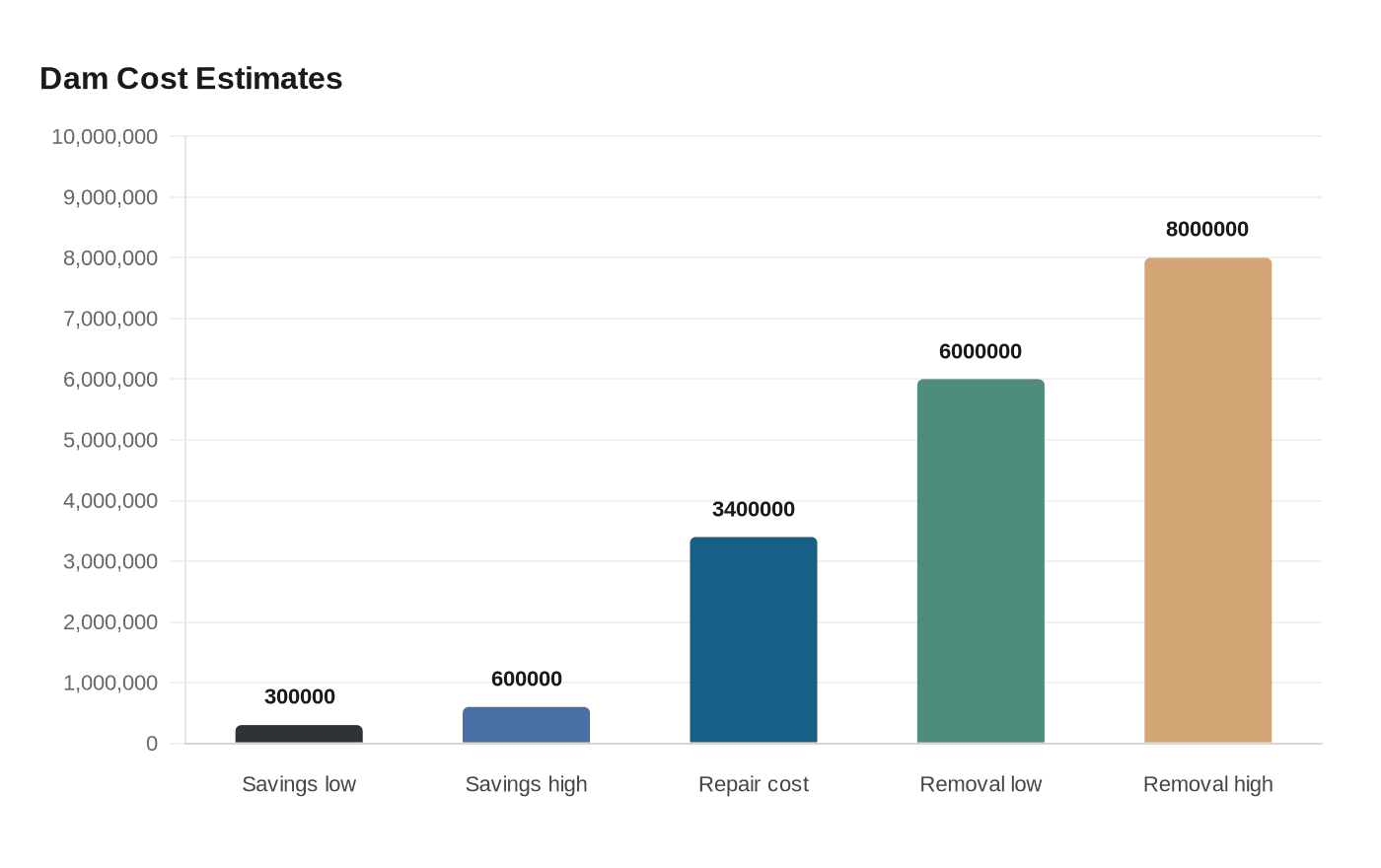
MSD has not taken a formal position on removal, but the district has said the hydroelectric facility supplies about 45% of the electricity needed to treat wastewater and saves customers an estimated $300,000 to $600,000 a year in energy costs. MSD has also said repairing the dam would require about $3.4 million in capital improvements over the next 10 years. That puts the district at the center of any next step, since it owns the dam and operates the treatment plant next door. Any move beyond advocacy would also run through state regulators, including the North Carolina Department of Environmental Quality.
A 2024-2025 study funded by the North Carolina Wildlife Resources Commission found no known engineering, sediment or regulatory barriers that would make removal impossible, according to American Rivers. The conceptual design and energy alternatives analysis was prepared by Stantec, Resource Environmental Solutions, American Rivers, MSD and Equinox. Proponents have described the removal concept as a $6 million to $8 million undertaking, but they cast it as a once-in-a-generation opportunity for the French Broad River. For Woodfin and the wider river corridor, the question is no longer whether the dam matters. It is which public cost matters most.
This article was produced by Prism’s automated news system from verified source data, official records, and press releases, then run through automated quality and moderation checks before publishing. The system is built and supervised by the people who set the standards it runs under. Read our full AI policy.
Did this article answer your question?