Buncombe County geoportal lets residents search neighborhoods, property data, parks
A Buncombe County map can flag flood data, zoning, parcel lines, tax details, and district boundaries before you buy, build, or dispute a property line.
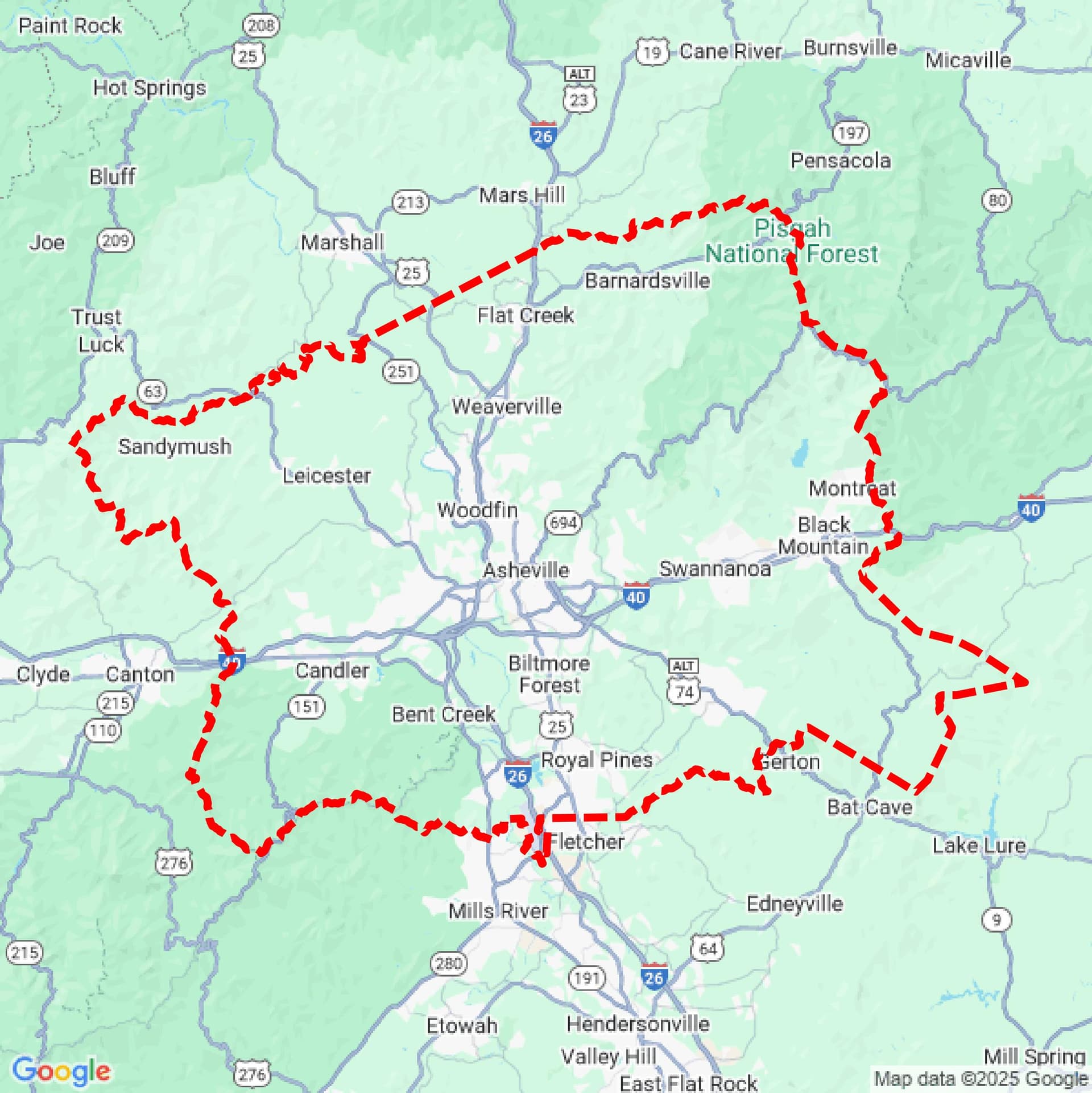
Discover Buncombe lets you search a Buncombe County address and pull up property information, nearby parks, schools, libraries, pools, and crime incidents. Before you buy a house in Asheville, add on to a place in Candler, or argue over a fence in Weaverville, it can answer the first questions that usually cost people money.
Start with the address
Discover Buncombe is the county’s GeoPortal, built for practical checks rather than abstract planning. Type in an address or place name and the map can bring up the property and the surrounding streets. The portal is useful not only for homeowners but also for renters, agents, researchers, and neighbors trying to confirm what is around a parcel.
The county’s broader GIS home page covers property, infrastructure, environmental, and community information. The same tool can help you think through several decisions at once: whether a lot is in a flood-prone area, whether a use is allowed by zoning, whether a parcel boundary matches the deed, or whether the address falls inside a particular district.
What the map layers show
Buncombe County’s open map services add detail behind the simple search box. One official layer set includes county boundary, property, address, street centerline, incorporated areas, Buncombe County zoning, commissioner districts, election precincts, and voter information data. Another county map service adds points of interest, landslides, cemeteries, control monuments, major roads, and a bicycle suitability index.
If you are comparing homes, you can see which incorporated area you are in and whether the parcel sits near a steep slope, a cemetery, or a road that the county considers more or less suitable for bicycling. If you are planning a renovation or an addition, zoning layers and property lines can help you spot issues before a contractor draws plans around the wrong assumption.
The county’s legend also shows still more local detail: townships, fire districts, flood data, contour lines, lakes and ponds, protected ridges, zip codes, and municipal zoning categories for places including Asheville, Woodfin, Black Mountain, Montreat, and Weaverville.
Why residents use it before they buy or build
Parcel data is compiled from recorded deeds, plats, and other public records, and the county’s source documents run from the late 1940s to the present.
The portal is also useful in disputes. A homeowner checking a fence line, a buyer worried about lot size, or a neighbor trying to understand whether a driveway encroaches on adjacent land can compare the mapped parcel with the recorded record. Users can view parcels, street centerlines, surface water, elevations shown as contours, and aerial imagery on the GIS map, which gives a fuller view of what is actually on and around a piece of land.
Flood data and contour lines are especially important in a county with mountain terrain and low-lying creek corridors. A property that looks ordinary on a listing can sit near surface water, along a steep grade, or beside protected ridges. Those conditions can affect drainage, access, insurance, and what kind of work makes sense on the lot.
Government districts are on the map too
The geoportal also maps government districts. The commissioner-district dataset reflects the current boundaries for the three districts of the Board of County Commissioners. The board sets policy on the property tax rate, erosion control, noise, subdivisions outside municipal jurisdiction, and the annual budget.
The county’s election-precinct layers show polling locations along with county commissioners, state-house, and congressional boundaries. If you are figuring out who represents your address or where you vote, the same county system can put streets, precincts, and district lines in the same view.
How the county defines GIS and why that matters
GIS is the computer system that relates data to points, lines, and areas on the earth. In plain terms, that means the county can connect a parcel to a street centerline, a floodplain, a contour line, a fire district, or a voting precinct and show how those layers overlap at a specific address.
The portal is useful in Asheville and Black Mountain, but also in Weaverville, Woodfin, Candler, Montreat, Biltmore Forest, and other parts of the county where incorporated areas and township lines can change what rules apply. A resident checking a bike route, a researcher comparing land use, or a parent looking up a school area can all use the same map framework to get local context.
Use it carefully, but use it
The county keeps a GIS staff directory with a direct phone line at 828-250-6860, and the map services are publicly accessible through multiple county tools.
Still, tax and parcel information can change constantly. The county’s tax system makes every effort to provide accurate and timely information, but it does not guarantee the accuracy or completeness of parcel data. Deeds, plats, and tax records are updated over time, and a map that is useful today can still shift when a new document is recorded.
This article was produced by Prism’s automated news system from verified source data, official records, and press releases, then run through automated quality and moderation checks before publishing. The system is built and supervised by the people who set the standards it runs under. Read our full AI policy.
Know something we missed? Have a correction or additional information?
Submit a Tip