Buncombe County Schools Urge State Action After Court Ruling Threatens Education Funding
NC Supreme Court kills the $5B Leandro school plan; Buncombe superintendent Rob Jackson warns the ruling puts STEM staffing, EC services, and bus coverage at immediate risk.
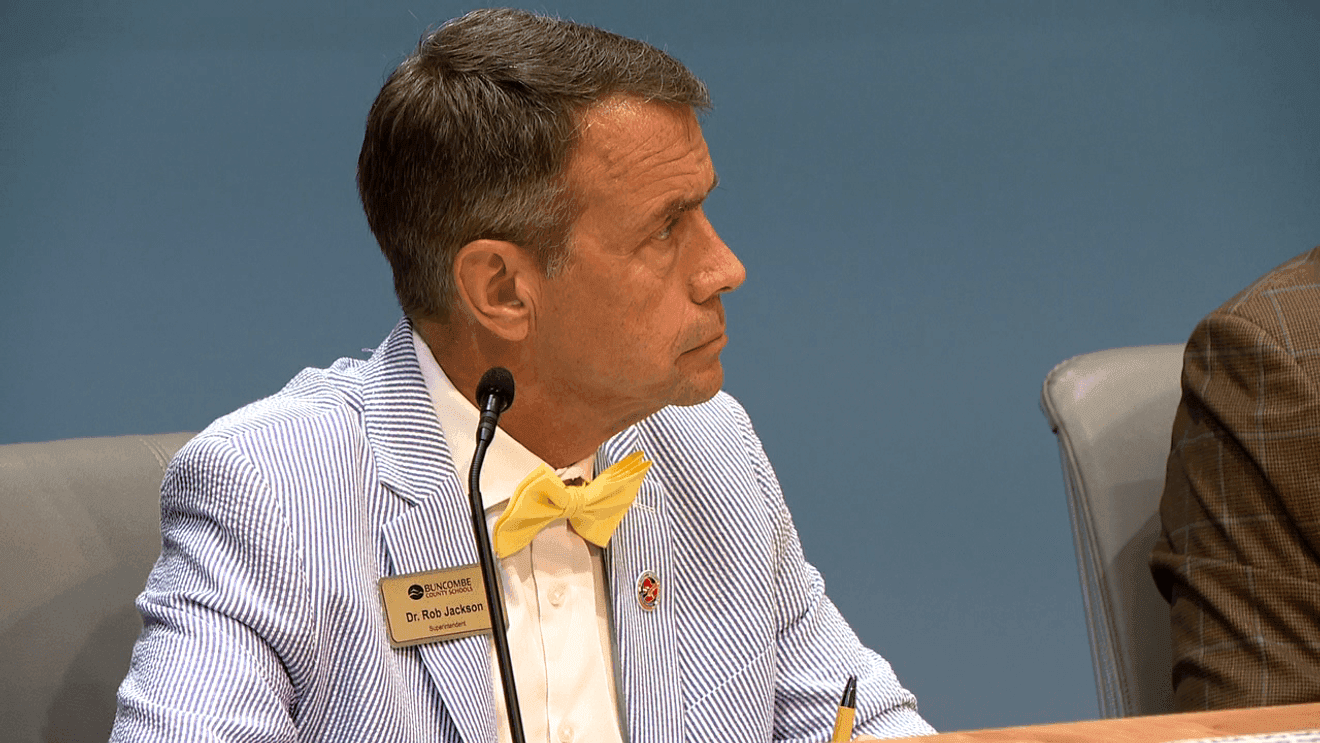
The North Carolina Supreme Court's 4-3 ruling on April 2 to dismantle the multibillion-dollar Leandro education funding plan landed on the same night Buncombe County Schools Superintendent Rob Jackson sat before 21 public commenters demanding answers about teacher shortages, half-empty bus routes, and underfunded exceptional children's programs.
With state appropriations making up 60% of the district's operating budget, the court's decision to return full spending authority to the Republican-controlled General Assembly means Buncombe County Schools faces a narrower path to shoring up the gaps parents have been loudest about: STEM teacher vacancies leaving classrooms understaffed, bus driver shortages stretching ride times across the county, and exceptional children's services that advocates say are already running on inadequate state allotments.
Jackson, who made fully funding the Leandro plan a centerpiece of the district's 2025 legislative agenda, said after the April 2 Board of Education meeting that the ruling caught district leadership off guard. "For the state Supreme Court to walk away from that was surprising to me," he said. "I worry about that, because we had certainly hoped that that litigation would encourage our general assembly to fully fund public education, and so in the coming days we'll begin to fully understand the ramifications of that decision."
The plan the court scrapped would have put more than $5 billion into North Carolina's public schools, part of a 2021 agreement that a then-Democrat-majority Supreme Court endorsed in 2022 and required the General Assembly to begin funding. The court's four Republican justices, led by Chief Justice Paul Newby, ruled that the trial court had overstepped its jurisdiction when it expanded the original 1994 case into a statewide overhaul of the entire school funding structure.
The timing compounds a budget crisis already battering Buncombe County Schools. The General Assembly remains nine months into fiscal year 2026 without adopting a state budget. The state's short legislative session opens April 21, less than one month before local school boards must submit budget requests to county commissioners. That compressed window leaves Jackson and the board with almost no runway to replace what the Leandro decision removed before families feel it in the fall.
Shanna Peele, president of the Buncombe County Association of Educators, zeroed in on exceptional children's services during public comment. "You are being asked to build a world-class education system with crumbs from the state," Peele told the board. "While we recognize you are doing the best you can with what you've been given, our students cannot thrive on scarcity."
Natalie Dorsey, a BCS parent and co-coordinator for Buncombe County Public School Strong, put the ground-level consequences plainly. "Students and families are feeling the impact of the General Assembly's failure to pass a state budget and fully fund public schools," Dorsey said. "There are teacher shortages in key areas like STEM, larger class sizes, and schools don't have enough bus drivers to serve all students adequately."
The Buncombe County Board of Commissioners approved $121.8 million for Asheville City Schools, Buncombe County Schools, and A-B Tech Community College combined in the current fiscal year, a budget already strained by $11.4 million in Helene-related revenue losses. The district's 2026 legislative agenda also asks the state to stabilize enrollment-based funding, which fluctuated sharply after Helene displaced families across Western North Carolina, and to fund summer learning programs to recover instructional time the storm erased.
Those requests now go to a General Assembly under no court order to honor them. Without specific commitments from state lawmakers in the short session opening April 21, the decisions about what gets cut will fall to county commissioners and the school board before the June budget deadline.
This article was produced by Prism’s automated news system from verified source data, official records, and press releases, then run through automated quality and moderation checks before publishing. The system is built and supervised by the people who set the standards it runs under. Read our full AI policy.
Did this article answer your question?