Buncombe County Under Burn Ban as Code Yellow Air Quality Alert Issued
Yard debris, campfires and burn barrels remain banned across Buncombe County; valley residents face Code Yellow air quality as the statewide ban stretches past nine days with no end date set.
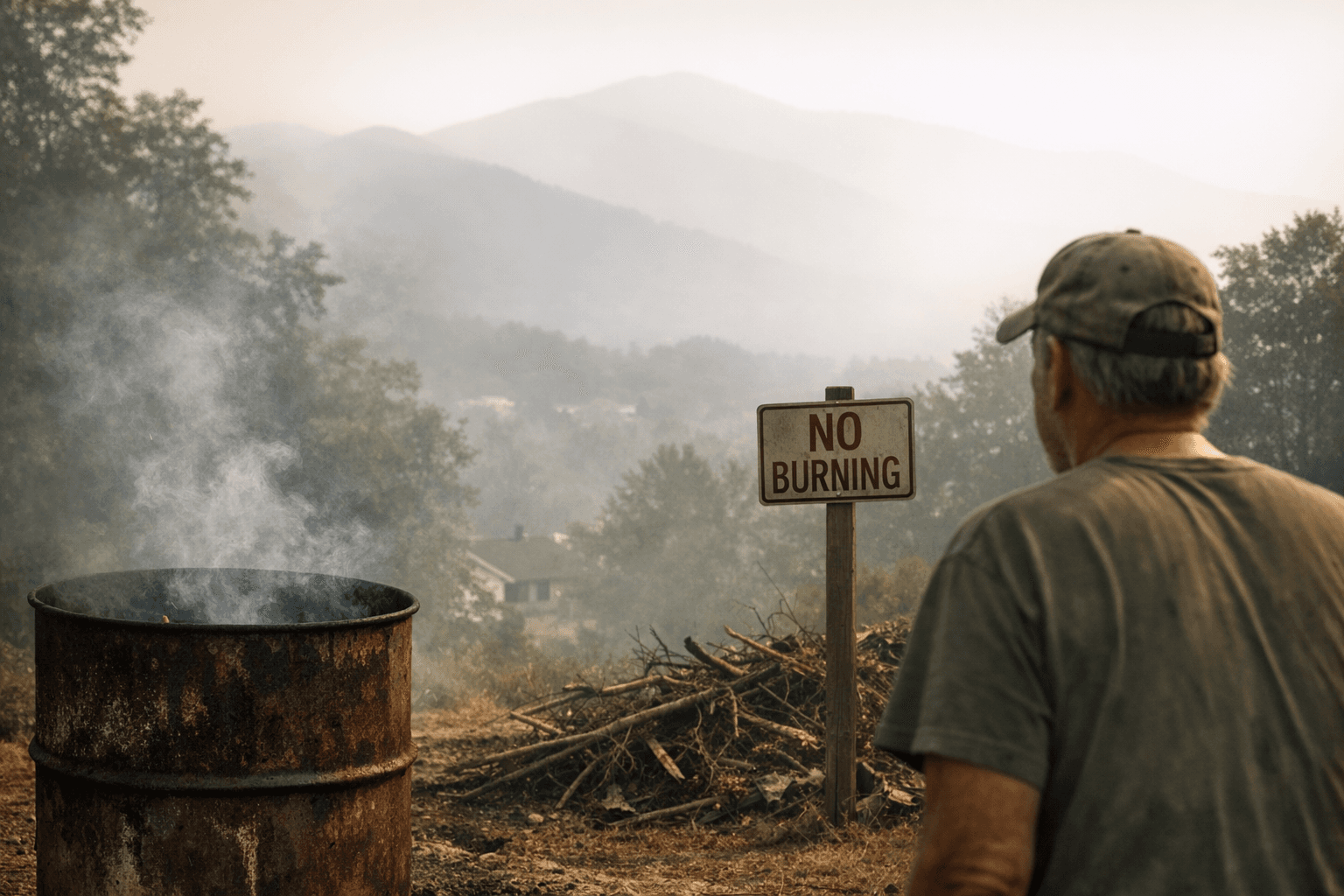
Nine days into a statewide prohibition with no end date set, Buncombe County residents still cannot light a campfire, torch a brush pile, or touch a match to a burn barrel. The North Carolina Forest Service issued the ban at 6 p.m. on March 28, canceling all existing burning permits and suspending new ones, citing drought severity, low humidity, gusty winds and dry fuels forecasted to persist across all 100 North Carolina counties.
The order covers everything open and combustible: campfires, fires in pits, yard waste and debris burns, and land-clearing burns. The Buncombe County Fire Marshal's local ban mirrors the statewide rule. The only exceptions are barbecue grills and approved outdoor food-preparation devices. Residents in Asheville, Biltmore Forest, Black Mountain, Montreat, Weaverville and Woodfin face an additional layer of permanence: open burning has never been legal within those municipal limits, regardless of any statewide ban.
On April 1, the Asheville-Buncombe Air Quality Agency issued a Code Yellow forecast specifically for the valley areas of Asheville and Buncombe County, placing the region at an AQI between 51 and 100. At that level, air quality is considered moderate but carries a real warning: unusually sensitive people, including those with asthma or COPD, should consider limiting prolonged outdoor exertion, particularly when the index pushes toward the upper end of the range.
That warning lands hardest in the lowlands. The same geography that carves the Asheville basin into a scenic bowl also traps ground-level ozone and smoke when winds go calm and humidity falls, the precise conditions behind the current fire danger. Children and seniors face the same elevated sensitivity as people with diagnosed respiratory illness, and the agency's Code Yellow designation singled out valley areas for exactly that reason.
Burning in defiance of the ban can result in a $100 fine and $183 in court costs under state law. Buncombe County's air quality regulations separately allow civil penalties of up to $25,000 for prohibited burning.
Yard debris and storm material that would normally be burned can go through Buncombe County's yard-waste collection program, residential chipping services, or paid drop-off at county convenience centers. No new burning permits will be issued while the ban holds.
To report a suspected illegal burn or check on a permitted burn's compliance, contact the NC Forest Service's Asheville district office at 828-667-5211 or the statewide line at 919-857-4801. The Asheville-Buncombe Air Quality Agency handles complaints and questions at (828) 250-6777; its daily burning-status hotline, updated seven days a week, is (828) 250-6767.
In Mitchell County, a wildfire near the Tennessee state line burned 350 acres before reaching 80 percent containment, a recent illustration of how quickly dry-fuel conditions can escalate. Officials have offered no timeline for lifting the ban, stating only that it will remain in place until atmospheric conditions improve. Spring fire weather in western North Carolina typically runs through April, meaning relief from the restrictions could still be weeks out.
This article was produced by Prism’s automated news system from verified source data, official records, and press releases, then run through automated quality and moderation checks before publishing. The system is built and supervised by the people who set the standards it runs under. Read our full AI policy.
Did this article answer your question?