East Asheville Library joins solar backup network for storm outages
East Asheville Library is slated to become a storm lifeline, with solar backup that can keep phones charged, medicines cold and neighbors connected when the grid fails.
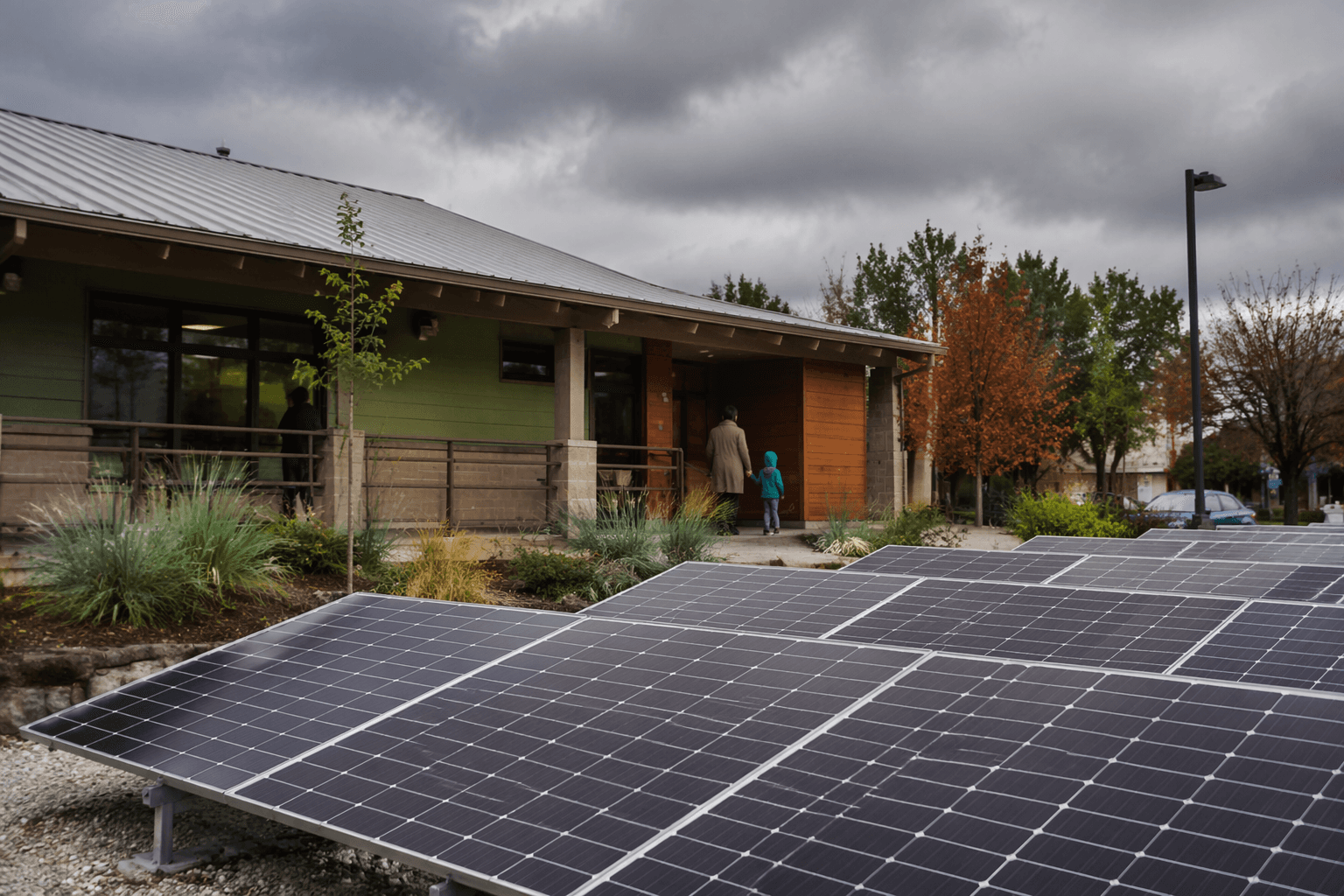
When the power goes out in East Asheville, the library could become more than a place for books. The East Asheville Library is one of the Buncombe County sites being added to a solar-and-battery backup network meant to keep people connected, protect refrigerated medicines and food, and give residents a reliable place to gather when storms knock out the grid.
Nonprofit partners gathered June 12 at MANNA FoodBank in Mills River to announce the next phase of the Beehive microgrid project, which the North Carolina Department of Environmental Quality said it backed with a $5 million investment last August through the State Energy Office. The initiative now includes up to 24 stationary microgrids across six Helene-affected counties, plus two mobile Beehive hubs, one for western North Carolina and one for eastern North Carolina. DEQ said the trailer-based systems can provide refrigeration, device charging, medical-equipment power and drinking-water filtration during outages.

For Buncombe County, the East Asheville branch gives the project a familiar public place where neighbors can look for phone charging, internet access and a powered building during the next blackout. DEQ said western North Carolina communities lost power and communications for weeks after Hurricane Helene, and Land of Sky Regional Council’s Sara Nichols said the storm showed that resilience means keeping medicine cold, charging phones, accessing information, powering essential services and helping neighbors during a crisis.
The five announced sites include East Asheville Library along with community hubs in Madison, Mitchell, Rutherford and Yancey counties. The project is designed around places people already turn to in emergencies, including libraries, food banks, churches, fire stations and community centers. N.C. State University College of Engineering Outreach reported that Footprint Project began installing mobile solar and battery microgrids the day after Helene struck, and that the larger Clean Energy Microgrid project will install more than 25 permanent microgrids and two resilience hubs.
The Buncombe connection matters because food and power failures overlap in hard-hit communities. MANNA FoodBank serves more than 300 partner food pantries, meal sites and schools, and more than 95% of the food it serves moves through those partners. A separate report on MANNA’s Mills River facility said it went nearly 500 days without permanent cold storage after storm damage and had to rely on refrigerated trucks, a reminder of how quickly a regional food system can buckle when the grid fails. In the next disaster, the East Asheville Library may help fill that gap, becoming a neighborhood anchor when residents need power, information and a place to regroup.
This article was produced by Prism’s automated news system from verified source data, official records, and press releases, then run through automated quality and moderation checks before publishing. The system is built and supervised by the people who set the standards it runs under. Read our full AI policy.
Did this article answer your question?