Swannanoa workshop will help residents assess flood, wildfire risks
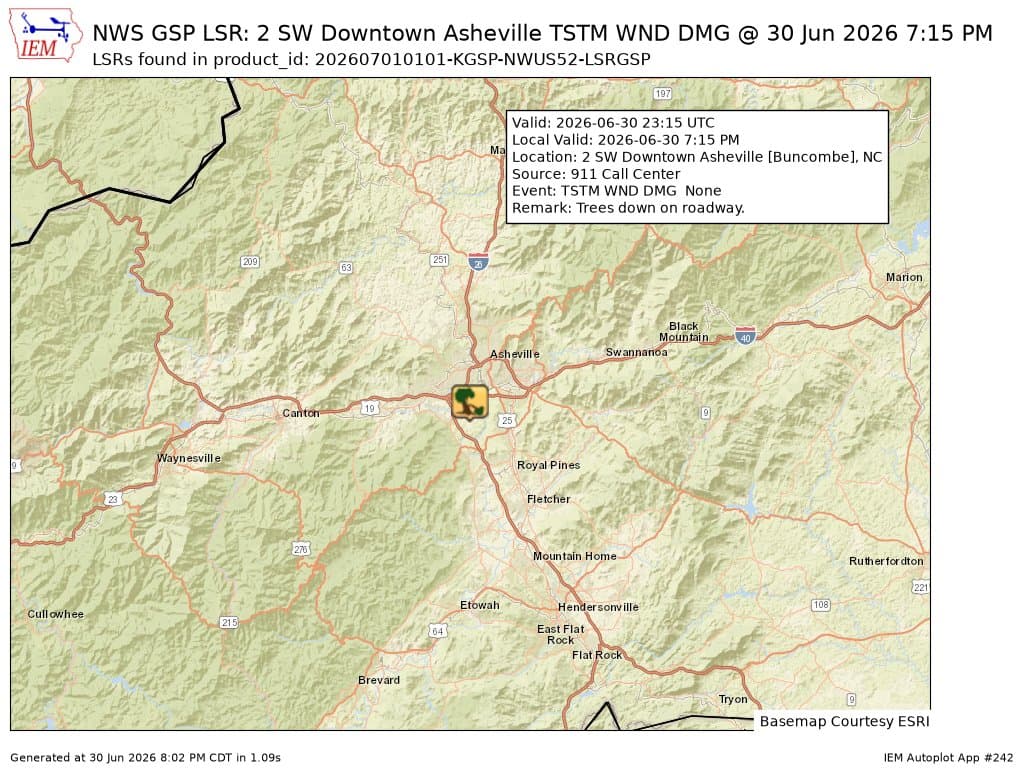
Swannanoa residents can get a parcel-level risk snapshot at a drop-in workshop built around the area’s flood, fire and landslide threats.
A practical checkup for a mountain community still living with storm risk
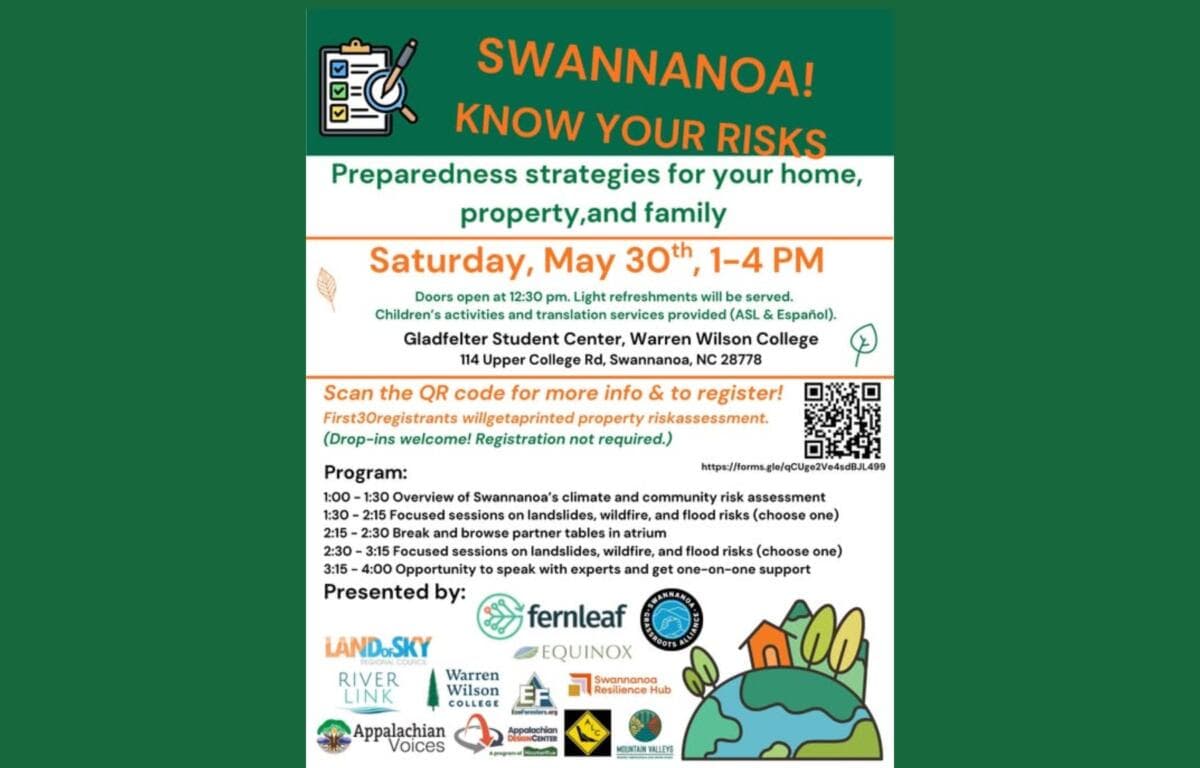
Swannanoa residents will have a rare chance to sit down with experts and get a clearer read on the hazards tied to their own property, not just the neighborhood around it. The workshop, “Swannanoa! Know Your Risks,” is built around the threats that have shaped life in this part of Buncombe County: flooding, wildfire and landslides.
The session is scheduled for 1 to 4 p.m. Saturday, May 30, 2026, at Warren Wilson College in the Gladfelter Student Center. It is set up as a drop-in event, so residents can come with questions and move through the discussion at their own pace. The first 30 people who register will receive a printed, parcel-level property risk assessment, one of the most concrete takeaways available at a community preparedness event.
Why this workshop matters now
This is not just another preparedness table with pamphlets and general advice. In Swannanoa, the risks are already written into the landscape. Buncombe County’s own after-action report says Tropical Storm Helene was the most devastating natural disaster in the region’s history, killing 43 people in the county, destroying 372 homes and leaving more than 11,000 homes in need of significant repairs. The county said more than 60% of properties sustained damage.
Those numbers explain why a workshop focused on the specific conditions of a parcel, a slope or a drainage path has immediate value. In a place where a single hard rain can expose weak points in a house site, a road connection or a yard, knowing where water is likely to move can change what a homeowner does next.
Buncombe County also regulates development in the 100-year floodplain through its Flood Damage Prevention Ordinance, which makes flood risk part of the county’s rebuilding and permitting reality. That matters for property owners trying to understand not only what happened during Helene, but what the next major storm could trigger.
What attendees can expect to learn
The event’s main promise is practical: help residents understand the vulnerabilities on their own land and structures before the next major storm arrives. That means the workshop is likely to be especially useful for homeowners who want answers to questions such as how water moves across a lot, whether a slope appears unstable, or what kinds of changes might reduce damage.
- drainage improvements around a house or driveway
- vegetation management to reduce fire and slope risk
- access routes for emergency conditions
- insurance questions tied to flood exposure
- evacuation planning if roads or bridges are compromised
The parcel-level assessment should give the first 30 registrants a more individualized starting point than a broad county map. That kind of information can help residents think through:
Because the event is a drop-in session, it is designed for conversation rather than lecture. Residents can bring property questions and compare them against what experts know about the area’s flood, fire and landslide conditions.
Flooding remains the central issue along the Swannanoa corridor
The timing and location of the workshop make sense when viewed against work already underway in the river corridor. In July 2025, RiverLink completed a detailed study of streambank damage from Helene and identified opportunities to improve flood resilience along a 6.9-mile stretch of the Middle Swannanoa River. That study area runs from the outskirts of Black Mountain through Swannanoa and downstream to the western side of Warren Wilson’s campus.
That stretch is more than a line on a map. It is the river corridor surrounding the workshop site, and it remains a focus of restoration and mitigation. The workshop gives residents a chance to connect those bigger efforts to what they see on their own property: eroded banks, storm runoff, drainage bottlenecks and access problems that become obvious only when a storm hits.
Landslide risk is part of the same conversation
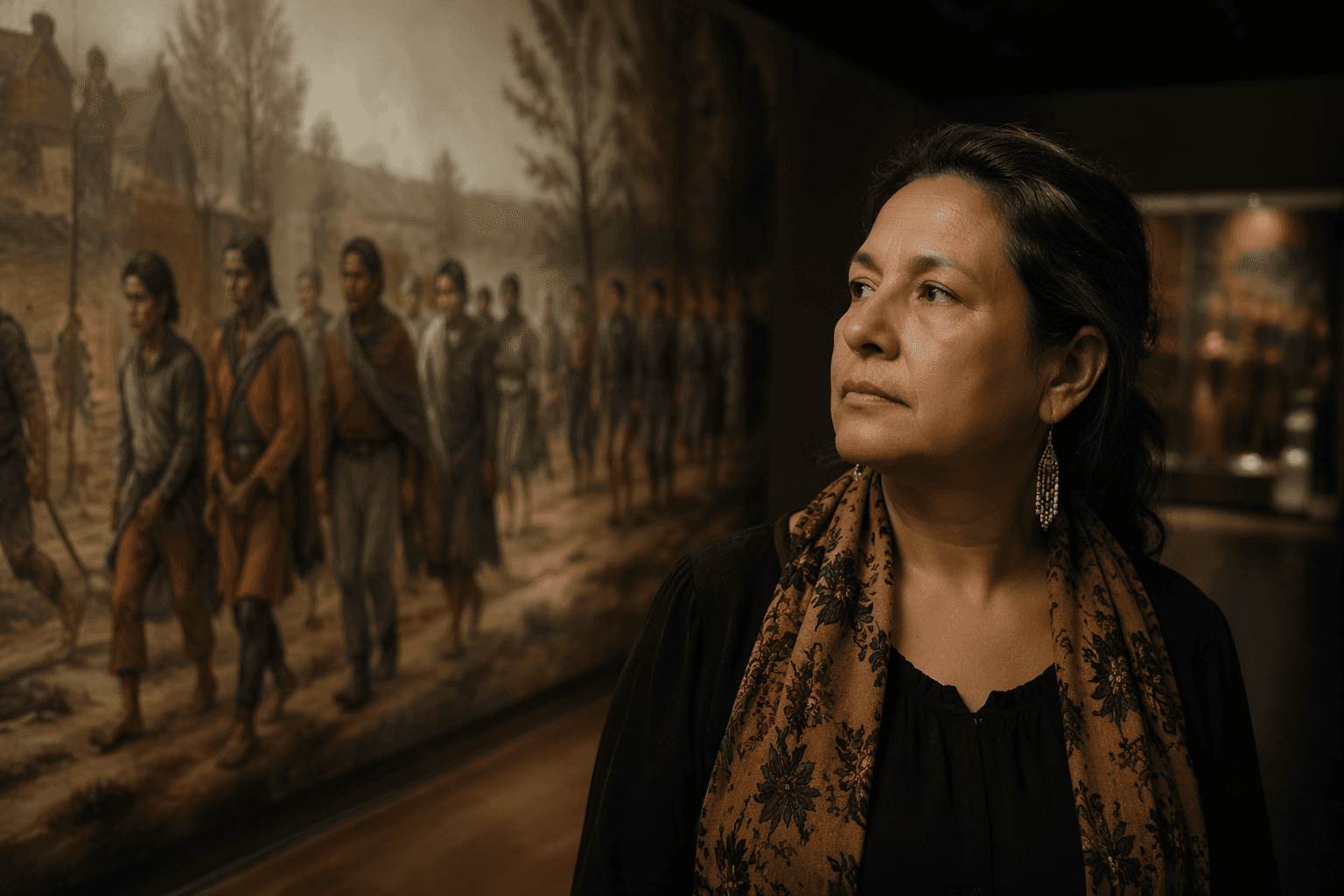
The inclusion of landslides alongside flood and wildfire risk reflects the reality of mountain weather. Buncombe County has already launched a pilot landslide mitigation effort in Swannanoa’s Grovemont neighborhood, using that area as a test case for how federal, state and local governments can work together on stabilization.
That focus is not abstract. Local reporting said the Grovemont landslides during Helene killed two people, a reminder that slope failure can be just as deadly as rising water. For residents who live near steep ground, or below it, the workshop offers a chance to understand whether a property sits near trouble spots and what warning signs to watch for when heavy rain returns.
Warren Wilson’s role in the recovery landscape
The choice of Warren Wilson College as the venue is also telling. The college’s Center for Working Lands has been involved in post-flood river restoration and resilience partnerships, including work with groups such as RiverLink and Asheville GreenWorks. That places the campus within the broader recovery network that has emerged around the Swannanoa and Middle Swannanoa River corridors.
Hosting the workshop at the Gladfelter Student Center puts the event inside a place already linked to land stewardship and restoration. For residents, that means the setting is not only convenient but symbolically aligned with the kind of long-term mitigation work the county has been forced to confront since Helene.
What to bring and why it is worth the trip
Residents do not need to treat this like a formal conference. It is a drop-in session, meant to be accessible and practical. If you are coming, the most useful thing to bring is a clear idea of the questions you want answered about your own property: where water enters, where it leaves, how steep the land is, whether trees or banks look unstable, and what you should ask an insurer or builder before making changes.
The value of attending is simple. You leave with better information than you arrived with, and in a place still absorbing the lessons of Helene, better information can shape repairs, preparation and future rebuilding decisions. In Swannanoa, where flooding, wildfire and landslides remain part of daily planning, that kind of map-based guidance is more than educational. It is part of staying ready for the next storm.
This article was produced by Prism’s automated news system from verified source data, official records, and press releases, then run through automated quality and moderation checks before publishing. The system is built and supervised by the people who set the standards it runs under. Read our full AI policy.
Did this article answer your question?