Three Blue Ridge Parkway stops to visit near Asheville this June
Craggy Gardens is in bloom, and two Asheville Parkway stops turn it into a half-day loop for views, craft, and easy orientation.
The cleanest half-day on the Blue Ridge Parkway in Buncombe County starts with a high-elevation climb and ends with two stops that are easy to pair back near Asheville. Because the Parkway is built for slow travel at 45 mph or less, this stretch rewards a deliberate route: go north for Craggy Gardens, then swing back toward town for the Folk Art Center and the Blue Ridge Parkway Visitor Center.
Craggy Gardens, where June still belongs to the mountain
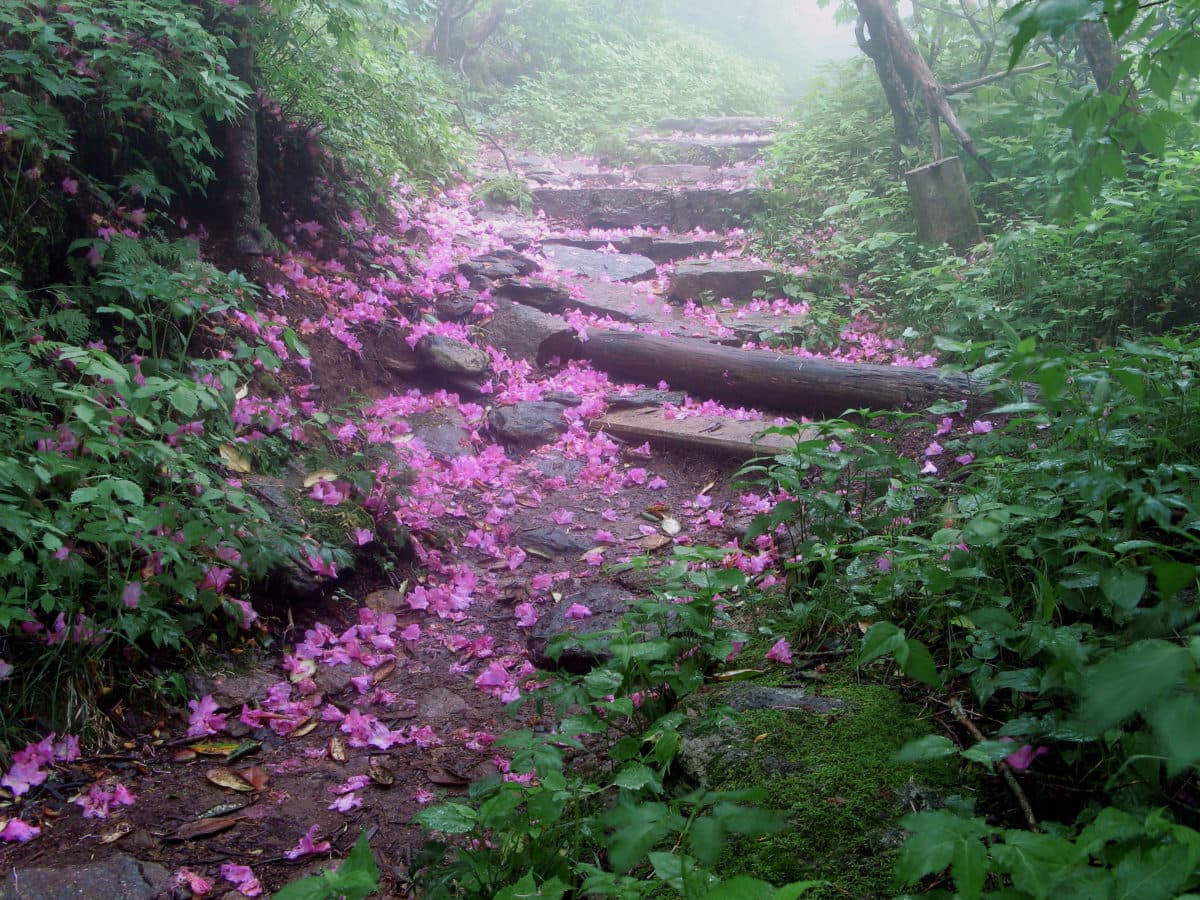
Craggy Gardens sits about 20 miles north of Asheville, at roughly 5,500 feet, and it is the stop to make if you want the Parkway’s June bloom season at full strength. The visitor center is at milepost 364.4, while the trails and picnic area are at milepost 367.6, so the whole stop is spread across a short, manageable stretch rather than one crowded pull-off. This is the place for travelers who want the mountain itself, not just a view from the car.
The name fits the landscape. The “Craggy” part comes from jagged rock outcroppings, and the “garden” reference comes from the summit balds, where shrubs and grasses give the ridgelines a surprisingly open feel. Strong winds, fog, and harsh winters have shaped stunted, twisted trees there, which makes the high country look and feel different from the forests lower on the Parkway.

June is the month that makes the stop especially useful for a Buncombe County itinerary. The Catawba rhododendron typically blooms from early June into the third week of June at Craggy Gardens, and the Parkway has long treated that window as the peak season for the pink and purple flowers. Other plants, including violets, blackberry, May-apple, and Turkscap lily, add to the display, so even outside the rhododendron peak there is still something on the ground and along the trail edge to notice.
This is also the best stop for people who want a short walk with a payoff. The Craggy Pinnacle Trail is a short hike with a 360-degree view of seemingly endless peaks and forested slopes, and Mount Mitchell, the highest point east of the Mississippi, gives the route another named landmark to anchor the day. The visitor center, exhibits, and picnic area are described as wheelchair-accessible, which makes Craggy one of the better Parkway choices for multigenerational groups that want some mountain scenery without a long or difficult hike.
The Folk Art Center, where the Parkway turns into a craft corridor
From Craggy Gardens, the drive back toward Asheville brings you to the Folk Art Center at milepost 382, a stop that trades alpine views for the work of mountain makers. The center includes three galleries, a library, an auditorium, and the Allanstand Craft Shop, so it works as both an exhibit space and a place to browse regional craft in one stop. This is the right choice for visitors who want a covered, easy walk and a deeper look at western North Carolina’s artistic life.
The history here matters. The Southern Highland Craft Guild was founded in 1930 during the Great Depression to unite local artisans and open more opportunities to sell their work, and the Folk Art Center opened in 1979 with the Guild, the National Park Service, and the Appalachian Regional Commission behind it. Allanstand Craft Shop goes even farther back, to 1895, and is recognized as the oldest craft shop in America. That means the Folk Art Center is not just a place to shop after a scenic drive, but a long-running institution in the region’s craft economy.
It is also one of the easiest year-round Parkway stops to use as a flexible anchor for a June itinerary. The Guild has operated craft sales there since opening, and daily demonstrations run from March through December, which gives the stop a living-workshop feel when artisans are at the benches. If Craggy Gardens is for the mountain views and the flowers, the Folk Art Center is for readers who want a calmer indoor stop, a rainy-day backup, or a place where the Parkway’s cultural story is as visible as the landscape outside.
The Blue Ridge Parkway Visitor Center, the best place to start or finish
Just a couple of miles farther, at milepost 384, the Blue Ridge Parkway Visitor Center makes the easiest orientation stop of the three. The building is LEED-certified, and inside you will find exhibits on the Parkway’s natural, cultural, and recreational resources, a film about the road, a 1.3-mile Kids in Parks TRACK Trail, and a one-stop resource for maps, rangers, merchandise, and Parkway-themed displays. This is the stop for first-timers, families with children, and anyone who wants to understand the route before continuing deeper into the mountains.
The visitor center is open year-round and closed only on Thanksgiving, December 25, and January 1, which makes it the most dependable stop in the group when the weather is uncertain or the day is too full for a longer hike. It is also one of only two Parkway visitor contact stations open year-round, alongside the Folk Art Center, so the two make a natural pair when you want both information and culture without leaving the Asheville area. The center also connects to the Mountains-to-Sea Trail, which gives walkers another reason to stop even if they are not planning a long Parkway drive.
Recent Parkway access changes have made this stop even more practical. In November 2024, the National Park Service reopened an 11-mile Asheville section of the Parkway and said the Asheville Visitor Center resumed daily hours from 9:00 a.m. to 4:30 p.m. That kind of scheduling detail matters if you are trying to turn a scenic drive into a workable half-day plan rather than a loose idea. For Buncombe County residents and visitors alike, the visitor center is the easiest place to close the loop after Craggy Gardens and the Folk Art Center, because it turns the Parkway from a view-only road into a trip you can actually navigate with confidence.
This article was produced by Prism’s automated news system from verified source data, official records, and press releases, then run through automated quality and moderation checks before publishing. The system is built and supervised by the people who set the standards it runs under. Read our full AI policy.
Did this article answer your question?