Cleveland County author Woodrow Wilkins ties journalism to Delta suspense novel
Woodrow Wilkins turns his Delta newsroom experience into a suspense novel where a brief visit becomes a dangerous love story and a missing-person case.
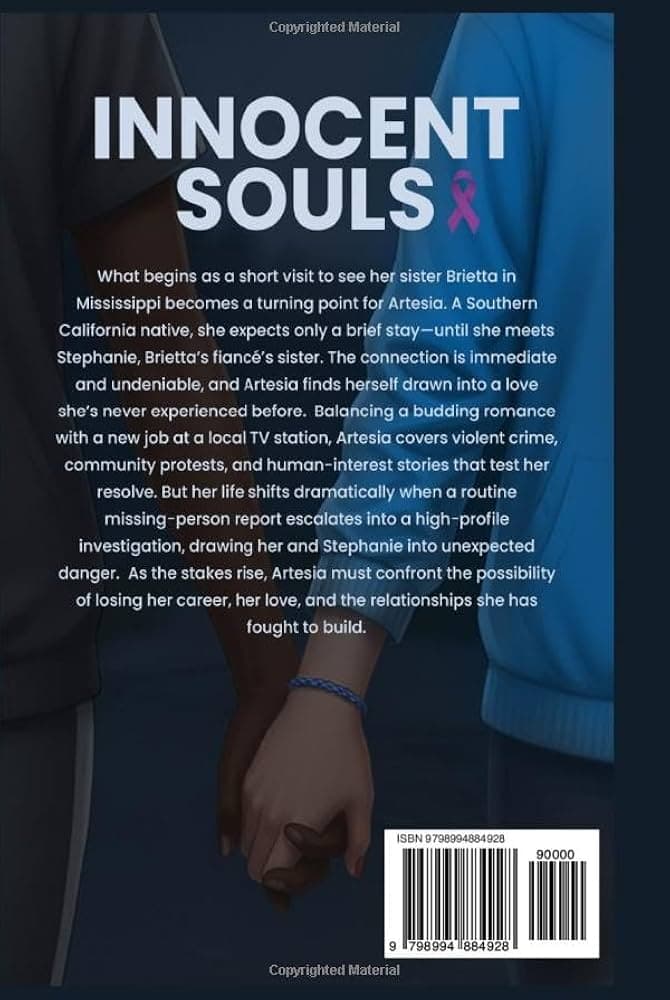
Woodrow Wilkins has turned the Delta newsroom he knows best into the engine of a suspense novel. In *Innocent Souls: A Delta Blue Story*, a short family visit in Mississippi becomes the start of a new life for Artesia, a Southern California native who meets Stephanie, her sister’s fiancé’s sister, and is pulled into a story shaped by love, violence, and the pressures of telling the truth.
A Delta story built from familiar ground
Wilkins’s second novel picks up where *Delta Blue* left off, extending the fictional world he created in his first book. That matters because the new release does not arrive as a standalone novelty, but as part of a continuing Delta-based narrative that already has readers oriented to the people, institutions, and tensions that define the setting.
The earlier novel centered on Ken, a Black police officer, and Brietta, a young white prosecutor from California, placing romance and professional conflict against the Mississippi Delta. *Innocent Souls* keeps that regional focus but shifts the emotional center to Artesia and Stephanie, using their relationship to deepen the story’s sense of place. The result is a novel that reads less like a generic thriller and more like a local story built from recognizable Delta dynamics.
That regional grounding is one of the book’s strongest hooks for local readers. The Delta in Wilkins’s fiction is not a backdrop; it is the force that shapes the characters’ choices, the pace of the plot, and the risks that come with living in a close community where everyone seems to know everyone else.
Journalism is not just a detail, it drives the plot
Artesia’s new job at a local television station gives the novel its newsroom backbone. She covers violent crime, community protests, and human-interest stories, which places the character in the same kind of daily pressure that real local journalists face when they have to turn fast-moving events into clear, accurate reports.
The plot grows more serious when a missing-person report becomes a high-profile investigation. From there, the story pushes Artesia and Stephanie into danger and raises the stakes around career, love, and family loyalty. That escalation gives the book its suspense, but it also ties the tension to the practical realities of local reporting, where a routine assignment can quickly become something much bigger.
Wilkins’s own career gives that journalism setting credibility. He has been a professional journalist for 36 years, and earlier biographies say he spent 18 years as a newspaper writer, copy editor, and page designer before moving into television. He is also the news director at The Delta News, so the newsroom details in the novel come from lived experience rather than outside observation.
The author has said his fiction draws from the cases he covered, especially real situations involving women killed by people who loved them. That experience helps explain why *Innocent Souls* feels anchored in consequence rather than atmosphere. The suspense comes not just from danger, but from the moral weight of reporting on people at the center of painful public stories.

Who Woodrow Wilkins is beyond the byline
Wilkins’s biography gives the book additional local texture. He is a Mississippi native, a U.S. Navy veteran, a community theater actor with Delta Center Stage, a member of the Greenville Community Harmony Chorus, and someone who has appeared in the film *Death Letter Blues*. Those details matter because they show a writer who moves easily between journalism, performance, and community life.
An older bio also says he previously lived in Hollandale while working in Greenville. That kind of rootedness is part of why his fiction feels specific to the region. He is not writing about the Delta from a distance; he is drawing from years of reporting, editing, and living inside the same social world that his novels now dramatize.
For readers and aspiring writers, that background is a quiet lesson in how local storytelling can travel. Wilkins’s path shows that newsroom skills, community involvement, and an ear for local speech can become fiction that still sounds true to place. It also explains why this release feels larger than one more book on a shelf: it is a continuation of a Delta storyteller turning reporting into narrative.
Where to buy the book and where to catch Wilkins
*Innocent Souls: A Delta Blue Story* is Wilkins’s second novel, and bookseller listings place the paperback at 286 pages with ISBN 9798994884928 and a publication date of June 6, 2026. Readers looking for the book can find it through major booksellers including Barnes & Noble, Amazon, and Waterstones.
The rollout has also started to move into public appearances. A local item said Wilkins was scheduled for a book signing in Leland, and his own website lists an appearance at the Mississippi Gulf Coast Book Festival in Gulfport on August 8. Those events give the release a practical local footprint, with opportunities for readers to meet the author and for bookstores and festival organizers to draw attention to a homegrown voice.
That matters for the local creative economy in a very direct way. Book signings, festival appearances, and word-of-mouth around a regional novelist help keep attention, traffic, and spending tied to local cultural institutions instead of sending all of that energy elsewhere. For aspiring writers, the message is just as clear: a career can grow from reporting, community work, and a strong sense of place, then circle back to the same region as a book worth following.
*Innocent Souls* is built on that cycle. It takes the Delta’s newsroom habits, personal loyalties, and social tensions and turns them into a story that is both local and consequential, the kind of release that helps define a region’s literary voice while giving readers a new reason to keep watching what comes next.
This article was produced by Prism’s automated news system from verified source data, official records, and press releases, then run through automated quality and moderation checks before publishing. The system is built and supervised by the people who set the standards it runs under. Read our full AI policy.
Know something we missed? Have a correction or additional information?
Submit a Tip