Cleveland County page helps residents find their town and services
Cleveland County’s cities-and-towns page helps residents sort out town versus county offices, a practical need in a county with 15 municipalities.
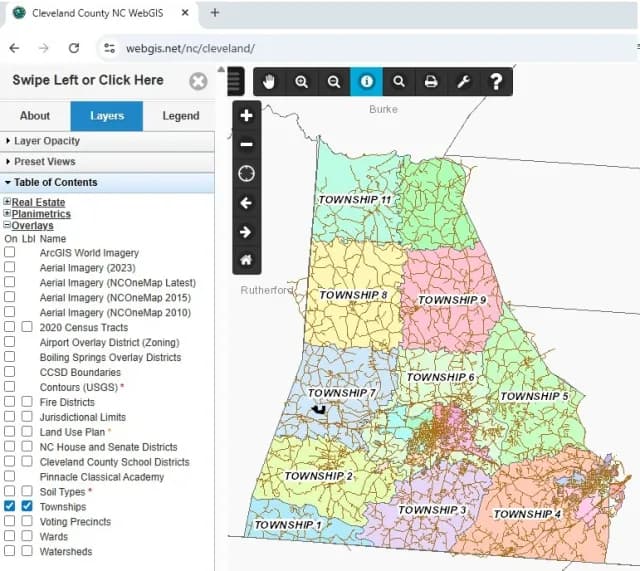
Cleveland County has 15 municipalities, and the right office often depends on whether an address sits inside a town limit or in unincorporated county territory. The county’s cities-and-towns page helps residents figure out where to go for a service, a permit, or a record.
Zoning rules, neighborhood priorities, and some local services can change from one municipality to the next, so the county’s directory is a useful first stop before making a trip to the wrong counter.
Start with the municipality, not the assumption
The county’s directory is built to help people find the right town website and contact information quickly. The list starts with places such as Belwood and Boiling Springs, and it sits in the larger county context that includes well-known communities such as Shelby and Kings Mountain.
Cleveland County government is the umbrella, not the only layer. Each municipality still has its own identity and, in many cases, its own decision-making on local matters. If you live in Shelby, your city office will handle city issues; if you live in unincorporated Cleveland County, the county office may be the right place instead.
A quick way to think about it is this: if the issue is tied to a neighborhood inside a town line, start with the town. If it involves countywide records, county planning, or elections, start with county government.
When the county office is the right place
Several everyday services are clearly county responsibilities. Planning & Zoning is where residents can take land-use and development questions, and the department’s GIS Services page is useful for map-based property lookups and related forms. It is the place to start if you are trying to understand a parcel, a boundary, or a development question that reaches beyond a simple street address.
The Register of Deeds is another key county office. Its land-records page points residents toward recorded property information, which is often the right step when a deed, a transfer, or another recorded document is involved. For people trying to verify property history or pull official records, that county system is the place to begin.
The county also maintains a Board of Elections presence online, which is where voting information belongs. If a resident is unsure about registration, precinct issues, or election-related procedures, that is a county function, not a municipal one.
What usually belongs to a town office
Town governments handle the local details that vary from place to place. Ordinances, town-specific zoning questions, and neighborhood-level priorities often sit with the municipality rather than the county. That is why a person living inside Shelby, Kings Mountain, Boiling Springs, Belwood, or another town should not assume the county can answer every question.
A resident may need a permit, ask about a code issue, or want to know whether a rule applies in a specific neighborhood. The answer can depend on the town boundary, which is exactly why the county’s municipalities page exists as a directory instead of a one-size-fits-all guide.
How county planning shows the split in practice
Cleveland County’s Comprehensive Land Use Plan, adopted on December 7, 2021, shows how local governance is shaped by both county officials and community representatives.
Residents dealing with growth, land use, or development need to know whether a matter belongs in a town office or at the county level.
The county’s Planning & Zoning FAQs page and its GIS Services page cover questions about the shape of a parcel, a land-use category, or a service area map. If it involves a town ordinance or a local development rule inside a municipality, the town may be the first call.
Why the financial and records pages matter too
Cleveland County also publishes a Comprehensive Annual Financial Report for the year ended June 30, 2024. The county’s 2025 to 2026 adopted budget lists the board overseeing county operations.
Finance, planning, records, and elections all sit within a system that is documented, budgeted, and publicly organized. The same county website that helps people find a town name also gives them a path to the records and offices that keep county government running.
A simple way to use the page
When you are trying to figure out where to go, start with three questions:
- Is the issue tied to a town boundary or town ordinance?
- Does it involve land use, maps, deeds, or elections?
- Do you need the town website, or the county office?
If the answer points to a municipality, use the cities-and-towns directory to get to the right local office. If the answer points to records, land use, mapping, or voting, the county pages for Planning & Zoning, GIS Services, Register of Deeds, and Board of Elections are the better route.
This article was produced by Prism’s automated news system from verified source data, official records, and press releases, then run through automated quality and moderation checks before publishing. The system is built and supervised by the people who set the standards it runs under. Read our full AI policy.
Did this article answer your question?