Cleveland County’s 15 towns shape life across the Piedmont
A Shelby mailing address can point to different services, and Cleveland County's 15 towns make taxes, police, zoning, and schools a local map problem.

A Shelby mailing address does not automatically tell you which government runs your street, and that is the first thing to understand about Cleveland County. The county spans 469 square miles in the foothills of the Blue Ridge Mountains, and its identity is spread across 15 municipalities rather than one dominant city. From Shelby and Kings Mountain to Belwood, Boiling Springs, Casar, Earl, Fallston, Grover, Kingstown, Lattimore, Lawndale, Mooresboro, Patterson Springs, Polkville, and Waco, the county works as a network of towns with different boundaries and responsibilities.
How to read the county map
Cleveland County sits in the Piedmont of southwestern North Carolina and describes itself as a gateway between Charlotte, the Greenville-Spartanburg area, and Asheville. The county says it has more than 100,000 residents, and the Census Bureau puts the July 1, 2025 estimate at 103,325, up from 99,519 in the 2020 census. That kind of slow, steady growth helps explain why local boundaries still matter so much in daily life.
The county’s housing and education profile adds more context to that picture. The Census Bureau says median gross rent in Cleveland County was $914 in 2020-2024, and 22.0% of adults 25 and older held a bachelor’s degree or higher in that same period. Those numbers point to a county where commute patterns, school placement, and access to affordable housing all shape where people land and how they move through the region.
Who handles what
The easiest way to sort out local government is to separate the county from the municipality. County government is the broader layer, while towns and cities take on the closer work that comes with being inside city limits.
Taxes and mailing addresses
Your property tax bill can include county taxes and, if you live inside a municipality, city or town taxes as well. A postal name alone does not settle the question, because USPS place names can differ from the government that actually serves the property. That is why a Shelby mailing address may not mean Shelby city services.
Police, zoning, and utilities
Police coverage usually changes when you cross a town line. Incorporated towns often maintain their own police departments, while the sheriff’s office typically covers county territory outside those limits. Zoning, land-use rules, water, sewer, and other utility questions can also change from one municipality to the next, so the address on your mailbox is not enough to tell you which rules apply.
Schools and service lines
School assignment can follow district boundaries rather than the city name in your mailing address. The same house can sit in one postal area and another school system, which is why families moving into the county should check the map before they sign a lease or close on a home. That is especially true in a county where towns are close together and borders can feel less obvious than the names on envelopes.
Shelby and Kings Mountain anchor the county
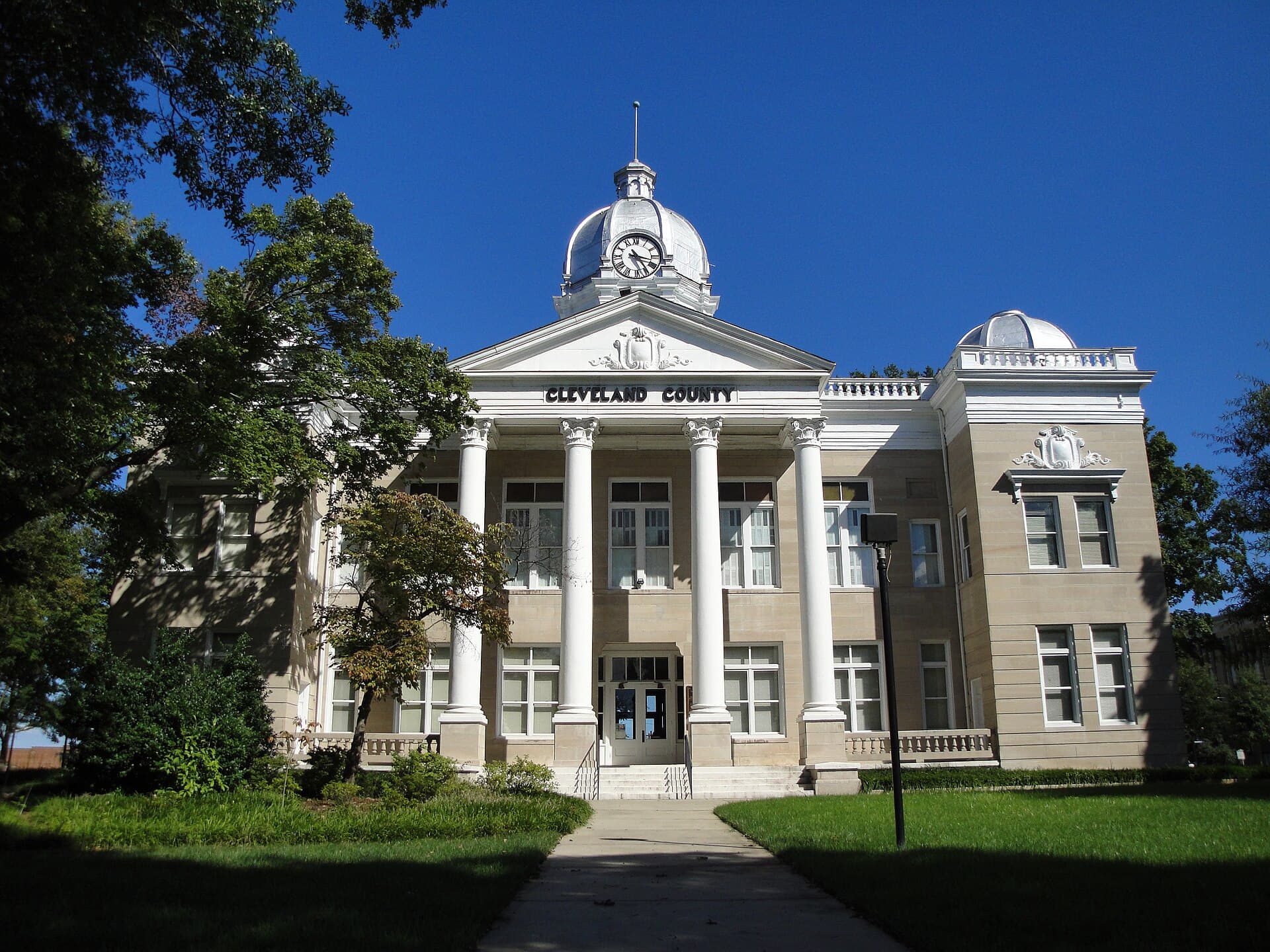
Shelby is the county seat, and its courthouse square still functions as the civic center of gravity. The former Cleveland County Courthouse now houses the Earl Scruggs Center in the restored 1907 courthouse, which opened in January 2014 and links local history with the banjo master whose name is on the building. That reuse of the old courthouse shows how Cleveland County keeps its public memory inside the structures that once handled its government.
Kings Mountain carries a different kind of weight. The Battle of Kings Mountain was fought on October 7, 1780, and the National Park Service identifies it as the first major Patriot victory after the British capture of Charleston. The county itself was named for Benjamin Cleveland, an American Revolutionary War colonel who took part in that Patriot victory, and the original spelling, Cleaveland, held until 1887.
The smaller towns are not footnotes
Boiling Springs, Lawndale, Polkville, Waco, and the other smaller municipalities shape the county as much as the better-known centers do. Boiling Springs is home to Gardner-Webb University, which traces its beginnings to Boiling Springs High School in 1905, became Gardner-Webb College in 1942, and adopted university status in 1993. That campus gives the town a year-round civic rhythm that reaches beyond classrooms and into countywide life.
The university also helps explain why Cleveland County feels larger than a simple county seat-and-suburb pattern. Students, faculty, and staff move among town, county, and regional services, and the college anchors one of the county’s most recognizable communities. The rest of the smaller towns add their own pattern of churches, schools, volunteer groups, and local businesses that keep the county from collapsing into a single urban center.
A county built on roads, not one center
The county says access to Interstates 85, 40, 26, and 77 makes travel easy and convenient. That highway network connects residents to regional job markets and to the nearby cities that shape much of the Piedmont economy, while still letting Cleveland County retain the small-town character that its government emphasizes. The result is a place where local errands, school lines, and service districts matter as much as the drive to a larger metro.
History still shows up on the courthouse square
Cleveland County’s public story does not begin with modern development. It was formed in 1841 from Lincoln and Rutherford counties, then centered in Shelby, where the seat was established in 1842 and the town was chartered in 1843. The county kept the Cleaveland spelling until 1887, a reminder that even the name evolved as the county matured.
That past remains visible in the landmarks locals still use as reference points. The county’s historic-places list includes the Historical Cleveland County Courthouse and Earl Scruggs Center, the Banker’s House, Double Shoals Cotton Mill, Joshua Beam House, Central School Historic District, and Belvedere Park Historic District. Taken together, those places show a county whose identity is built not only on municipal lines, but on courthouse law, industry, music, schools, and preserved architecture.
What to check before you move, vote, or call for help
If you are new to Cleveland County, start with three questions: what town you are actually inside, which school district serves the address, and which office collects the fees tied to the property or utility account. Then confirm whether the street sits inside Shelby, Kings Mountain, Boiling Springs, or one of the other 12 municipalities, or in unincorporated county territory. That small step can save time when you need police, zoning guidance, tax information, or utility details.
The bigger point is simple. Cleveland County is not one place with one civic center, but a countywide system of 15 municipalities, each one shaping the way people live, pay, travel, and find public services. Once you know which line your address falls on, the county’s geography starts making sense.
This article was produced by Prism’s automated news system from verified source data, official records, and press releases, then run through automated quality and moderation checks before publishing. The system is built and supervised by the people who set the standards it runs under. Read our full AI policy.
Did this article answer your question?