Cleveland Main Street boosts downtown with jobs, investment and preservation
Cleveland Main Street is shaping downtown Cleveland through preservation, investment and visible public-space changes that residents can see and use every day.
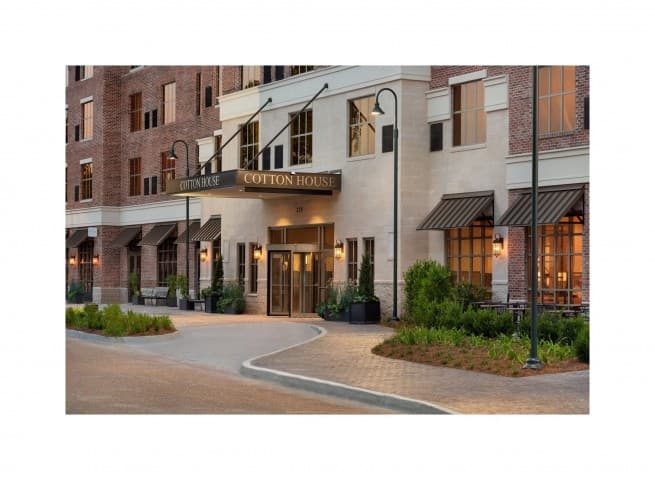
Downtown Cleveland carries more weight than a typical main street in a county seat of about 10,138 people. It is the city’s shared center for shopping, gatherings, music and civic identity, and Cleveland Main Street has become one of the main forces keeping that core active while protecting what makes it distinct.
A downtown built around place, not just commerce
Cleveland sits in Bolivar County and anchors a compact Delta city where downtown is a daily destination, not a distant business district. The city is home to Delta State University and the GRAMMY Museum Mississippi, which helps make the downtown area part of a broader cultural circuit rather than a strip of isolated storefronts. That matters in a city where the population estimate fell from 11,199 in the 2020 census to 10,138 on July 1, 2025, according to the U.S. Census Bureau.
The setting gives Cleveland Main Street a clear job: keep downtown useful, walkable and recognizable. The Mississippi Main Street Association describes downtown Cleveland as a district shaped by historic preservation, economic vitality, placemaking and community engagement, with the historic Greenstrip running through the area on a former railroad corridor that once divided the community and now links it. In a place with that kind of rail-era history, preservation is not decorative. It is part of how downtown still functions.
What the numbers say about the work
Cleveland Main Street’s public statistics show a long runway of investment rather than a one-off campaign. The organization says it has supported 238 new businesses, 40 business expansions, and 922 new jobs, alongside more than $8.2 million in public dollars and more than $24.8 million in private dollars invested. It also reports 9,238 volunteer hours, a figure that points to broad civic buy-in rather than a program driven only by staff.
Those numbers matter because they describe a downtown ecosystem where merchants, property owners, volunteers and civic leaders are all tied to the same physical center. The job creation figure is especially important in a small city: 922 jobs created through downtown-focused work represents a meaningful share of the local economic base, and the combination of public and private investment shows that preservation and commercial growth are being pursued together. Cleveland Main Street’s role is less about branding than about keeping the city center active enough for daily life to concentrate there.
Preservation is the economic strategy
Downtown Cleveland is listed on the National Register of Historic Places as a historic district, and part of that area is locally protected as the Crosstie Historic District. That designation gives Cleveland Main Street’s work extra significance because it is operating in a place where the built environment itself is part of the civic story. The Crosstie name reflects the railroad history that shaped the city, and the preservation framework helps keep that history visible in the blocks residents still use.
The organization’s approach treats heritage and commerce as mutually reinforcing. Older buildings, walkable blocks and a recognizable downtown character can help support retail, events and repeat foot traffic, while new business activity gives owners a reason to maintain and reuse historic structures. In Cleveland, that means the question is not whether downtown should be preserved or developed. The Main Street model assumes it must be both.
Visible changes residents can actually see
Some of the strongest downtown work is the kind people notice immediately. On February 24, 2025, Cleveland Main Street announced a new CLVLND sign downtown as a photo-op feature, a small but clear placemaking addition that gives people one more reason to stop, take pictures and spend time in the center city. These kinds of projects may be modest compared with full building restorations, but they help shape the public feel of downtown in ways residents encounter every day.
The organization also reported in its 2024 year-in-review material that it facilitated more than $52,185 in public investments and $18,300 in private investments. That same report listed two rehabilitation projects and seven public improvement projects, showing that the work extends beyond signage and into building repair and street-level upgrades. For downtowns like Cleveland’s, those are the changes that accumulate into a more usable place: safer facades, better-looking blocks and a stronger sense that the center of town is being maintained rather than left to fade.
Recognition, planning and statewide reach
Cleveland Main Street’s profile rose again on June 17, 2025, when it received three statewide awards at the Mississippi Main Street Association’s annual awards luncheon in Jackson. The honors placed Cleveland’s downtown work in a larger statewide context, where Main Street communities are judged on revitalization, preservation and community development rather than on slogans alone.
The organization also was selected in 2024 for the Real Estate Redevelopment Game Plan, a grant-funded initiative supported by the USDA Rural Community Development Initiative. The program provides downtown communities with professional real-estate guidance, market data and redevelopment strategies at no cost to the community or property owners. That kind of technical help matters in a market where downtown property decisions can determine whether a building is restored, reused or left vacant.
Cleveland Main Street also remains a nationally accredited Mississippi Main Street community. Mississippi Main Street describes its statewide network as a catalyst for the preservation and economic revitalization of historic downtowns and traditional commercial districts, and says those communities generated more than $242 million in public and private investment in 2022, along with more than 42,255 volunteer hours. Cleveland’s work fits squarely into that model, with downtown serving as both an economic engine and a visible marker of civic pride.
The people and office behind the work
Crista Cooper serves as Director of Main Street and Community Development, and the office is located at 101 S. Bayou Ave. That local presence matters because downtown revitalization is not abstract from there. It is tied to project coordination, property conversations, event support and the day-to-day work of keeping the city center legible and active.
Taken together, the investments, awards, district protections and public-facing improvements show why Cleveland Main Street remains central to the city’s downtown life. In Cleveland, preserving old buildings and improving public space are part of the same effort: keeping the heart of town strong enough for residents to shop, gather, walk and recognize their own history in the blocks they use every day.
This article was produced by Prism’s automated news system from verified source data, official records, and press releases, then run through automated quality and moderation checks before publishing. The system is built and supervised by the people who set the standards it runs under. Read our full AI policy.
Did this article answer your question?