Doe’s Eat Place keeps Greenville history alive on Nelson Street
Doe’s Eat Place is more than a steakhouse on Nelson Street. Its family rituals, Civil Rights-era roots and landmark status make it a Greenville anchor.
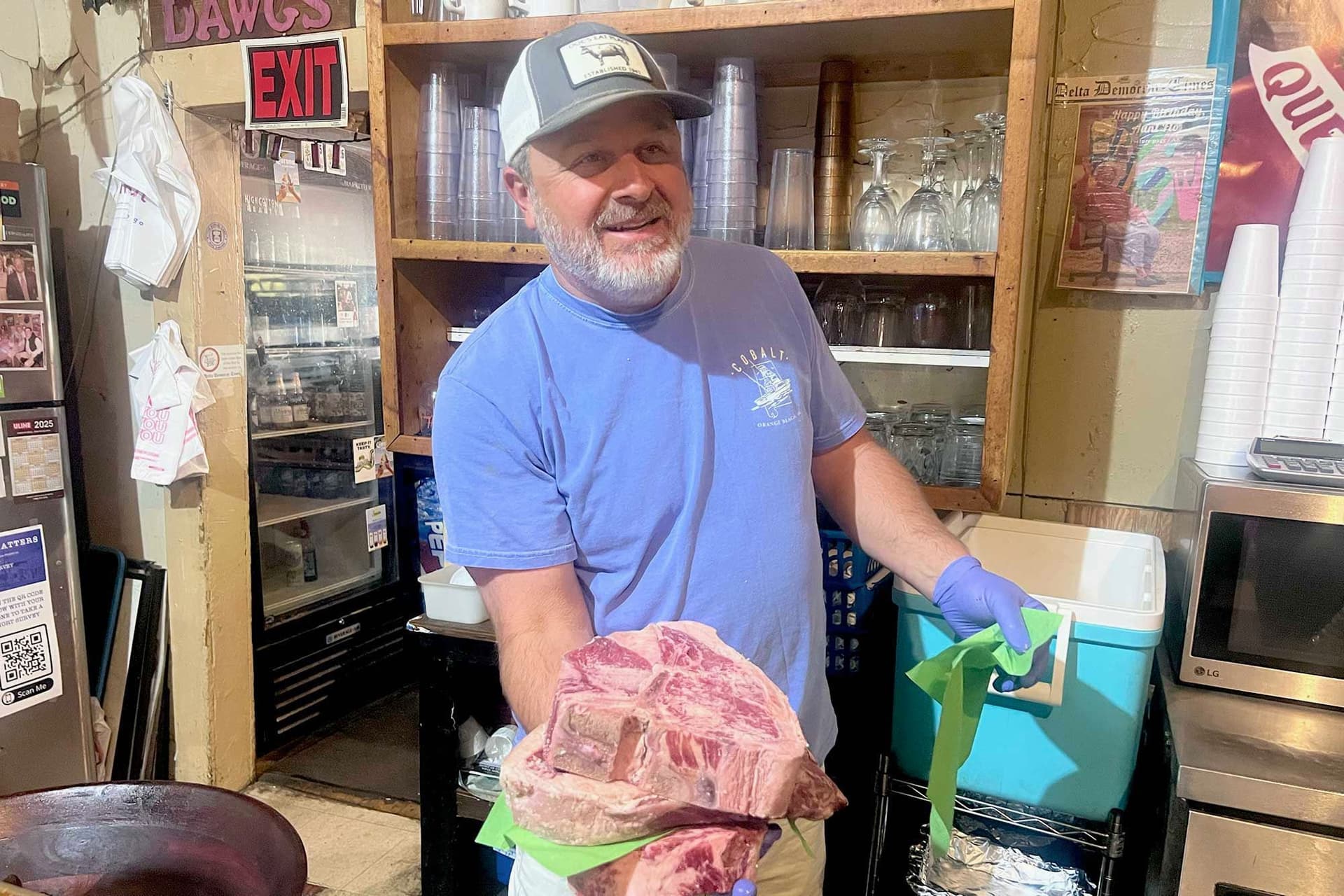
Doe’s Eat Place still feels like a room where family history is being made in public. At 502 Nelson Street in Greenville, the original restaurant has stayed in the Signa family since 1941, and that continuity is what gives the place its weight. The third generation is now carrying it forward through Dominick Signa III, while the kitchen still works as a classroom for the next hands, the next recipe, and the next set of habits that keep the room recognizable.
A family counter on Nelson Street
The heart of Doe’s is not just the steakhouse itself, but the way the family has kept its rituals intact. In the kitchen, Pamela Hall works the wooden floors and the crowded open space, then gets a hands-on lesson from Florence “Aunt Flo” Signa on how to make the signature salad. That kind of scene explains why the restaurant has lasted: tradition here is taught by touch, repetition, and memory, not by branding.
Dominick Signa III now helps run the family’s broader network of locations while preserving the atmosphere that made the Greenville original famous. The restaurant still carries the look and feel of a hometown institution, even as its reach has moved far beyond the Delta. The menu still centers on the items that made the name travel, especially hot tamales and 32-ounce steaks.
From neighborhood grocery to civil-rights-era landmark
Doe’s began as something smaller and more local than the national reputation it eventually earned. The Mississippi Department of Archives and History traces the business roots to a neighborhood grocery, where Dominick “Big Doe” Signa started serving food from the front room in the 1930s. In 1941, he picked up a tamale recipe from a coworker at Greenville Army Air Field, and Mamie Signa refined it into the version that became part of the family’s identity.
That history matters because Doe’s grew up in a segregated Mississippi and still became a place where Black and white customers sat down under the same roof. The James Beard Foundation describes it as a restaurant that emerged from a 1940s grocery store selling homemade hot tamales, then evolved into a casual steakhouse that served both communities. In 2007, the foundation named Doe’s Eat Place an America’s Classic, placing it among the country’s most durable independent restaurants and underscoring how much of a community anchor it had become.
What the building itself tells you
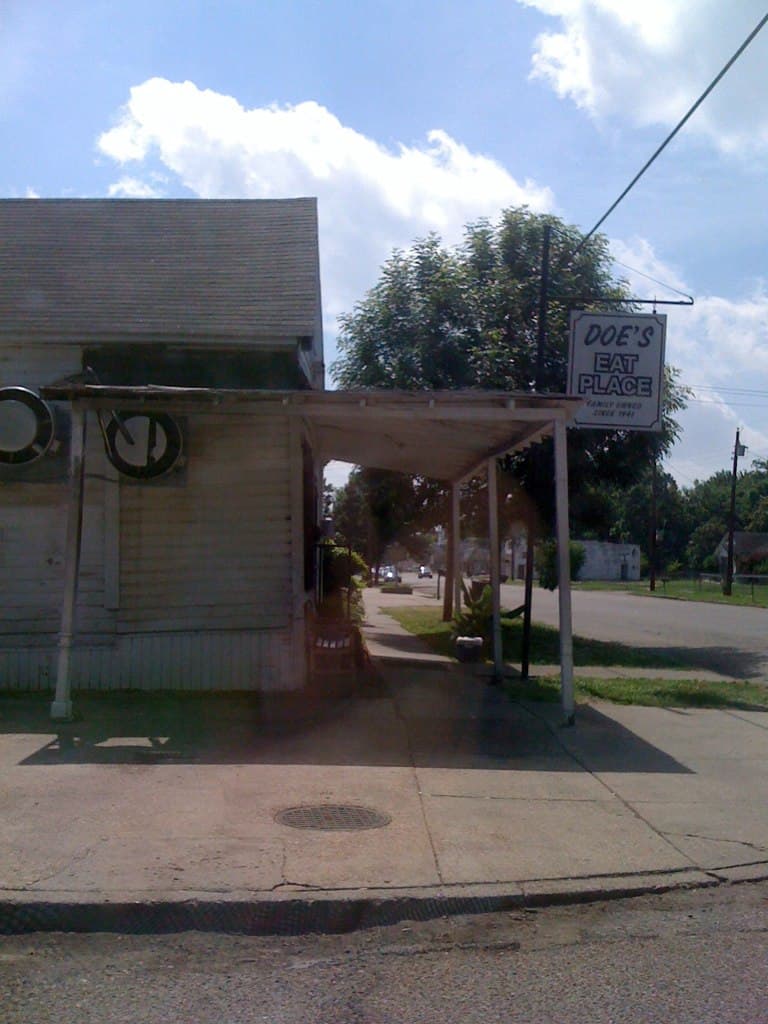
The landmark status is not just symbolic. The National Register of Historic Places nomination entered Doe’s in 2012 and lists its significance under commerce, placing the restaurant inside the documentary record of Greenville’s downtown life. The registration form describes the building as a one-story wood-frame structure with a gable roof and additions, set on a corner lot close to the sidewalk. The nomination also identifies one contributing building resource and one noncontributing building resource, which helps explain how the site is preserved as a historic property rather than treated as a generic storefront.

The property record places the building squarely in the commercial story of the Delta. Periods of significance run across 1925 to 1949 and 1950 to 1974, reflecting how long the place has remained tied to public life in Greenville. That matters because Doe’s is not frozen as a museum piece. It is still a working restaurant, still serving meals, and still carrying the lived habits that made the original room famous.
Why Nelson Street gives the restaurant its meaning
Doe’s sits on a street that has its own long memory. The Mississippi Blues Trail says Nelson Street was once the epicenter of African American business and entertainment in Greenville, with nightclubs, cafes, churches, groceries and other enterprises packed into a corridor that shaped the city’s civic and cultural life. That makes Doe’s more than a destination for steak and tamales. It places the restaurant inside a larger story about Black commercial life and the social life of downtown Greenville.
The address also sits in a community small enough for the restaurant’s scale to register immediately. Greenville had 29,670 residents in the 2020 Census, and Washington County had 44,922. In a county of that size, a business that has lasted across generations becomes part of the local map in a way that goes beyond food. It becomes a marker residents use to describe where the city has been and what still survives.
A Greenville original that now reaches beyond the Delta
The original location at 502 Nelson Street is still the anchor, but the business has expanded into a multi-location network. Doe’s official Greenville page lists additional locations in Paducah, Kentucky; Jackson, Tennessee; Baton Rouge, Louisiana; and Monroe, Louisiana. That growth explains how a neighborhood restaurant built on one family’s methods became a regional name without giving up the customs that made the first room distinct.
Even with that reach, the Greenville location still carries the authority. The original room remains the one tied to the family recipe, the salting of the steak, the tamale tradition, and the working habits that have been passed from one generation to the next. What survives on Nelson Street is not just an old building or a famous meal. It is a family system, a downtown landmark, and a civic memory all operating under the same roof.
This article was produced by Prism’s automated news system from verified source data, official records, and press releases, then run through automated quality and moderation checks before publishing. The system is built and supervised by the people who set the standards it runs under. Read our full AI policy.
Did this article answer your question?