Juneteenth farm tour in Mississippi Delta teaches self-sustainability
A Delta Juneteenth farm tour showed how Black-owned land, practical know-how, and heirs' property planning can help Cleveland County families build lasting resilience.
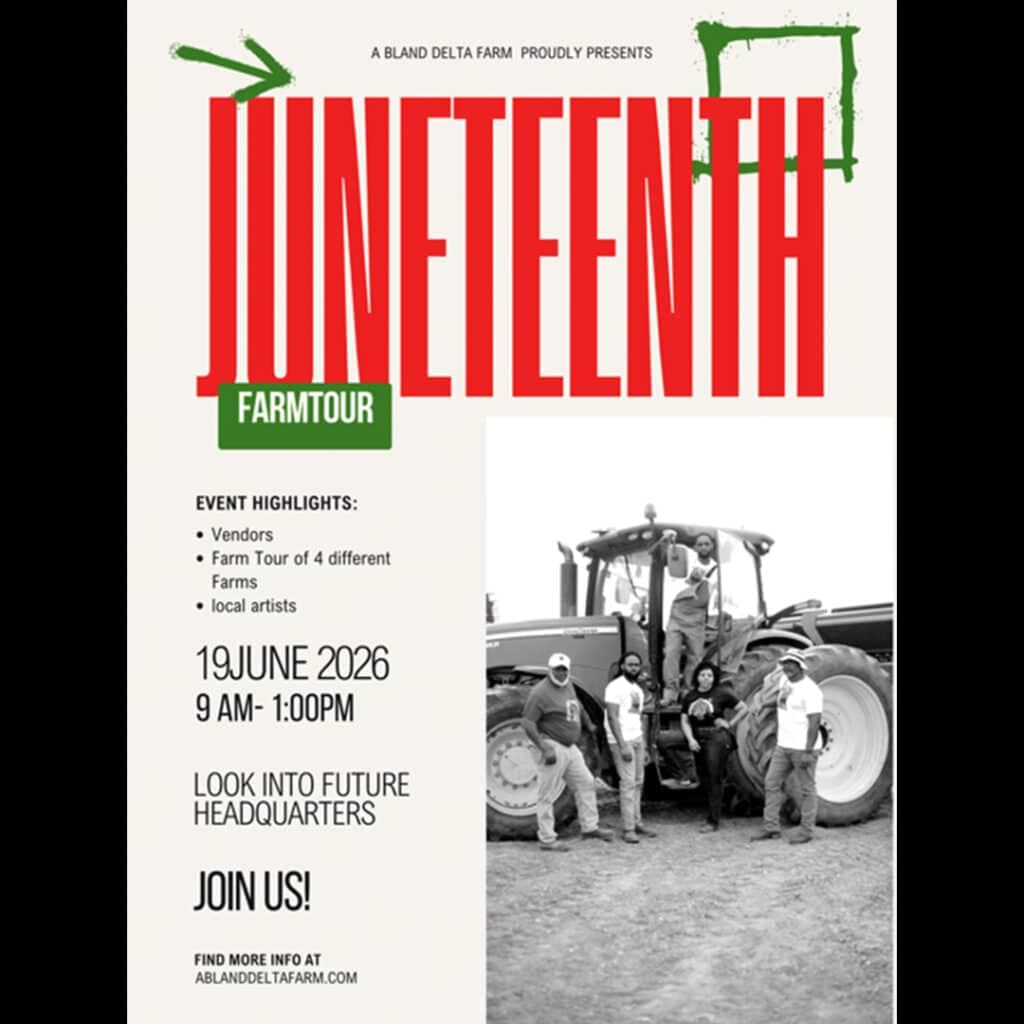
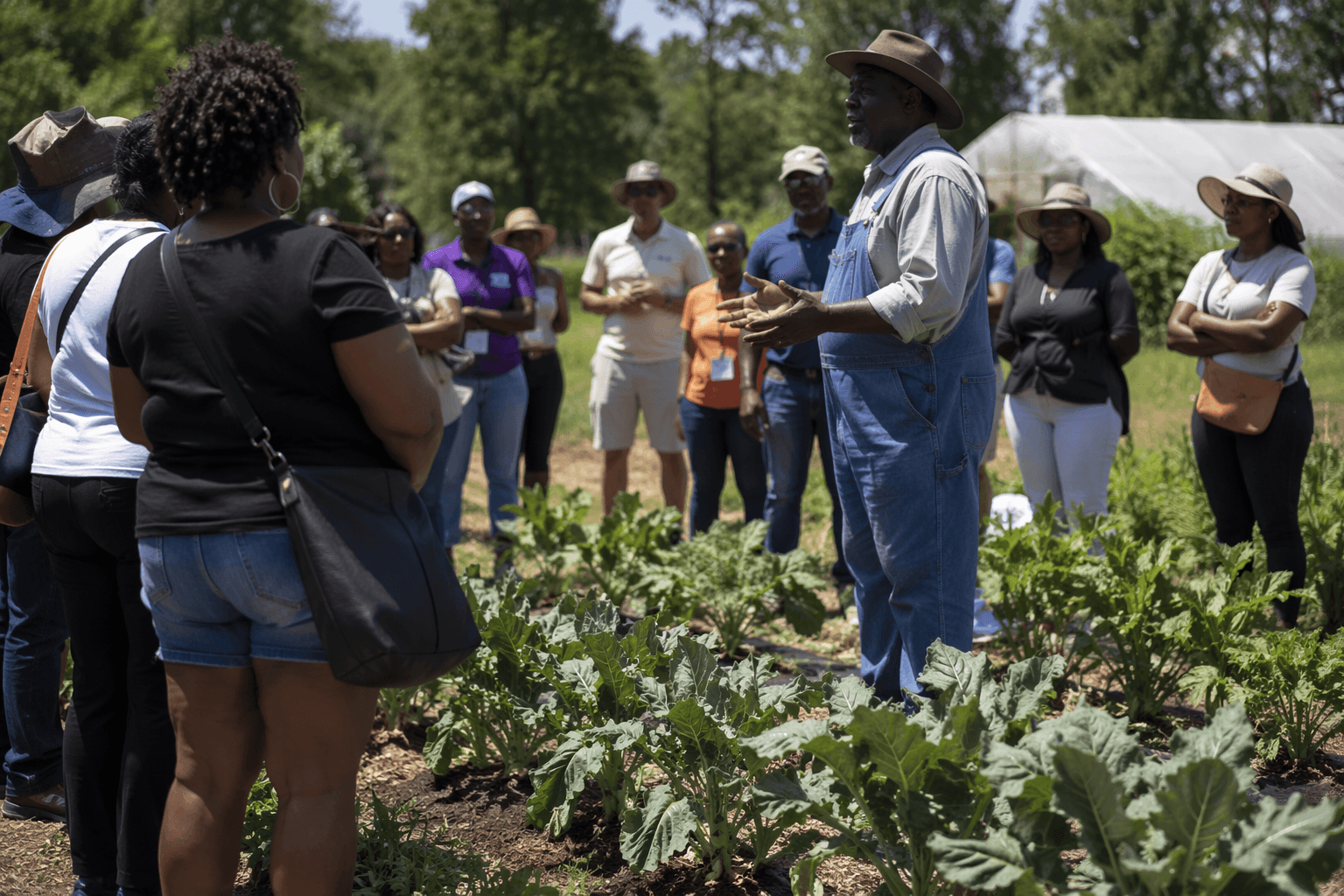
A Juneteenth farm tour across the Mississippi Delta did more than open farm gates. It showed how Black-owned land can function as a working lesson in food production, family wealth, and long-term self-sufficiency, the kind of model Cleveland County growers and community gardeners can study for practical ideas. Roughly 30 people followed A Bland Family Farm through four Black-owned farms on June 19, tracing a route that turned Quitman, Coahoma, Tunica, and Tallahatchie counties into a classroom.
A Delta route built around ownership
The tour centered on A Bland Family Farm in Sledge, Mississippi, a four-generation rice-farming operation whose own history gives the day its weight. By moving from one Black-owned farm to another, the route made ownership visible, not abstract. It also linked working land to local food production, showing how farms can serve as both businesses and community anchors.
That matters in a place where land is part of the region’s identity and economic memory. The tour was not just about crops or scenery. It was about what happens when families hold land long enough to pass along knowledge, maintain soil, and build a durable income stream from agriculture rather than selling off acreage when pressures rise.
The setting also matters for Cleveland County readers because the Delta model is not limited to one corner of Mississippi. School ag programs, small growers, and neighborhood gardeners in Cleveland County can take the same idea and apply it locally: make the land itself part of the lesson, then connect production to ownership, stewardship, and succession planning.
Why Juneteenth sharpened the message
Holding the tour on Juneteenth gave the day a deeper meaning. Juneteenth marks June 19, 1865, when enslaved people in Galveston, Texas, learned they were free. On that date, a farm tour built around Black ownership and food independence carried a clear message: freedom has always required the ability to feed a family, control land, and keep wealth from slipping away.
That connection between emancipation and agriculture runs through the Delta’s history. Farming here has long been about more than planting and harvesting. It has been tied to survival, self-reliance, and the ability to turn local labor into generational stability. The Juneteenth tour captured that idea in practical form by showing how Black farmers are teaching neighbors what self-sustainability looks like on the ground.
For communities trying to hold onto land and build local food systems, the timing was not symbolic filler. It highlighted a straightforward reality: freedom without assets is fragile, and assets without ownership planning are vulnerable.
The numbers behind the lesson
The broader agricultural picture makes the tour even more significant. In the USDA National Agricultural Statistics Service 2022 Census of Agriculture, Black producers were involved in decision-making for 32,653 U.S. farms, operating 5,323,654 acres. The census also showed that Black-operated farms declined 8% nationally from 2017 to 2022.
Mississippi remains a major part of that story. The 2022 census counted 6,267 Black farmers in the state, operating 4,312 farms across 741,466 acres. Those numbers show both the scale of Black agriculture in Mississippi and the fragility of the gains. The farms are real, the acreage is real, and so is the pressure on families trying to keep land in production across generations.
The Delta tour translated those figures into something easier to see. Instead of talking in the abstract about food sovereignty or rural wealth-building, it put names, routes, and farm operations in front of people. That is often how a durable lesson takes hold: through a concrete place, a working farm, and a direct look at how a family keeps land productive.
Land loss is part of the story, too
The tour also sits inside a longer and harsher history. A Mississippi historical account notes that Black farmers in the state owned 2.2 million acres in 1910. Between 1950 and 1969, the United States lost 6.6 million acres of Black-owned farmland, including more than 800,000 acres in Mississippi. Those figures show why a farm tour about self-sustainability is also a story about recovery and defense, not just celebration.
One of the biggest threats is heirs’ property, where land is passed down without a clear legal title. That can make land easier to lose, harder to finance, and more vulnerable to outside pressure. In 2021, the Mississippi Center for Justice and the Center for Heirs’ Property Preservation launched an initiative to help historically underserved Mississippians keep generational land by providing legal services, assistance, and resources.
That legal backdrop is essential. A farm can teach soil management and crop planning, but if the title is unclear, the next generation may not inherit security along with the acreage. The Delta tour implicitly pointed to that gap by showing that self-sufficiency depends on both agricultural skill and legal staying power.
What Cleveland County can take from the Delta
The most useful part of the Juneteenth route is how easily its lessons translate westward. Cleveland County growers, extension agents, school ag programs, and community gardeners do not need a Delta farm tour to understand the basic formula. They need the same pairing of land knowledge and ownership planning.
- Farm visits work best when they show how a crop is raised, sold, and passed down.
- Extension programs are most useful when soil health and business planning are taught together.
- School agriculture programs can connect students to local history, not just production techniques.
- Community gardens become more resilient when participants talk about land access, composting, water use, and long-term stewardship at the same time.
The Delta farms on this Juneteenth tour offered a practical version of self-sustainability: own the land, work the land well, and make sure the next generation can do the same. In Mississippi, where Black land ownership has been under pressure for more than a century, that is not a slogan. It is the central economic lesson.
This article was produced by Prism’s automated news system from verified source data, official records, and press releases, then run through automated quality and moderation checks before publishing. The system is built and supervised by the people who set the standards it runs under. Read our full AI policy.
Did this article answer your question?