Cleveland schools use gardens to build healthier community ties
A blueberry tasting at D.M. Smith Elementary shows how Cleveland’s school gardens are turning campus space into health lessons, science time and a small test of community trust.
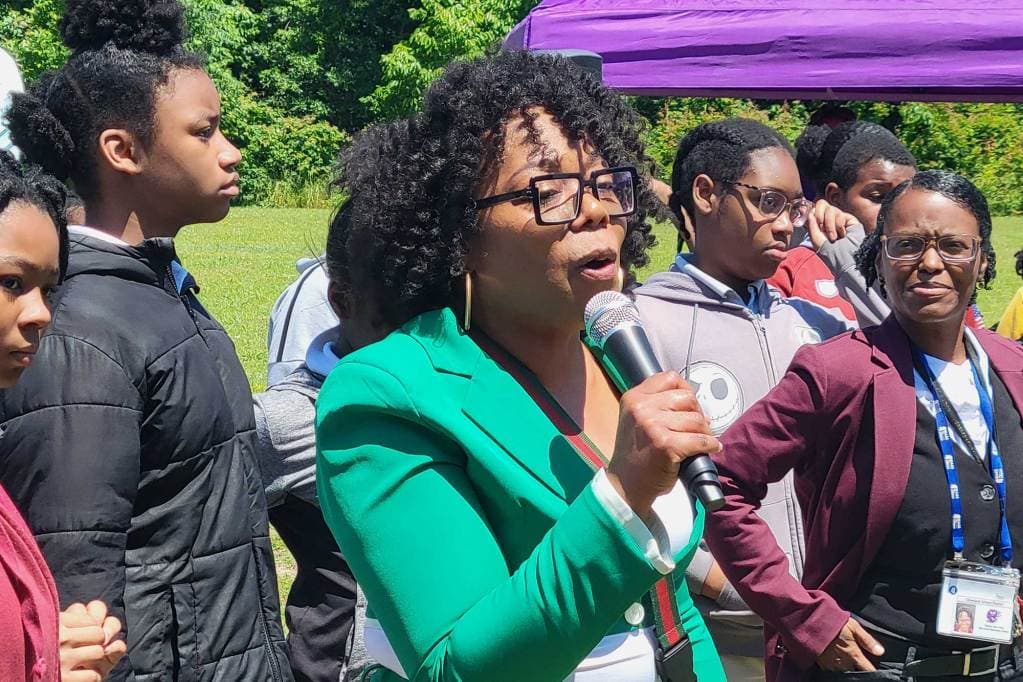
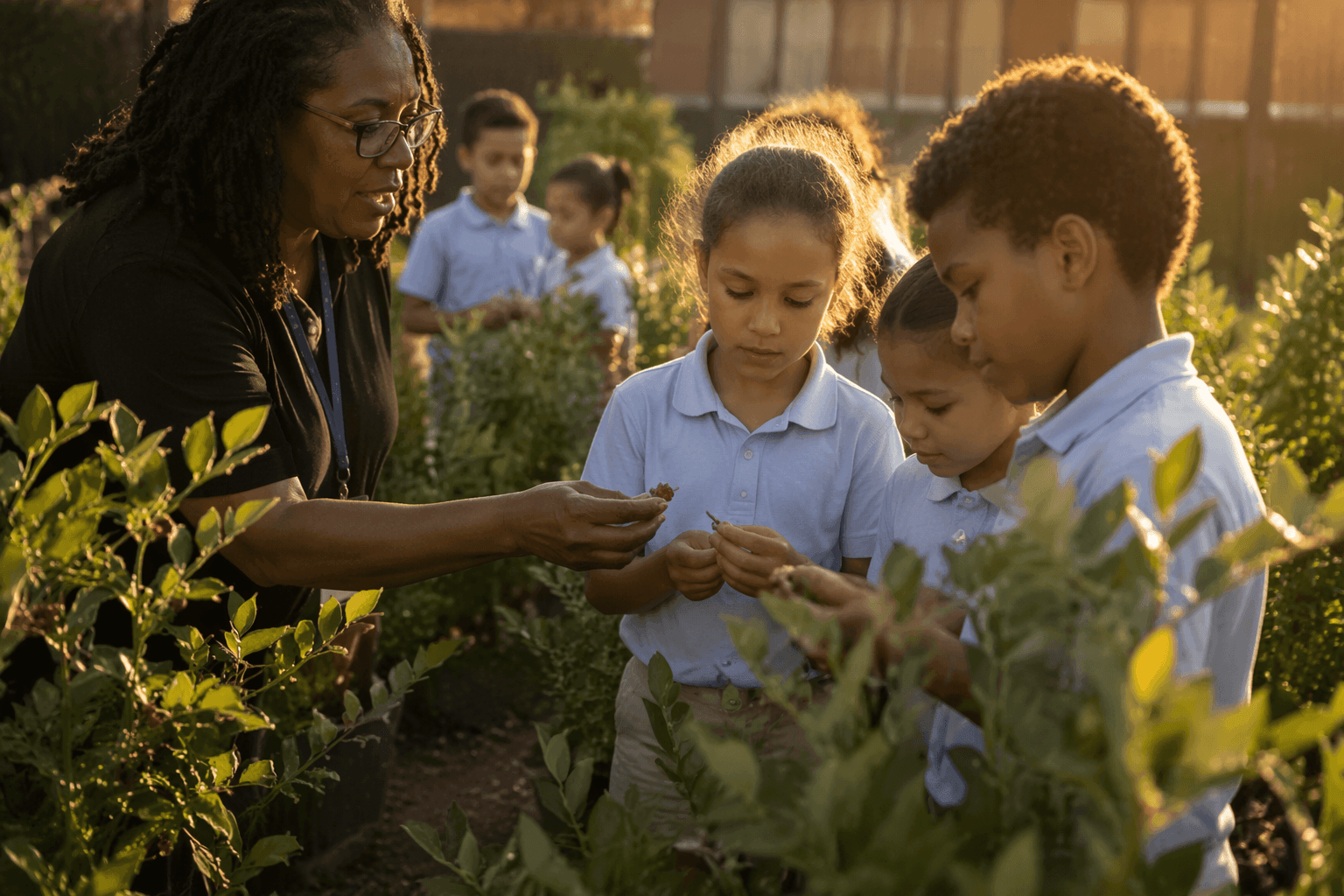
At D.M. Smith Elementary, the garden is not being treated like decoration. Students stepped under the gazebo, tasted blueberries, and got a lesson that tied food, farming and school life together in a town where public spaces have often reflected old divisions as much as shared purpose.
Krista Davis, the Cleveland School District’s health, wellness and nutrition coordinator, used the visit to connect the children to Mississippi agriculture and food culture. She pointed them toward a detail with local pride behind it: fourth graders in Madison lobbied the Legislature in 2023 to make the blueberry the state fruit, a reminder that even a simple crop can become part of civic education.
A garden lesson with immediate payoff
The value of the garden at D.M. Smith is practical first. It gives children a place to touch, taste and talk about food instead of hearing about it only in a classroom, and it creates a setting where adults can see the school investing in something visible and useful.
That matters in Cleveland because the district is trying to build habits, not slogans. A school garden can support nutrition education, science instruction and family engagement at the same time, especially when students bring home what they learned about growing, eating and respecting fresh food.
The district is building this across campuses
Cleveland Central Middle School shows that the garden effort is not a one-campus experiment. The district describes Wolfpack Wellness as an in-school and afterschool garden and ag-science program focused on plant-based science, agriculture research and garden-to-table nutrition education.
That program includes raised bed gardens, greenhouses and a school orchard, backed by an $187,000 award. The Wolfpack Wellness garden club is coordinated by science teacher Tammie Hodnett Marlow, giving the work a consistent adult lead and a clear academic home rather than leaving it as an occasional club activity.
The district’s garden work now reaches D.M. Smith Elementary, Parks Elementary, Cleveland Central Middle School and Bell Academy. That spread suggests a coordinated strategy, one that places food and agriculture learning into the daily routine of multiple campuses instead of relying on a single showcase site.
Why Cleveland’s history makes the stakes different
The reason these gardens matter in Cleveland is tied to the city itself. Federal officials have described Cleveland, Mississippi, as a city of about 12,000 residents divided by railroad tracks that separate east from west and black from white. The school system has long carried that history, and the desegregation fight has shaped local school politics for years.
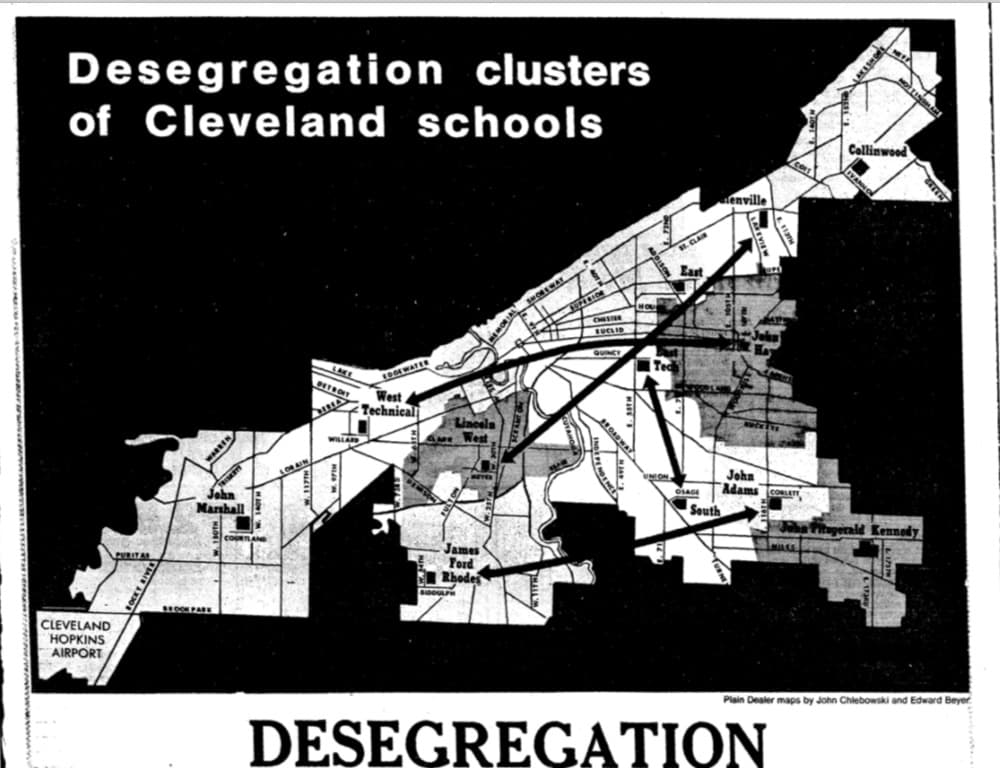
In 2016, a federal court ordered Cleveland schools to consolidate middle and high schools to remedy long-running segregation. The Justice Department said the approved plan would lead to the effective desegregation of the district’s middle and high schools by the start of the school year, after a judge agreed with federal officials that the district’s earlier approach kept illegal vestiges of segregation in place.
That backdrop gives the garden work a sharper meaning. In a district with a long memory of separation, shared spaces matter because they create shared routines. A garden does not solve old divisions by itself, but it can give children from different parts of town a place to work side by side on something concrete.
What families and residents can watch for
Cleveland School District says community engagement is one of its goals, and the garden program is one of the clearest places where that promise can be tested in public. Families can see whether the gardens make students more interested in science, more aware of where food comes from and more likely to talk about healthy eating at home.
The practical signs are easy to spot:
- students spending more time in hands-on science work
- families visiting campuses and seeing the gardens as part of school life
- children learning how plants, meals and local agriculture connect
- campuses feeling more cared for, more used and less anonymous
The district also says it does not discriminate on the basis of race, color, national origin, sex, disability, age or other protected classifications. In a city where education policy has long been measured against the legacy of separation, that kind of public commitment is only meaningful if it shows up in everyday practice.
A small space with a larger test
The strongest measure of Cleveland’s garden effort will not be how neatly the beds are arranged. It will be whether students keep using them, whether parents trust them, and whether the campuses that host them feel more connected to the neighborhoods around them.
If the gardens continue to produce lessons in science, nutrition and shared responsibility, they may become one of the district’s most visible tools for turning a divided history into a more workable future.
This article was produced by Prism’s automated news system from verified source data, official records, and press releases, then run through automated quality and moderation checks before publishing. The system is built and supervised by the people who set the standards it runs under. Read our full AI policy.
Know something we missed? Have a correction or additional information?
Submit a Tip