Delta State boosts Cleveland with tours, services and student support
Delta State drives Cleveland’s daily economy with tours, student services and year-round support that bring people, spending and activity into town.
Delta State University reaches Cleveland in ways that go far beyond class schedules. The campus draws visitors for tours, supports students year-round with financial aid and wellness services, and helps steady the local economy through housing demand, restaurant traffic and event attendance. For a city built around the university’s presence, those daily effects matter as much as the diplomas.
What the campus is doing for Cleveland right now
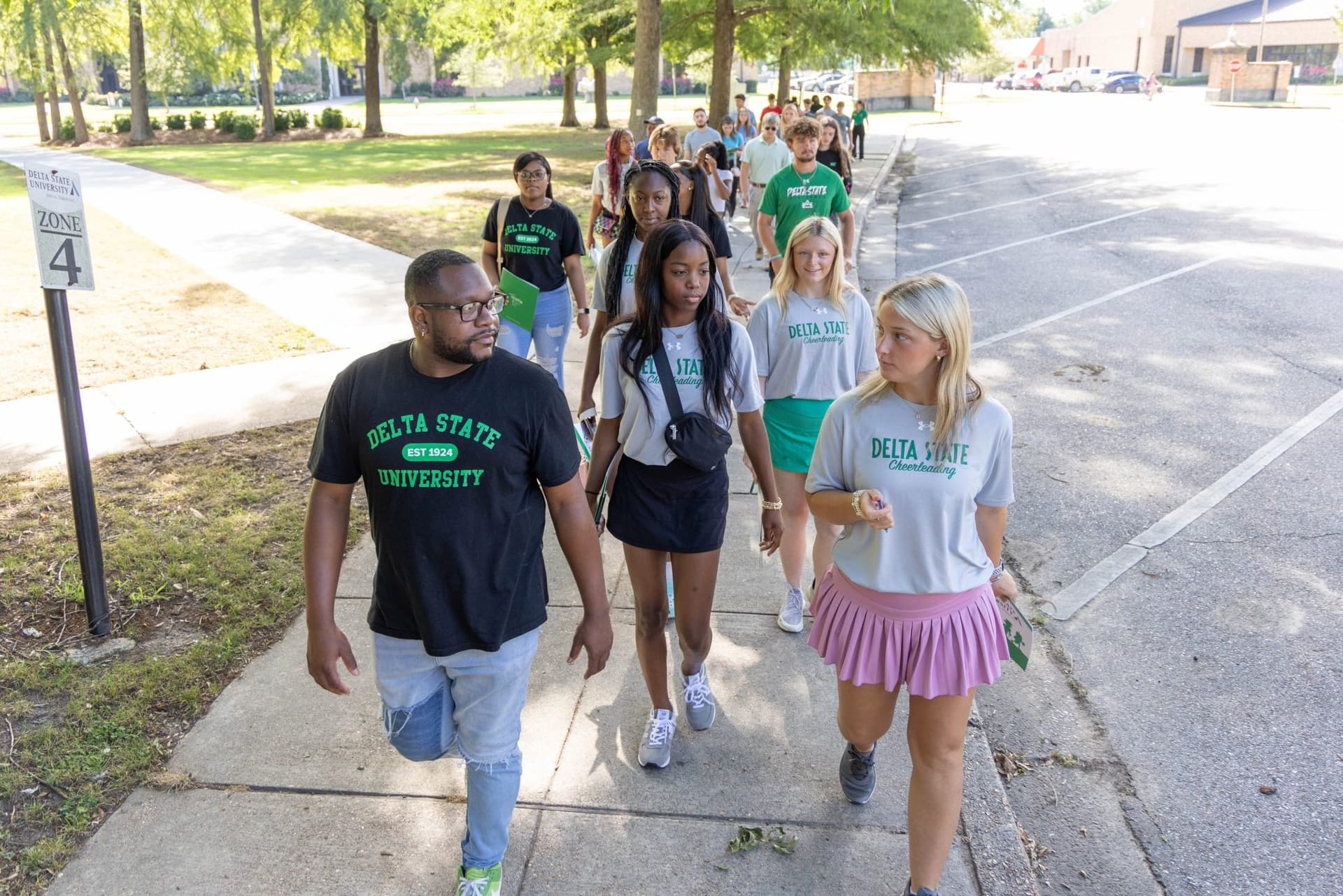
Delta State’s public-facing campus pages make the university feel open to the whole community, not just enrolled students. The Office of Admissions invites people to visit through on-campus or virtual tours, with stops that include the Quadrangle, the cafeteria and residence halls, and it explicitly ties the university experience to Cleveland itself as a place to live, learn and visit. That matters because the school is not simply a backdrop to the city. It is a steady generator of foot traffic, from prospective students and families to community members who come for campus events and services.
That steady flow shows up in practical ways across Cleveland. A university of this size helps support apartment occupancy, fills tables at local restaurants and keeps venues active when students, families and visitors are in town. It also gives the city a familiar civic anchor: a place where people gather, return and build routines around the academic calendar, the sports calendar and the social calendar alike.
How to visit and what to see
For anyone who wants to understand the school’s footprint, the easiest entry point is a campus visit. Delta State offers both in-person and virtual tours, which makes it easier for prospective students, parents and curious residents to see the campus even if they cannot come to Cleveland in person. The tour route is designed to show more than classrooms. It highlights the Quadrangle, the cafeteria and residence halls, the spaces that shape the day-to-day life of the university.
That matters for local readers because the university is presenting itself as part of the Cleveland experience, not a separate institution set apart from it. The message is clear: when people visit Delta State, they are also seeing Cleveland. That connection helps reinforce the role the university plays in drawing visitors into town and keeping the local economy moving.
The services students and families actually use
Delta State’s student-facing pages show a campus built to function all year, not only during fall and spring semesters. Student affairs information emphasizes wellness, engagement and support for academic and personal success, while financial aid materials walk users through scholarships, grants, loans and payment options. Graduate study options and online services add another layer, giving the university a broader reach across commuters, working adults and out-of-area students.
Those services matter locally because they shape how people interact with the university on a daily basis. Students and families who rely on aid guidance, support offices and online tools are also spending time and money in Cleveland, and many of them are building routines around the city. For a community that depends on the university as an economic and civic engine, the student support system is part of the infrastructure as much as the buildings are.
A long Cleveland story, not a recent arrival
Delta State’s relationship with Cleveland stretches back more than a century. The campaign to locate the university in Cleveland was already being discussed as early as 1910. Governor Henry L. Whitfield signed legislation creating Delta State Teachers College in 1924, and the school opened for summer school on June 7, 1925. Its first formal opening came on September 15, 1925, with a faculty of eleven and fall-quarter enrollment of 97 students.
That history helps explain why the university is woven into local identity so tightly. It did not simply arrive as another campus. It grew into Cleveland through years of public discussion, state action and community expectation. The result is an institution that has shaped the city’s civic character for generations and remains one of its most recognizable landmarks.
What the enrollment numbers say about its footprint
The latest enrollment figures show that Delta State still has real scale in Cleveland. The university’s 2024-2025 mini factbook lists fall 2024 enrollment at 2,654 students. By fall 2025, enrollment had risen to 2,791, a 5.2% increase. The growth was especially strong among new students, with freshman enrollment up 38% from fall 2024, transfer enrollment up 15% and first-time graduate student enrollment up 33%.
Those numbers matter because they translate into daily presence. More students mean more demand for housing, more meals purchased in town, more traffic around campus and more people moving through Cleveland on a regular basis. Even small percentage changes can have meaningful local effects when the institution is already such a central part of the city’s economy and identity.
The regional economic weight behind the campus
Delta State says its positive economic impact on the 18-county northwest Mississippi Delta region totaled $175 million in 2018. The university also describes a $110 million knowledge impact, including $81 million in increased alumni earnings. Those figures point to a much broader role than simple payroll or classroom activity. They suggest that the university affects lifetime earnings, regional talent retention and the cultural life that comes from campus events and alumni networks.
For Cleveland, that means the university functions as both a neighborhood-scale presence and a regional institution. It helps sustain the city’s own economy while also feeding talent and spending into the wider Delta. That dual role is part of what makes Delta State one of the city’s most important long-term assets.
Why the future still matters now
The university’s importance is not being discussed in a vacuum. President Daniel J. Ennis has been leading conversations about restructuring for fiscal sustainability, and the campus has held repeated town hall meetings through 2023, 2024 and 2025. Mississippi Today reported in September 2023 that Ennis said emergency-style budgeting had created an $11 million hole, and the university later posted budget and restructuring updates.
That backdrop matters for Cleveland because the school’s local benefits depend on its long-term stability. If Delta State is central to jobs, visitors, student spending and community life today, then its financial footing is a civic issue as well. The campus remains one of Cleveland’s defining institutions, and the way it adapts now will shape the city’s economy and identity for years to come.
This article was produced by Prism’s automated news system from verified source data, official records, and press releases, then run through automated quality and moderation checks before publishing. The system is built and supervised by the people who set the standards it runs under. Read our full AI policy.
Know something we missed? Have a correction or additional information?
Submit a Tip