Double Shoals Cotton Mill tells Cleveland County’s shift to industry
Double Shoals Cotton Mill shows how Cleveland County moved from river land to textile work, and why one site still matters for reuse, heritage and local identity.
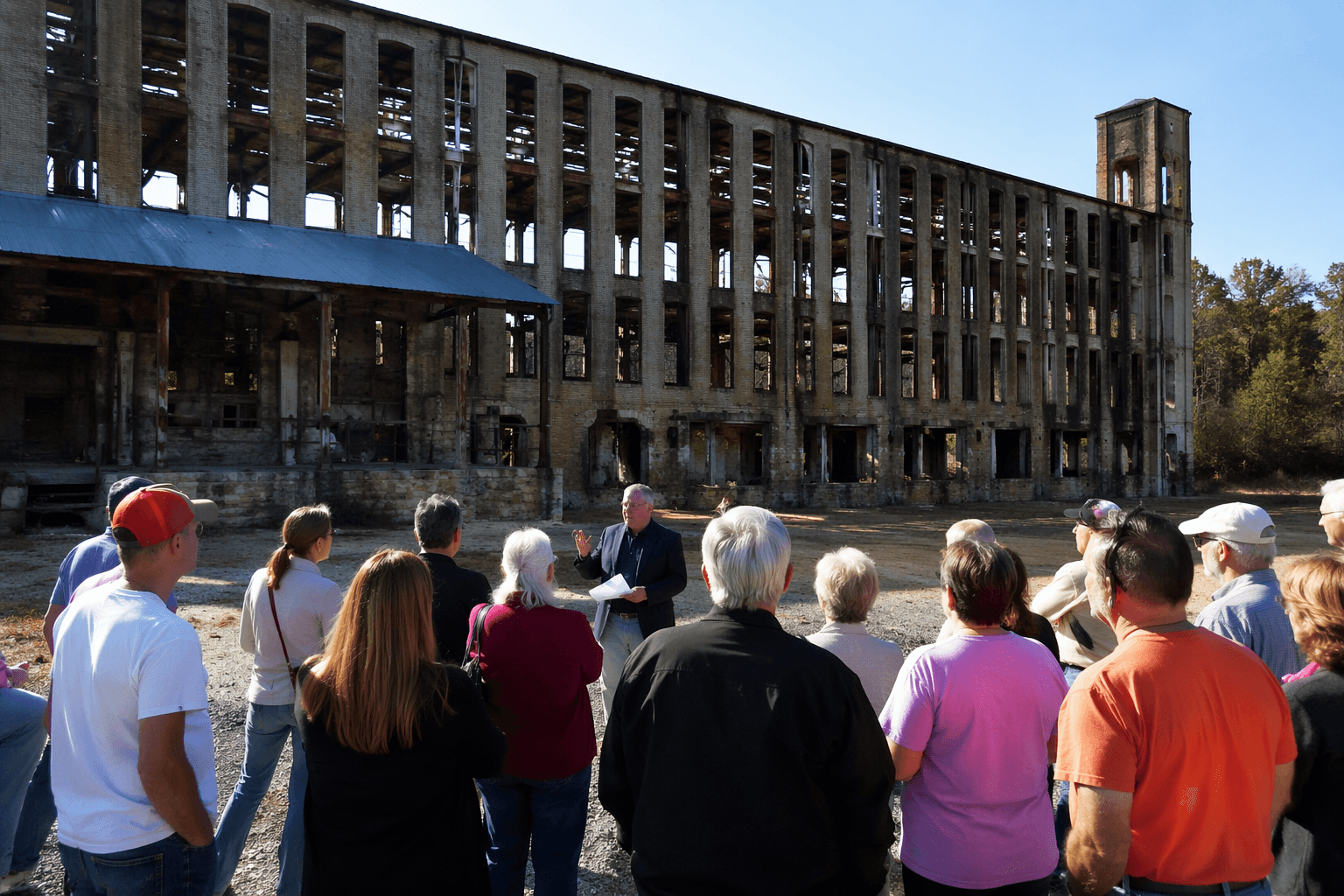
The first record of activity on the Double Shoals Cotton Mill property dates to 1847 on the First Broad River in Cleveland County. The site traces the county’s turn of water, land and labor into an industrial economy and shows how that shift shaped where people worked, where buildings rose and how the county defined itself. Its long arc runs to a postwar rebuilding in 1874 and later reuse that kept the property active in community life.
The county’s first cotton mill
The mill’s own history identifies Double Shoals as the first cotton mill in Cleveland County.
A cotton mill needed more than a building. It needed land, water power, transport access and a labor force close enough to make daily production possible. Once that kind of operation took root, it changed the value of nearby land and created a new business identity around manufacturing rather than only agriculture.
Built around water, rebuilt after war
The National Register nomination places the site in the Double Shoals community in the Shelby vicinity, facing the river. The layout tied the mill to the First Broad River, which supplied the power and setting that made the site work.
The property’s early ownership history traces that development. Thomas R. Jackson deeded 268 acres to Albert A. Homsley, who built a mill building in 1855 that became the precursor to the later Double Shoals Mill. The property changed hands again in 1867 and then in 1874, when it was sold to E. A. Morgan. Morgan renamed it the Double Shoals Mill Company, and the major structure standing today was built that same year after the Civil War.
The mill race and dam, built about 1880, add another layer to that industrial landscape. Together they show that the property functioned as a working complex rather than a single preserved building. Water control, not just brick and timber, was part of the business model.
What the old mill tells you about Cleveland County’s economy
The mill operated as a cotton and yarn mill until the early 1970s, when a fire ended that era of use. Later additions were made over time, and the last structure was built around 1970, which shows how the site kept adapting as textile technology, ownership and production needs changed.
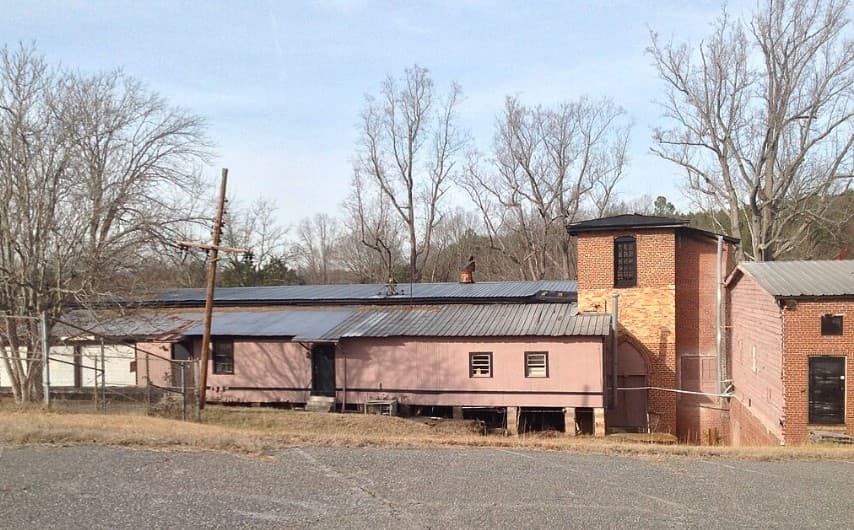
Industrial sites like Double Shoals often leave behind large buildings, water-oriented land, access roads and reusable open space. Those features can be expensive to replicate from scratch, so surviving mill properties often support later economic activity.
Cleveland County’s preservation map lists about 30 places on the National Register of Historic Places, with historic-landmarks listings spread across Boiling Springs, Double Shoals, Grover, Kings Mountain, Polkville and Shelby. Double Shoals is part of that network alongside the courthouse, The Banker’s House, Joshua Beam House and the Central School Historic District.
Why the site still works as a public place
The events grounds connect visitors to the First Broad River from the craft-fair area, and a nature walk follows the river down to a sandy beach. That gives the property a second life as a public gathering place, with the river still doing the work of defining the site’s character.
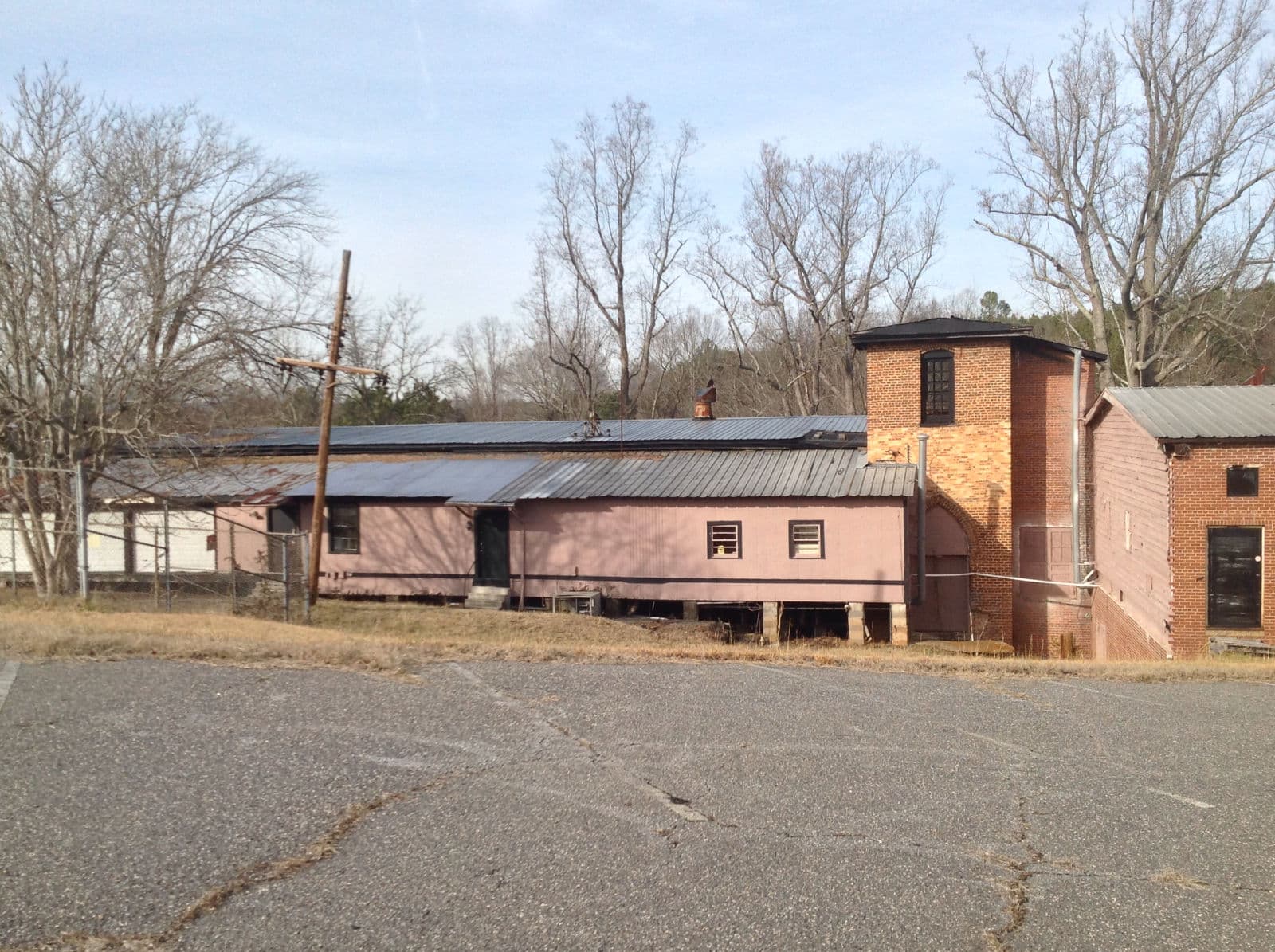
Adaptive reuse is strongest when a property offers something beyond nostalgia: room for events, outdoor circulation, a memorable setting and a clear identity that can support local activity. Double Shoals has all of that. Its river edge, historic structures and layered industrial history give Cleveland County a site that can host community use while still explaining how the county moved into manufacturing.
For visitors, the most useful way to read the property is to look for a few concrete markers:
- the postwar 1874 structure that anchors the site today
- the river-facing layout that shows why water power mattered
- the mill race and dam that reveal the larger industrial system
- the later additions, which track the site’s long working life
- the landscape toward the First Broad River, where production and place still meet
The address, 199 Old Mill Rd, Shelby, NC 28150, puts the mill squarely in the county’s industrial geography.
This article was produced by Prism’s automated news system from verified source data, official records, and press releases, then run through automated quality and moderation checks before publishing. The system is built and supervised by the people who set the standards it runs under. Read our full AI policy.
Know something we missed? Have a correction or additional information?
Submit a Tip